
一项回顾性分析,比较宏基因组下一代测序与传统微生物学检测在重症感染患者病原体鉴定中的应用。
A retrospective analysis comparing metagenomic next-generation sequencing with conventional microbiology testing for the identification of pathogens in patients with severe infections.
作者信息
Hou Fei, Qiao Yanting, Qiao Yuanyuan, Shi Ya, Chen Mingrui, Kong Min, Hu Xiaohang, Jiang Liqing, Liu Xiaowei
机构信息
Medical Laboratory of Jining Medical University, Jining Medical University, Jining, Shandong, China.
Department of Clinical Laboratory, The Affiliated Hospital of Jining Medical University, Jining, Shandong, China.
出版信息
Front Cell Infect Microbiol. 2025 Apr 8;15:1530486. doi: 10.3389/fcimb.2025.1530486. eCollection 2025.
INTRODUCTION
The application value of metagenomic next-generation sequencing (mNGS) in detecting pathogenic bacteria was evaluated to promote the rational and accurate use of antibiotics. A total of 180 patients with severe infections were included in this study.
METHODS
Based on their different symptoms, bronchoalveolar lavage fluid (BALF) or blood samples were collected for conventional microbiological testing (CMT) and mNGS.
RESULTS
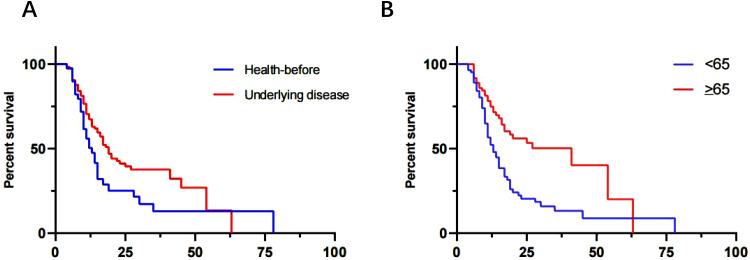
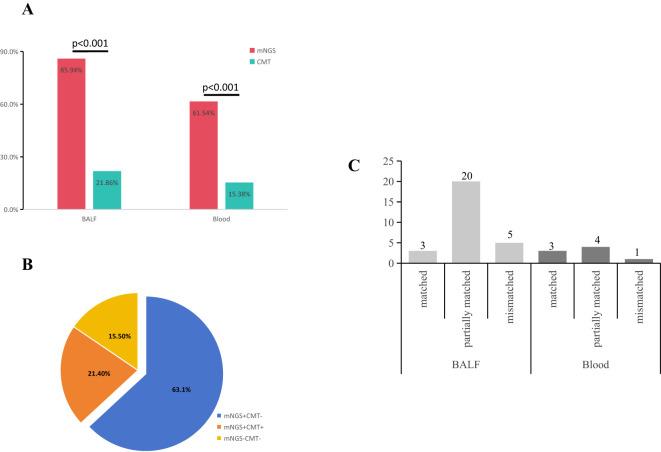
The results indicated that the etiological diagnosis rate of mNGS (78.89%) was significantly higher than that of CMT (20%) (p<0.001). Notably, mNGS exhibited greater sensitivity towards rare pathogens such as Chlamydia pneumoniae, Mycobacterium tuberculosis complex, and Legionella pneumophila, which were undetectable by CMT. Additionally, 64 cases underwent blood culture, BALF culture, and mNGS testing. Analysis revealed that the positive rate of blood culture (3.1%) was lower than that of BALF (25%), and the positive rate of CMT from both types was significantly lower than that of mNGS (89.1%) (p<0.001). In this study, 168 mNGS results were accepted, and 116 patients had their antibiotic therapy adjustment based on mNGS. Paired analysis indicated that white blood cell count (WBC), procalcitonin (PCT), C-reactive protein (CRP), and neutrophil (NEU) percentage provided valuable therapeutic guidance. The survival rate of patients was 55.36%, influenced by patient physical condition and age.
DISCUSSION
Our data indicated that mNGS had significant auxiliary value in the clinical diagnosis and treatment for critically ill patients, especially for those with negative CMT results and clinically undefined infections. mNGS could broaden the detection scope, especially for special pathogens, and improve the detection rate, providing powerful assistance for early clinical diagnosis and treatment.
引言
评估宏基因组下一代测序(mNGS)在检测病原菌方面的应用价值,以促进抗生素的合理准确使用。本研究共纳入180例严重感染患者。
方法
根据不同症状,采集支气管肺泡灌洗液(BALF)或血液样本进行传统微生物检测(CMT)和mNGS检测。
结果
结果表明,mNGS的病原学诊断率(78.89%)显著高于CMT(20%)(p<0.001)。值得注意的是,mNGS对肺炎衣原体、结核分枝杆菌复合群和嗜肺军团菌等罕见病原体表现出更高的敏感性,而CMT无法检测到这些病原体。此外,64例患者进行了血培养、BALF培养和mNGS检测。分析显示,血培养阳性率(3.1%)低于BALF(25%),两种类型的CMT阳性率均显著低于mNGS(89.1%)(p<0.001)。本研究中,168份mNGS结果被采纳,116例患者根据mNGS调整了抗生素治疗。配对分析表明,白细胞计数(WBC)、降钙素原(PCT)、C反应蛋白(CRP)和中性粒细胞(NEU)百分比提供了有价值的治疗指导。患者的生存率为55.36%,受患者身体状况和年龄影响。
讨论
我们的数据表明,mNGS在重症患者的临床诊断和治疗中具有显著的辅助价值,特别是对于CMT结果为阴性且临床感染不明确的患者。mNGS可以拓宽检测范围,尤其是对于特殊病原体,并提高检测率,为临床早期诊断和治疗提供有力帮助。


 Zotero 插件