Thomas Heather E, Boas Lichty Katherine E, Richards Gary P, Boyd E Fidelma
Department of Biological Sciences, University of Delaware, Newark, Delaware, USA.
U.S. Department of Agriculture, Agricultural Research Service, Dover, Delaware, USA.
Appl Environ Microbiol. 2025 May 21;91(5):e0061925. doi: 10.1128/aem.00619-25. Epub 2025 Apr 23.
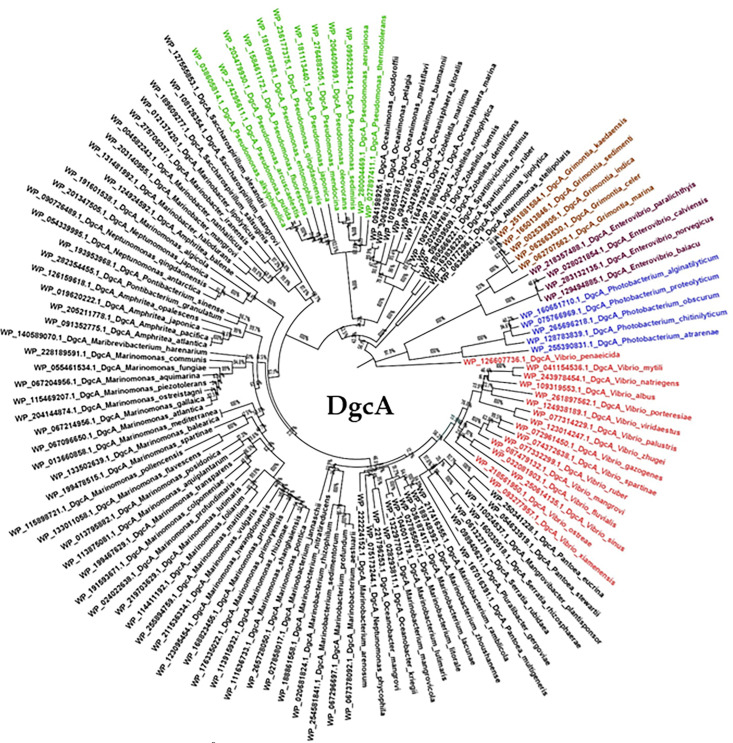
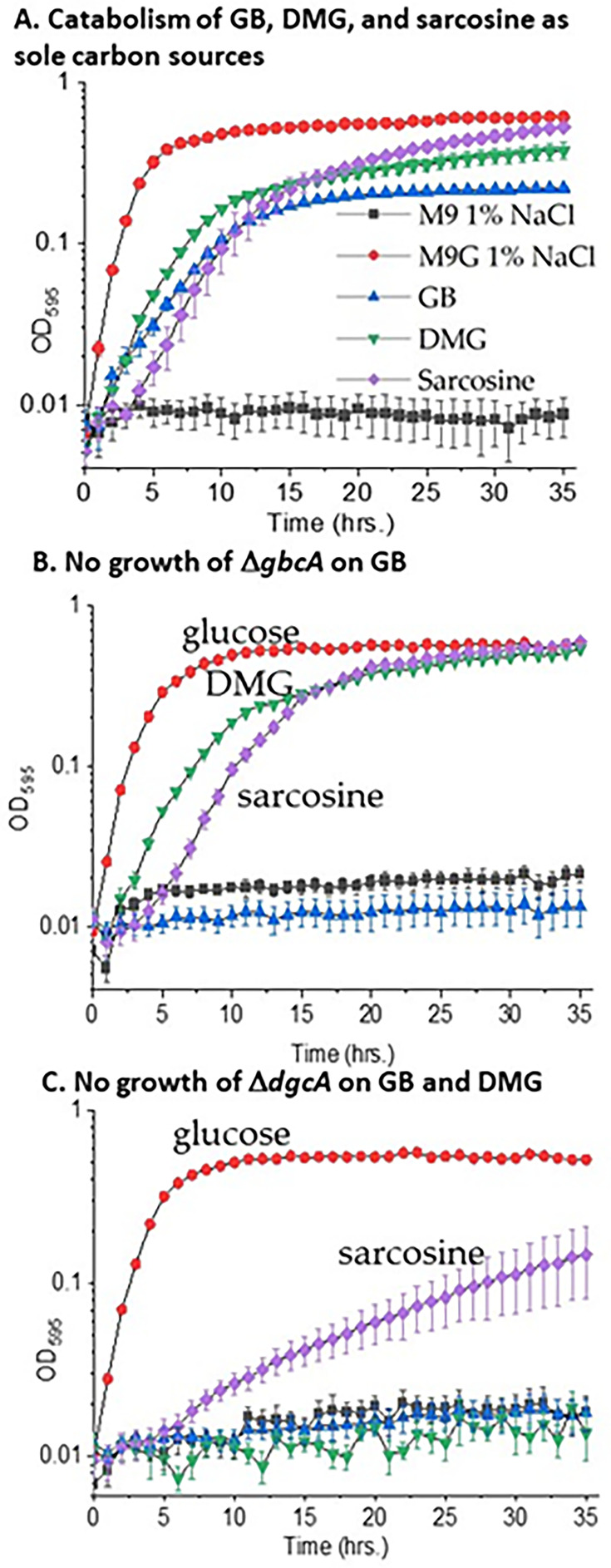
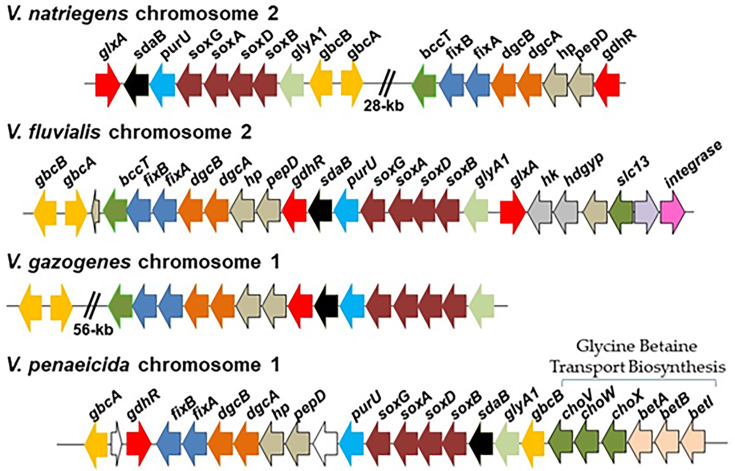
Bacteria respond to osmotic stress by intracellularly accumulating low molecular weight compounds called compatible solutes, also known as osmolytes. Glycine betaine (,,-trimethylglycine, GB) is a highly effective and widely available osmolyte used by bacteria, algae, and plants for abiotic stress protection. Here, we highlight the dual roles of GB, dimethyl glycine (DMG), and sarcosine for both osmoprotection and a less known role as sole carbon sources. First, we showed that the marine halophile can grow in 1% to 7% NaCl and biosynthesize GB, ectoine, and glutamate and import GB, DMG, and sarcosine in response to osmotic stress. Betaine-carnitine-choline transporters (BCCTs) for the uptake of GB and DMG, but not sarcosine, were identified. Bioinformatics analyses uncovered homologs of GB, DMG, and sarcosine catabolism genes () clustered in the genome, and these genes had a limited distribution among vibrios. We showed that ATCC 14048 grew on GB, DMG, and sarcosine as sole carbon sources, and gbcA and were required for growth. A contiguous catabolism cluster was present in a subset of strains, and we demonstrated the growth of 2013V-1197 in DMG and sarcosine as sole carbon sources. Phylogenetic analysis revealed the catabolism cluster did not share a common ancestor among members of the family .IMPORTANCECompatible solutes are frequently the most concentrated organic components in marine organisms, allowing them to adapt to high saline environments as well as affording protection to other abiotic stresses. These organic compounds are significant energy stores that have been overlooked for their potential as abundant nutrient sources for bacteria. Our study characterized glycine betaine (GB), dimethyl glycine (DMG), and sarcosine catabolism genes and showed their efficient use as carbon and energy sources by marine halophilic vibrios.
细菌通过在细胞内积累称为相容性溶质(也称为渗透剂)的低分子量化合物来应对渗透压胁迫。甘氨酸甜菜碱(,,-三甲基甘氨酸,GB)是一种高效且广泛存在的渗透剂,细菌、藻类和植物都用它来保护自身免受非生物胁迫。在这里,我们强调了GB、二甲基甘氨酸(DMG)和肌氨酸在渗透保护以及作为唯一碳源这一鲜为人知的作用方面的双重作用。首先,我们表明海洋嗜盐菌可以在1%至7%的NaCl中生长,并生物合成GB、四氢嘧啶和谷氨酸,还能在渗透压胁迫下摄取GB、DMG和肌氨酸。我们鉴定出了负责摄取GB和DMG而非肌氨酸的甜菜碱-肉碱-胆碱转运蛋白(BCCTs)。生物信息学分析揭示了GB、DMG和肌氨酸分解代谢基因()的同源物聚集在基因组中,并且这些基因在弧菌中的分布有限。我们表明ATCC 14048可以以GB、DMG和肌氨酸作为唯一碳源生长,生长需要gbcA和。在一部分菌株中存在一个连续的分解代谢簇,并且我们证明了2013V - 1197可以以DMG和肌氨酸作为唯一碳源生长。系统发育分析表明,分解代谢簇在弧菌科成员中没有共同的祖先。重要性相容性溶质通常是海洋生物中最浓缩的有机成分,使它们能够适应高盐环境,并为其他非生物胁迫提供保护。这些有机化合物是重要的能量储存物质,但其作为细菌丰富营养源的潜力一直被忽视。我们的研究对甘氨酸甜菜碱(GB)、二甲基甘氨酸(DMG)和肌氨酸分解代谢基因进行了表征,并表明海洋嗜盐弧菌能有效地将它们用作碳源和能源。