Iușan Simina Angela Lăcrimioara, Lucaciu Ondine Patricia, Petrescu Nausica Bianca, Mirică Ioana Codruța, Toc Dan-Alexandru, Albu Silviu, Costache Carmen
Department of Oral Health, Iuliu Hatieganu University of Medicine and Pharmacy, 400012 Cluj-Napoca, Romania.
Department of Microbiology, Iuliu Hatieganu University of Medicine and Pharmacy, 400012 Cluj-Napoca, Romania.
Dent J (Basel). 2025 Mar 28;13(4):148. doi: 10.3390/dj13040148.
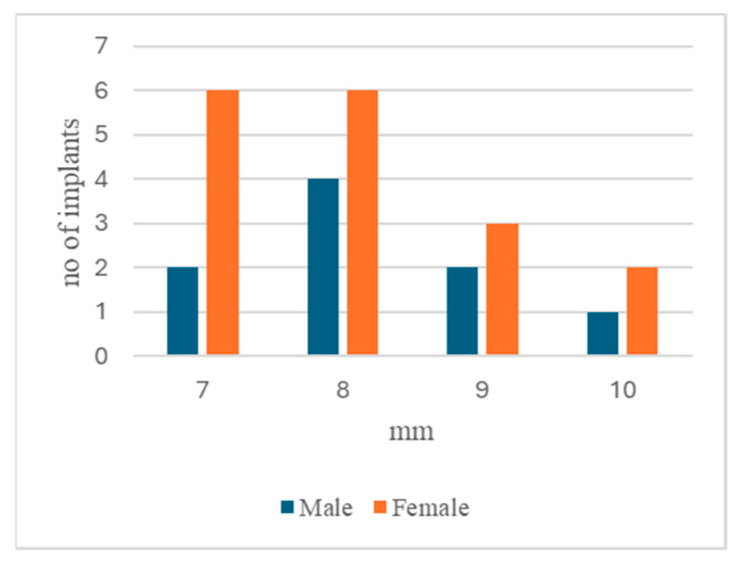
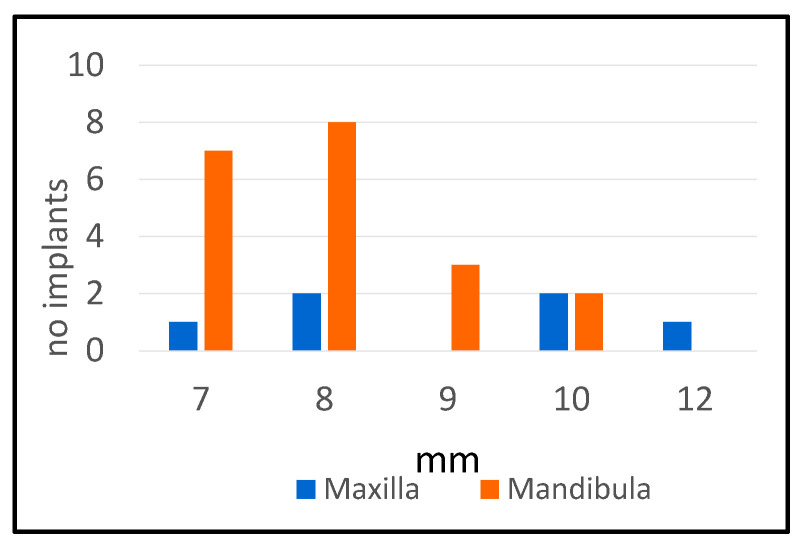
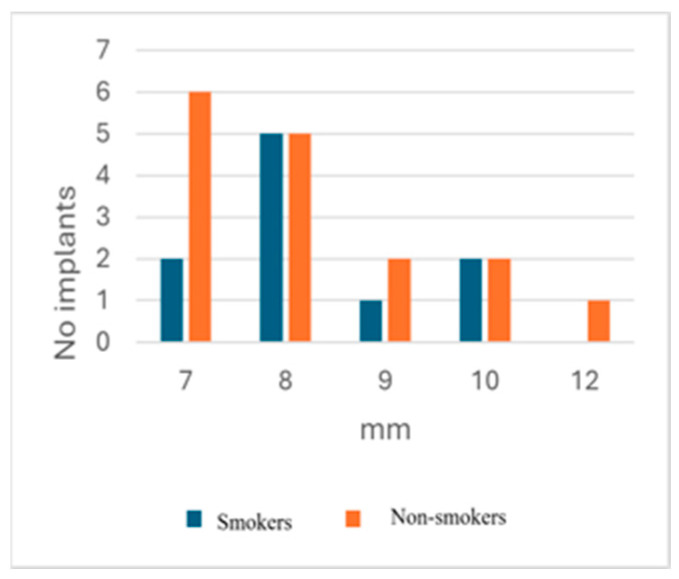
: With the increasing use of dental implants in edentulous patients and the high prevalence of peri-implantitis, understanding its microbial and risk factors is crucial. This study investigated Romanian patients from two private dental clinics in Cluj-Napoca, Romania, diagnosed with peri-implantitis, focusing on identifying the predominant bacterial species at affected sites compared with healthy implant sites. Additionally, we examined the impact of factors such as smoking, gender, age, and prosthetic restoration type on disease prevalence. : This cross-sectional study, conducted between January 2023 and December 2024, included randomly selected patients who met the predefined inclusion and exclusion criteria. We enrolled 22 patients and 50 implants in the study. Data collected from medical records, clinical evaluations, and microbiological assessments were subsequently entered into a computerized database. Clinical data were analyzed using Social Science Statistics software(Jeremy Staangroom 2018). Bacterial samples were assessed, incubated, and subsequently identified using the Vitek 2 Compact System (BioMérieux, Marcy-l' Étoile, France). : Peri-implantitis incidence was found to be independent of gender, more prevalent in the mandible, and equally affected smokers and non-smokers. The disease involves a complex polymicrobial infection, with pathogenic bacteria triggering the condition and opportunistic bacteria sustaining it. : Peri-implantitis is a complex polymicrobial infection that arises from the interaction of strict pathogenic bacteria and opportunistic bacteria. Peri-implantitis results from intricate interactions of local, systemic, and microbial factors. Identifying its causes is essential for developing effective treatments, with future research emphasizing the role of opportunistic bacteria in disease progression.
随着牙种植体在无牙患者中的使用日益增加以及种植体周围炎的高患病率,了解其微生物和风险因素至关重要。本研究调查了罗马尼亚克卢日 - 纳波卡两家私人牙科诊所被诊断为种植体周围炎的患者,重点是确定与健康种植部位相比,受影响部位的主要细菌种类。此外,我们还研究了吸烟、性别、年龄和修复体类型等因素对疾病患病率的影响。
这项横断面研究于2023年1月至2024年12月进行,纳入了随机选择的符合预先定义的纳入和排除标准的患者。我们招募了22名患者和50颗种植体进行研究。从病历、临床评估和微生物学评估中收集的数据随后被录入计算机数据库。临床数据使用社会科学统计软件(杰里米·斯塔恩格鲁姆,2018年)进行分析。细菌样本经过评估、培养,随后使用Vitek 2 Compact系统(法国生物梅里埃公司,马西 - 埃图瓦勒)进行鉴定。
发现种植体周围炎的发病率与性别无关,在下颌更常见,吸烟者和非吸烟者受影响程度相同。该疾病涉及复杂的多微生物感染,病原菌引发病情,机会性细菌维持病情。
种植体周围炎是一种由严格病原菌和机会性细菌相互作用引起的复杂多微生物感染。种植体周围炎是局部、全身和微生物因素复杂相互作用的结果。确定其病因对于开发有效的治疗方法至关重要,未来的研究将强调机会性细菌在疾病进展中的作用。