Wang Haolong, Yin Yanbo, Zhang Can, Li Fangzheng, Zhao Haiping, Liu Zhen, Sun Weili, Zhou Lisheng
College of Animal Science and Technology, Qingdao Agricultural University, Qingdao 266109, China.
College of Veterinary Medicine, Qingdao Agricultural University, Qingdao 266109, China.
Genes (Basel). 2025 Mar 21;16(4):358. doi: 10.3390/genes16040358.
Beagle dogs are widely used in biomedical research, but their genetic diversity and population structure require further investigation. This study aimed to assess genetic diversity, population structure, and selection signals in a foundational Beagle breeding population using genome-wide SNP genotyping.
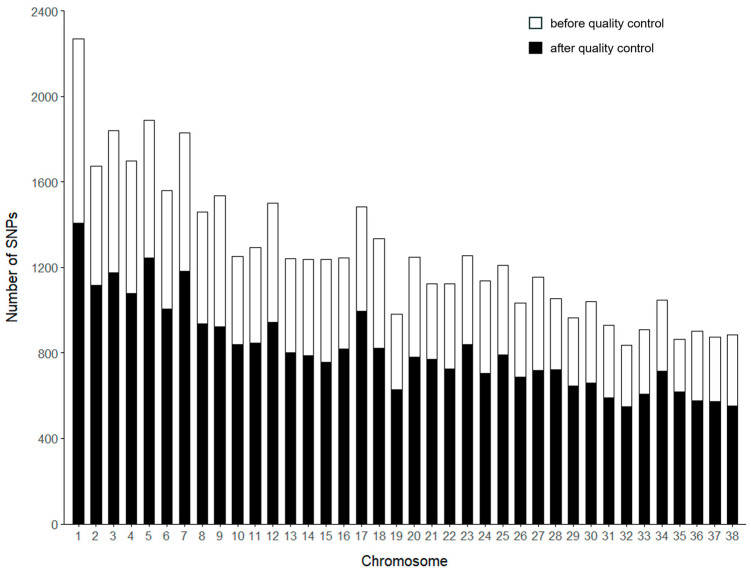
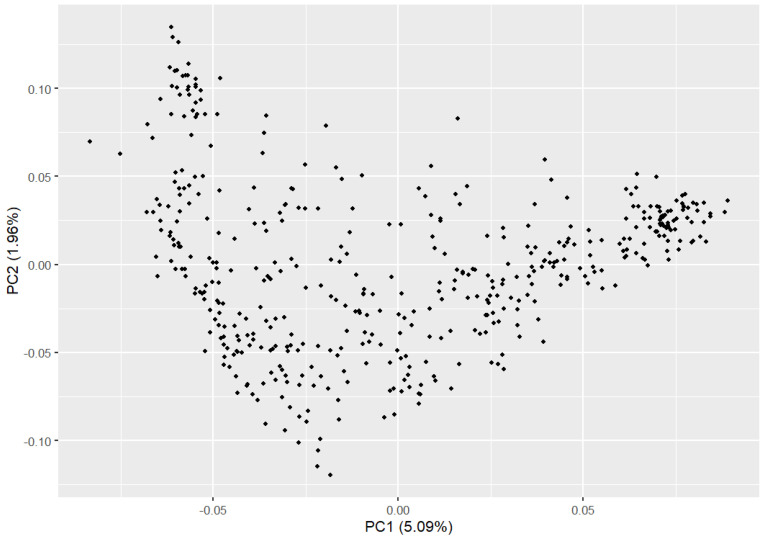
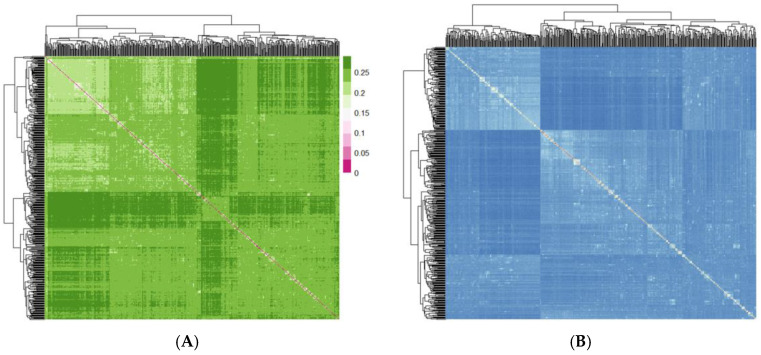
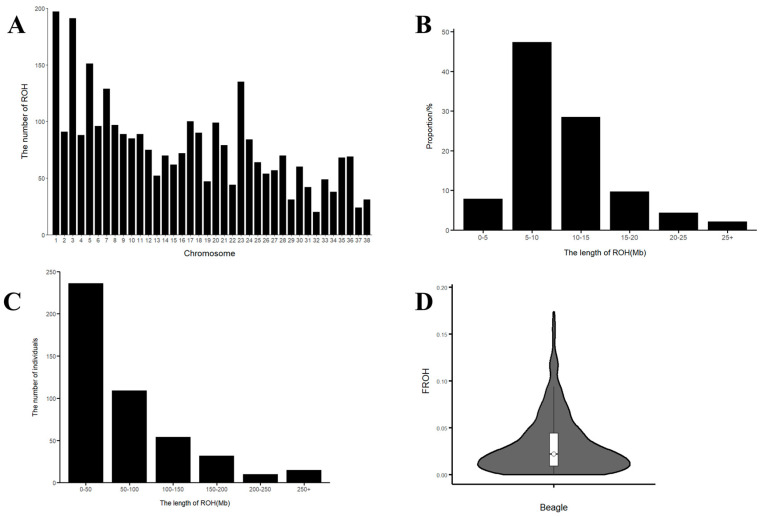
A total of 459 Beagle dogs (108 males, 351 females) were genotyped using the Canine 50K SNP chip. After quality control, 456 individuals and 31,198 SNPs were retained. Genetic diversity indices, principal component analysis (PCA), identity-by-state (IBS) distance, a genomic relationship matrix (G-matrix), runs of homozygosity (ROH), and Tajima's D selection scans were analyzed.
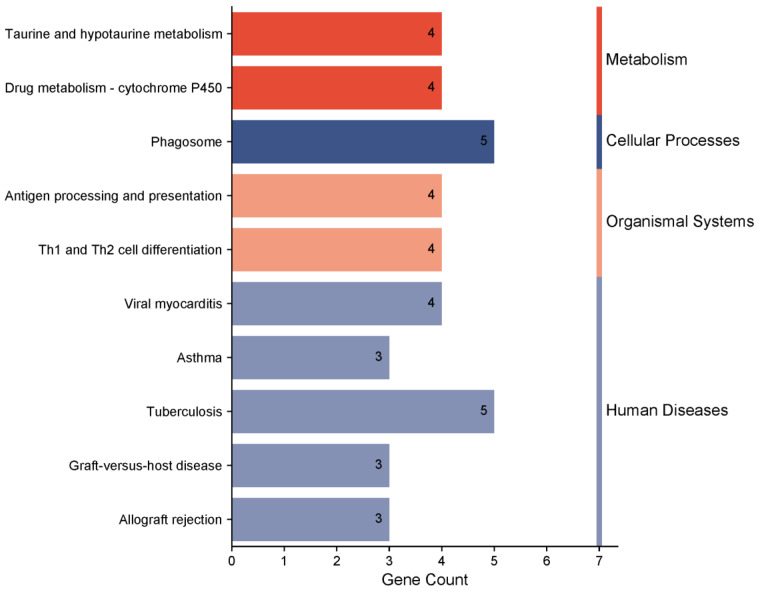
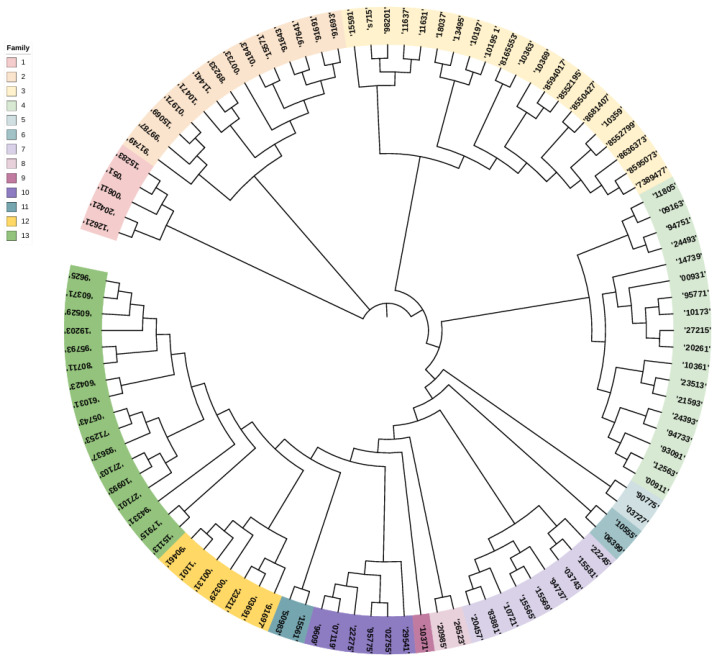
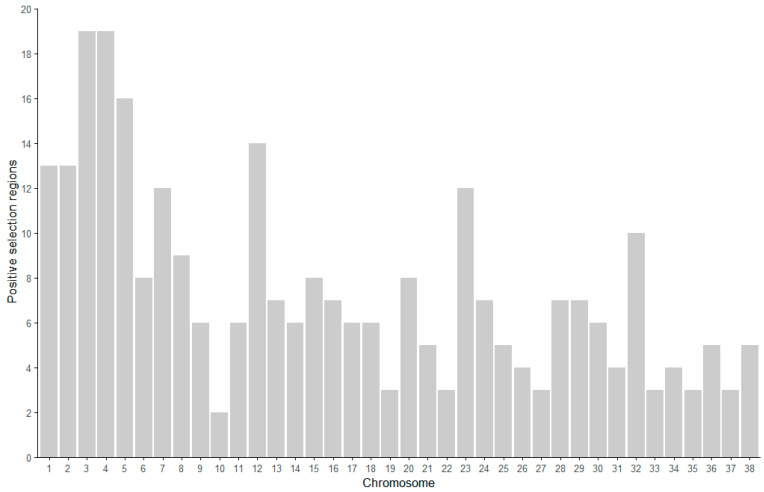
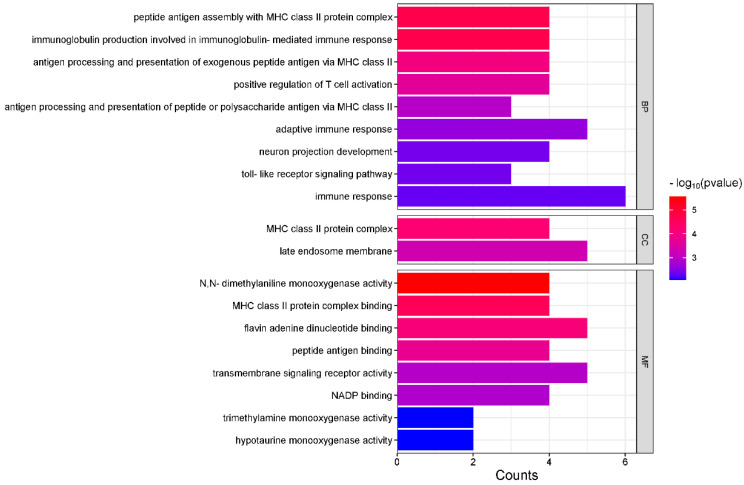
The average minor allele frequency was 0.224, observed heterozygosity was 0.303, and expected heterozygosity was 0.305. A total of 2990 ROH segments were detected, with a mean inbreeding coefficient of 0.031. Phylogenetic analysis classified 106 stud dogs into 13 lineages. Selection signal analysis identified (muscle function) and , , (immune regulation) under selection.
The Beagle population exhibits high genetic diversity and low inbreeding. To maintain genetic stability and ensure the long-term conservation of genetic resources, structured breeding strategies should be implemented based on lineage classifications.
比格犬广泛应用于生物医学研究,但其遗传多样性和群体结构仍需进一步研究。本研究旨在利用全基因组SNP基因分型评估一个基础比格犬繁殖群体的遗传多样性、群体结构和选择信号。
使用犬50K SNP芯片对总共459只比格犬(108只雄性,351只雌性)进行基因分型。经过质量控制后,保留了456个个体和31198个SNP。分析了遗传多样性指数、主成分分析(PCA)、状态一致性(IBS)距离、基因组关系矩阵(G矩阵)、纯合子连续片段(ROH)和 Tajima's D选择扫描。
平均次要等位基因频率为0.224,观察到的杂合度为0.303,预期杂合度为0.305。共检测到2990个ROH片段,平均近交系数为0.031。系统发育分析将106只种犬分为13个谱系。选择信号分析确定了处于选择状态的(肌肉功能)以及、、(免疫调节)。
比格犬群体表现出高遗传多样性和低近交程度。为维持遗传稳定性并确保遗传资源的长期保存,应基于谱系分类实施结构化育种策略。