Bernardes-Engemann Andrea Reis, Almeida-Silva Fernando, Cleare Levi G, Cruz Jefferson D da, Silva Jefferson Rocha de A, Neto Walter Sotto M Fernandes, Zancopé-Oliveira Rosely Maria, Amaral Ana Claudia Fernandes, Nosanchuk Joshua D, Almeida-Paes Rodrigo
Fundação Oswaldo Cruz, Instituto Nacional de Infectologia Evandro Chagas, Laboratório de Micologia, Rio de Janeiro 21040-900, RJ, Brazil.
Albert Einstein College of Medicine, Departments of Medicine (Division of Infectious Diseases) & Microbiology & Immunology, Bronx, NY 10461, USA.
Pharmaceuticals (Basel). 2025 Apr 6;18(4):534. doi: 10.3390/ph18040534.
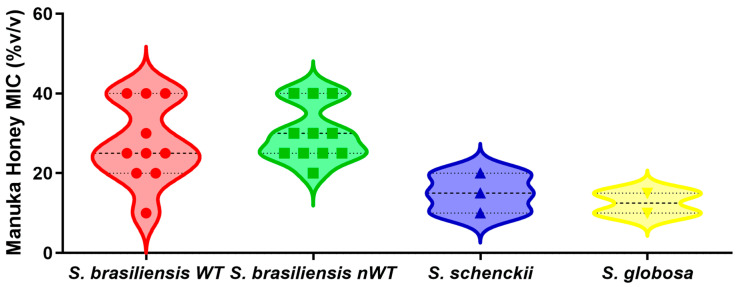
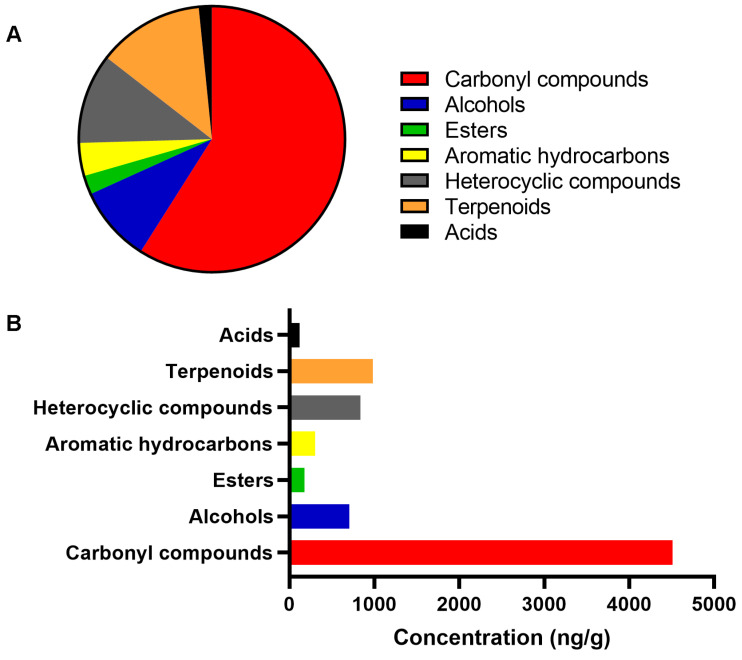
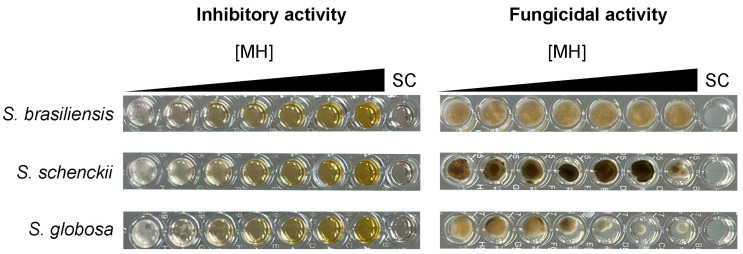
: While various clinical manifestations occur in sporotrichosis, cutaneous forms predominate. The recommended sporotrichosis treatment is itraconazole, an antifungal with certain restrictions. In recent years, the observation of reduced treatment effectiveness in some patients has arisen, possibly due to spp. resistance mechanisms. Consequently, there is a growing need for alternative therapeutic approaches. This study investigates the antifungal activity of manuka honey (MH) against pathogenic species of the genus . : In this study, we assessed MH antifungal efficacy across concentrations ranging from 5% to 40% against 26 spp. isolates. In addition, its components were evaluated through chromatography and other in vitro techniques. : Minimum inhibitory concentrations of MH were found to be 15-40%, 10-15%, and 5-10% for , , and , respectively. Purified methylglyoxal did not hinder growth. The MH antifungal potential was compromised through treatment with catalase or filtration through a 0.22 µm cellulose membrane. Chromatographic analysis of the volatile organic compounds (VOCs) present in MH identified 40 VOCs, including carbonyl compounds, alcohols, esters, aromatic hydrocarbons, heterocyclic compounds, terpenoids, and carboxylic acids. Additionally, two phenolic compounds were identified as potential markers for the authentication of MH, along with a disaccharide that may contribute to its antifungal activity. : MH has demonstrated biological activity against the most significant species with pathogenic impact on humans. This suggests its consideration in future research endeavors focused on novel topical treatments for cutaneous sporotrichosis in both human and animal subjects.
虽然孢子丝菌病有多种临床表现,但皮肤型为主。推荐的孢子丝菌病治疗药物是伊曲康唑,一种有一定限制的抗真菌药。近年来,观察到部分患者治疗效果降低,可能是由于 spp. 的耐药机制。因此,对替代治疗方法的需求日益增加。本研究调查了麦卢卡蜂蜜(MH)对该属致病菌种的抗真菌活性。:在本研究中,我们评估了浓度范围为5%至40%的MH对26株 spp. 分离株的抗真菌功效。此外,通过色谱法和其他体外技术对其成分进行了评估。:发现MH对 、 和 的最低抑菌浓度分别为15 - 40%、10 - 15%和5 - 10%。纯化的甲基乙二醛不阻碍 生长。通过过氧化氢酶处理或通过0.22 µm纤维素膜过滤会损害MH的抗真菌潜力。对MH中存在的挥发性有机化合物(VOCs)进行色谱分析,鉴定出40种VOCs,包括羰基化合物、醇类、酯类、芳烃、杂环化合物、萜类和羧酸。此外,鉴定出两种酚类化合物作为MH鉴定的潜在标志物,以及一种可能有助于其抗真菌活性的二糖。:MH已证明对影响人类的最重要的 菌种具有生物活性。这表明在未来针对人类和动物皮肤孢子丝菌病新型局部治疗的研究中应考虑使用它。