Long Cui, Du Yuxin, Guan Yumeng, Liu Sijia, Xie Jianbo
National Engineering Research Center of Tree Breeding and Ecological Restoration, Beijing Forestry University, No. 35, Qinghua East Road, Beijing 100083, China.
Key Laboratory of Genetics and Breeding in Forest Trees and Ornamental Plants, Ministry of Education, College of Biological Sciences and Technology, Beijing Forestry University, No. 35, Qinghua East Road, Beijing 100083, China.
Plants (Basel). 2025 Apr 21;14(8):1265. doi: 10.3390/plants14081265.
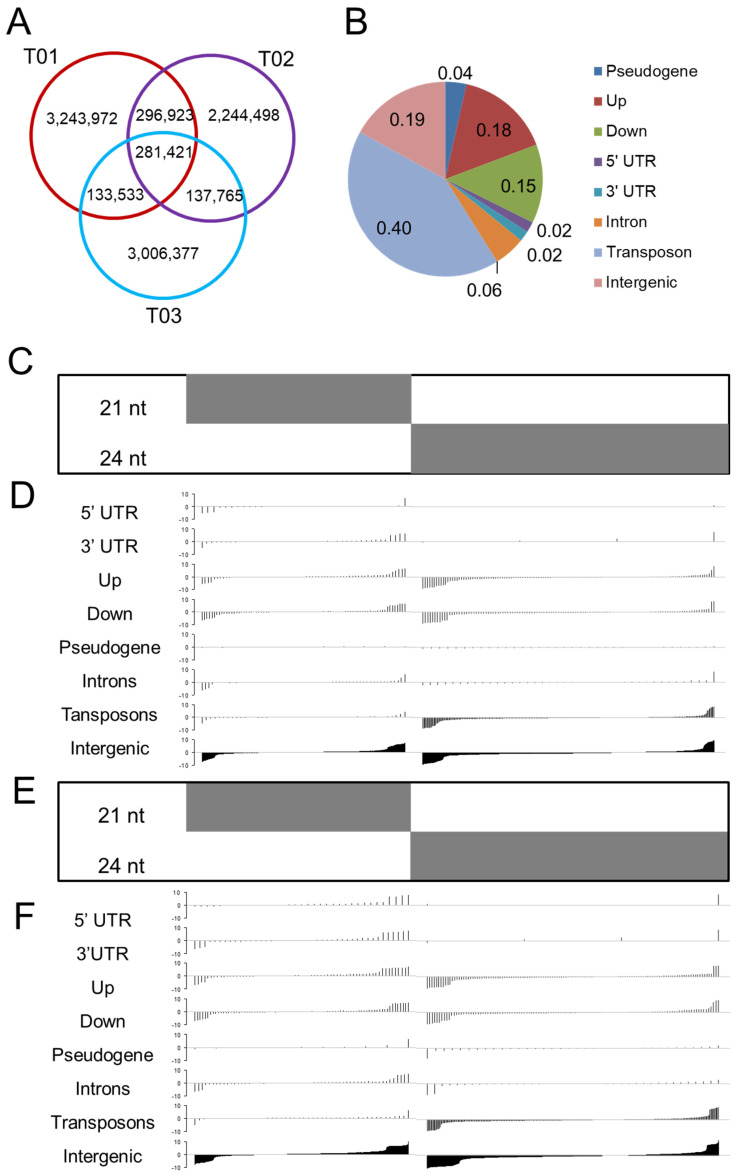
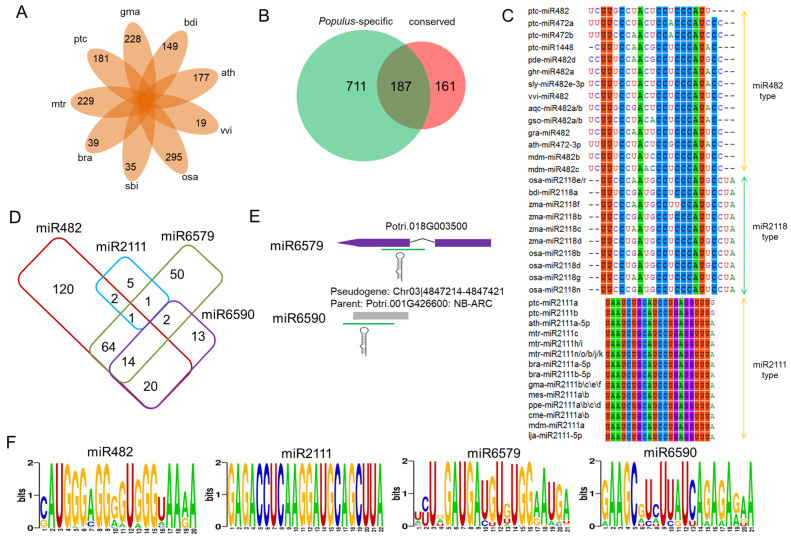
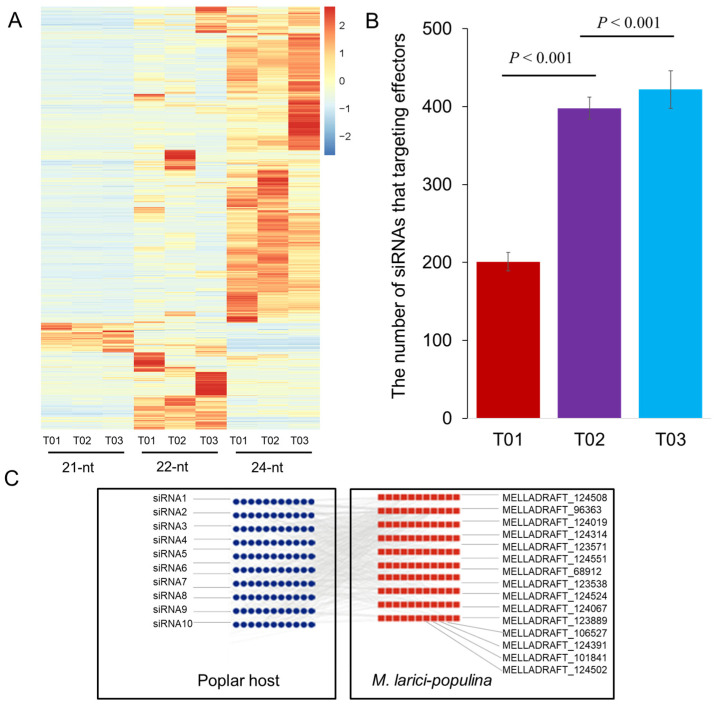
Utilizing high-throughput Illumina sequencing, we examined how small RNA (sRNA) profiles vary in Chinese white poplar () across two pivotal infection stages by the rust fungus : the biotrophic growth phase (T02; 48 h post infection) and the urediniospore development and dispersal phase (T03; 168 h), both essential for plant colonization and prolonged biotrophic engagement. Far exceeding random expectations, siRNA clusters predominantly arose from transposon regions, with pseudogenes also contributing significantly, and infection-stage-specific variations were notably tied to these transposon-derived siRNAs. As the infection advanced, clusters of 24 nt siRNAs in transposon and intergenic regions exhibited pronounced abundance shifts. An analysis of targets indicated that sRNAs potentially regulate 95% of genes, with pathogen effector genes showing heightened targeting by sRNAs during the biotrophic and urediniospore phases compared to controls, pointing to selective sRNA-target interactions. In contrast to conserved miRNAs across plant species, -specific miRNAs displayed a markedly greater tendency to target genes. These observations collectively highlight the innovative roles of sRNAs in plant defense, their evolutionary roots, and their dynamic interplay with pathogen coevolution.
利用高通量Illumina测序技术,我们研究了中国白杨(Populus tomentosa)在锈菌(Melampsora larici-populina)两个关键感染阶段的小RNA(sRNA)谱如何变化:活体营养生长阶段(T02;感染后48小时)和夏孢子发育与传播阶段(T03;168小时),这两个阶段对于植物定殖和延长活体营养期都至关重要。远超随机预期的是,小干扰RNA(siRNA)簇主要源自转座子区域,假基因也有显著贡献,且感染阶段特异性变化明显与这些转座子衍生的siRNA相关。随着感染的进展,转座子和基因间区域的24 nt siRNA簇表现出明显的丰度变化。靶标分析表明,sRNA可能调控95%的毛果杨基因,与对照相比,在活体营养期和夏孢子阶段,病原体效应子基因被sRNA靶向的程度更高,这表明存在选择性的sRNA-靶标相互作用。与跨植物物种保守的微小RNA(miRNA)不同,毛果杨特异性miRNA对毛果杨基因的靶向倾向明显更强。这些观察结果共同突出了sRNA在植物防御中的创新作用、其进化根源以及它们与病原体协同进化的动态相互作用。