Contato Alex Graça, Conte-Junior Carlos Adam
Analytical and Molecular Laboratorial Center (CLAn), Institute of Chemistry (IQ), Federal University of Rio de Janeiro (UFRJ), Cidade Universitária, Rio de Janeiro 21941-909, RJ, Brazil.
Center for Food Analysis (NAL), Technological Development Support Laboratory (LADETEC), Federal University of Rio de Janeiro (UFRJ), Cidade Universitária, Rio de Janeiro 21941-598, RJ, Brazil.
Nutrients. 2025 Apr 9;17(8):1307. doi: 10.3390/nu17081307.
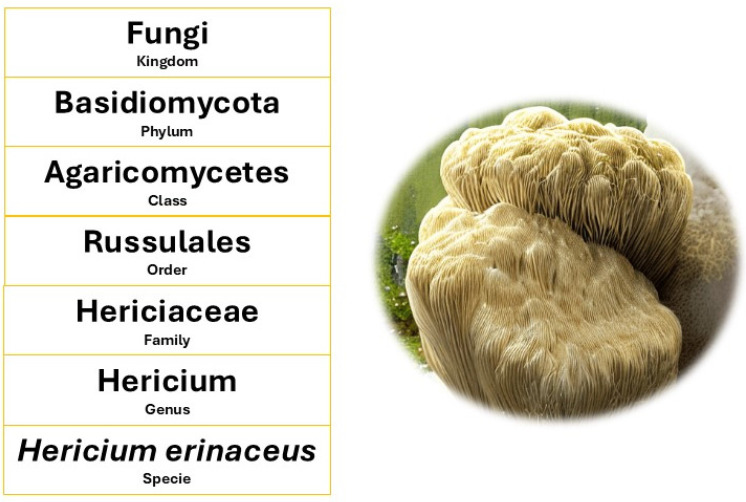
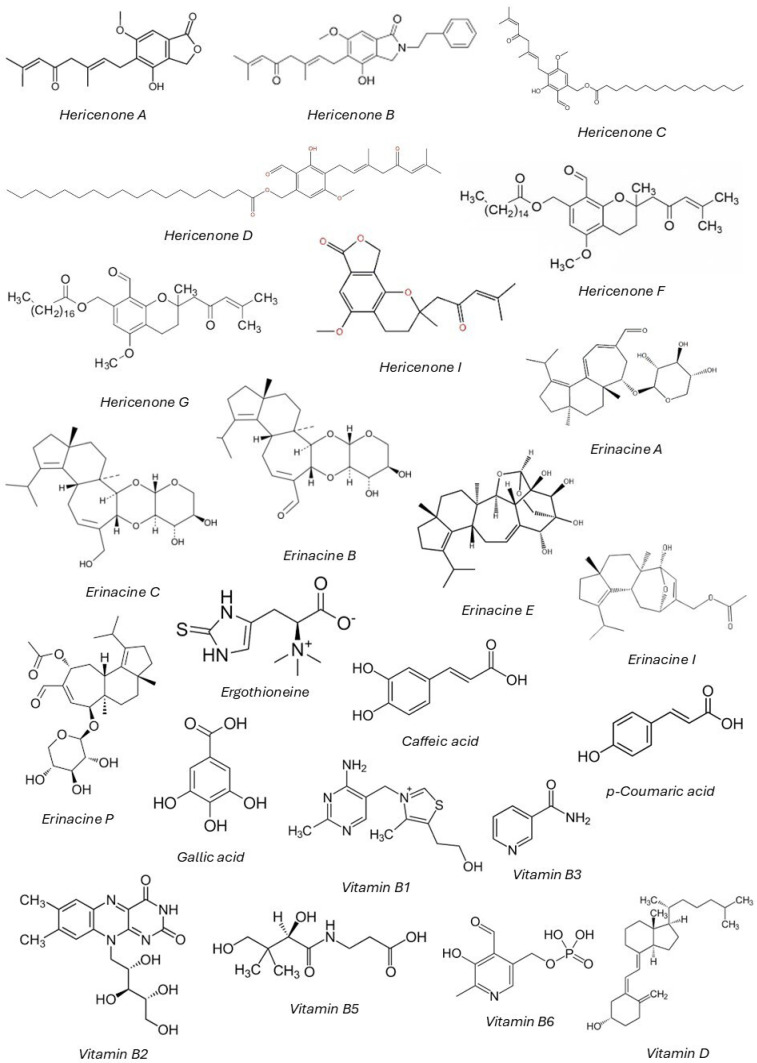
, commonly known as lion's mane mushroom, has gained increasing scientific interest due to its rich composition of bioactive compounds and diverse health-promoting properties. This narrative review provides a comprehensive overview of the nutritional and therapeutic potential of , with a particular focus on its anti-inflammatory, antioxidant, and antimicrobial activities. A structured literature search was performed using databases such as PubMed, Scopus, Science Direct, Web of Science, Science Direct, and Google Scholar. Studies published in the last two decades focusing on ' bioactive compounds were included. The chemical composition of includes polysaccharides, terpenoids (hericenones and erinacines), and phenolic compounds, which exhibit potent antioxidant effects by scavenging reactive oxygen species (ROS) and inducing endogenous antioxidant enzymes. Additionally, shows promising antimicrobial activity against bacterial and fungal pathogens, with potential applications in combating antibiotic-resistant infections. The mushroom's capacity to stimulate nerve growth factor (NGF) synthesis has highlighted its potential in preventing and managing neurodegenerative diseases, such as Alzheimer's and Parkinson's. Advances in biotechnological methods, including optimized cultivation techniques and novel extraction methods, may further enhance the bioavailability and pharmacological effects of . Despite promising findings, clinical validation remains limited. Future research should prioritize large-scale clinical trials, the standardization of extraction methods, and the elucidation of pharmacokinetics to facilitate its integration into evidence-based medicine. The potential of as a functional food, nutraceutical, and adjunct therapeutic agent highlights the need for interdisciplinary collaboration between researchers, clinicians, and regulatory bodies.
,通常被称为狮鬃菇,由于其丰富的生物活性化合物组成和多样的健康促进特性,已引起越来越多的科学关注。这篇叙述性综述全面概述了的营养和治疗潜力,特别关注其抗炎、抗氧化和抗菌活性。使用PubMed、Scopus、Science Direct、Web of Science、Science Direct和Google Scholar等数据库进行了结构化文献检索。纳入了过去二十年发表的聚焦于生物活性化合物的研究。的化学成分包括多糖、萜类化合物(猴头菌素和齿孔酸)和酚类化合物,它们通过清除活性氧(ROS)和诱导内源性抗氧化酶表现出强大的抗氧化作用。此外,对细菌和真菌病原体显示出有前景的抗菌活性,在对抗抗生素耐药性感染方面具有潜在应用。这种蘑菇刺激神经生长因子(NGF)合成的能力突出了其在预防和管理神经退行性疾病(如阿尔茨海默病和帕金森病)方面的潜力。生物技术方法的进展,包括优化的培养技术和新型提取方法,可能会进一步提高的生物利用度和药理作用。尽管有令人鼓舞的发现,但临床验证仍然有限。未来的研究应优先进行大规模临床试验、提取方法的标准化以及药代动力学的阐明,以促进其纳入循证医学。作为功能性食品、营养保健品和辅助治疗剂的潜力凸显了研究人员、临床医生和监管机构之间跨学科合作的必要性。