Hoogeveen Ron C, Diffenderfer Margaret R, Lim Elise, Liu Ching-Ti, Ikezaki Hiroaki, Guan Weihua, Tsai Michael Y, Ballantyne Christie M
Section of Cardiovascular Research, Department of Medicine, Baylor College of Medicine, Houston, TX 77030, USA.
Cardiovascular Nutrition Laboratory, Jean Mayer USDA Human Nutrition Research Center on Aging at Tufts University, Boston, MA 02111, USA.
Nutrients. 2025 Apr 11;17(8):1324. doi: 10.3390/nu17081324.
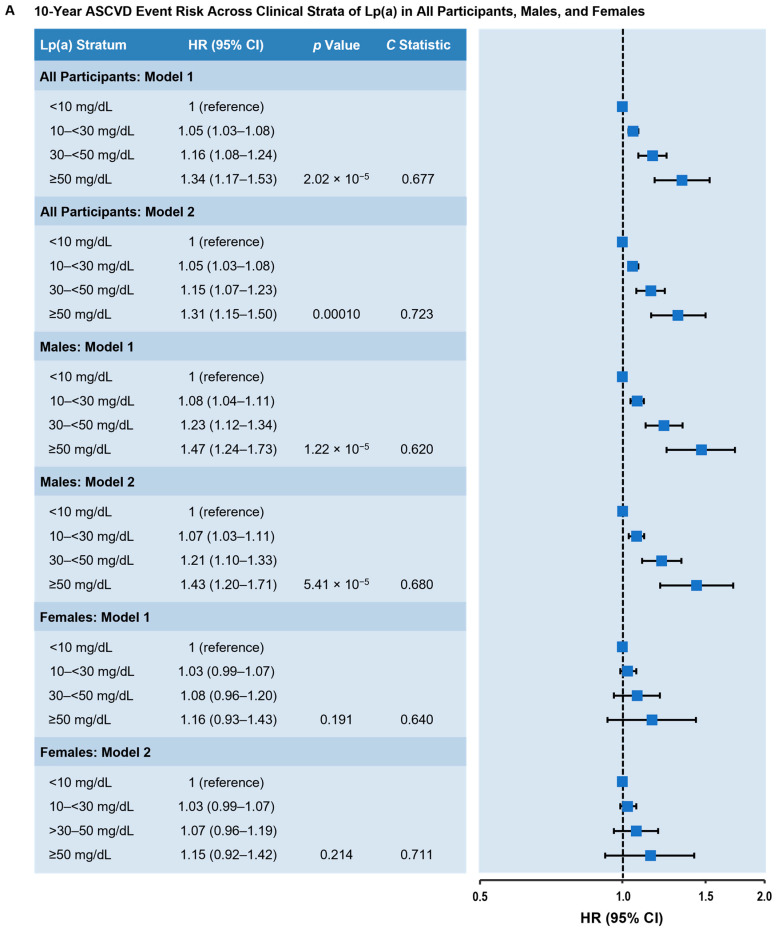
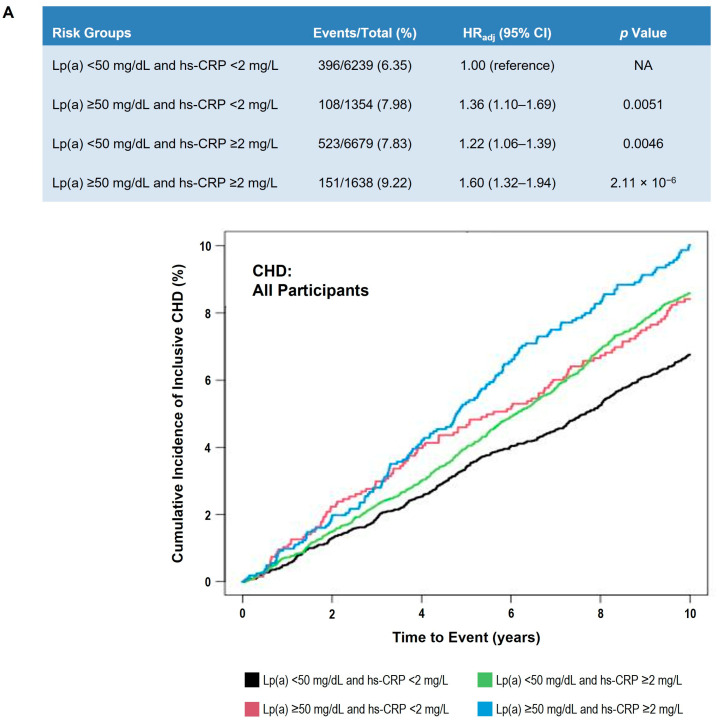
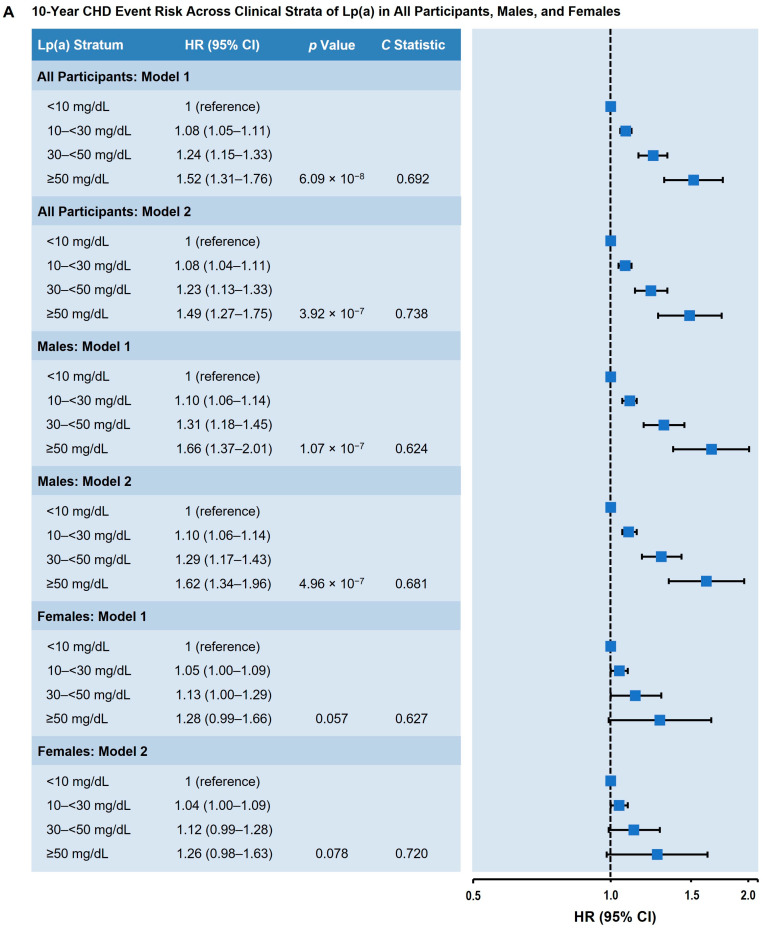
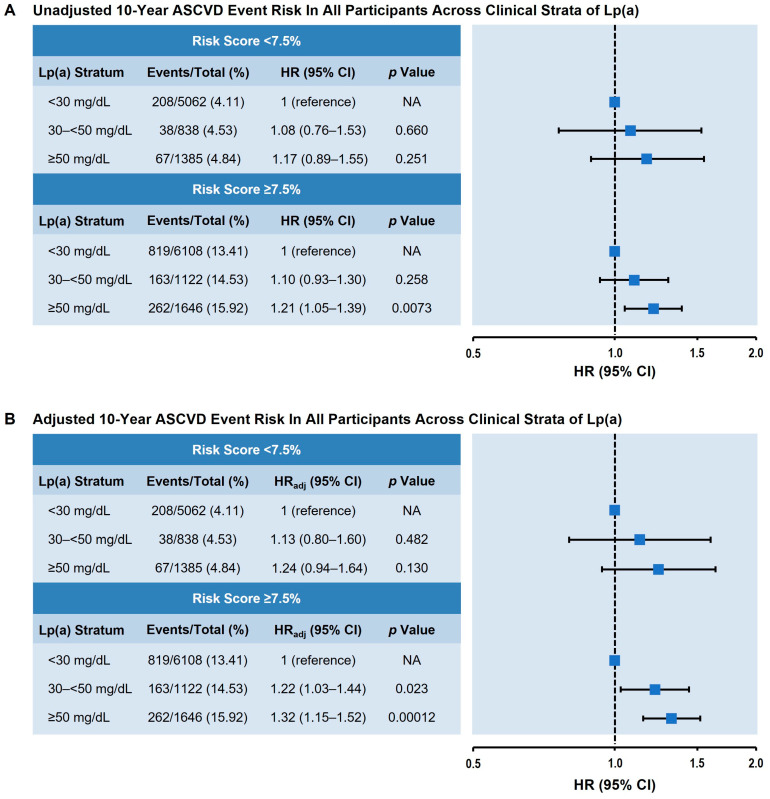
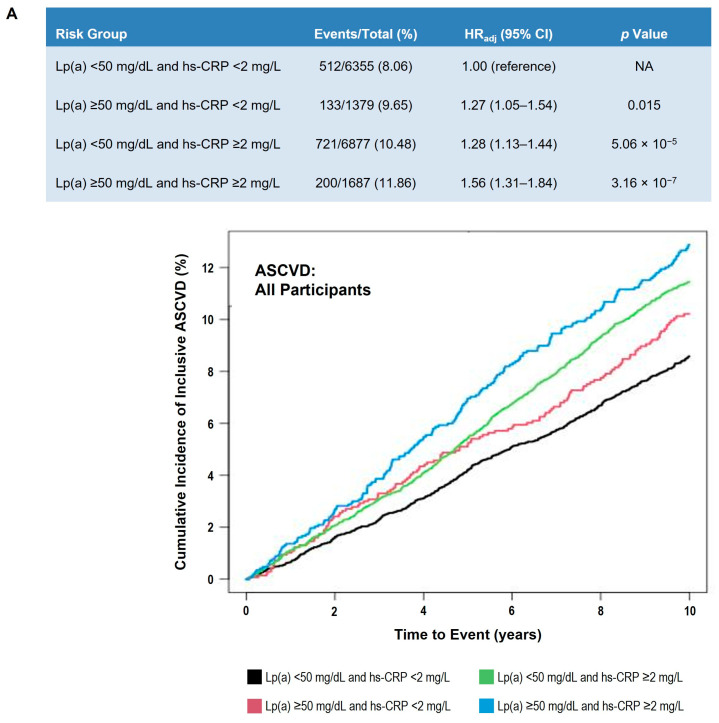
Elevated lipoprotein(a) [Lp(a)] is associated with increased incidence of atherosclerotic cardiovascular disease (ASCVD). We aimed to assess the utility of Lp(a) as an ASCVD risk-enhancing factor, as recommended by the 2019 ACC/AHA guidelines on ASCVD primary prevention, and to determine whether C-reactive protein (CRP) modifies the association of elevated Lp(a) with ASCVD risk. Lp(a), high sensitivity CRP (hs-CRP), and other ASCVD risk factors, including blood lipids, blood pressure, diabetes status, body weight and height, and smoking, were measured in 15,933 participants (median age 61.7 years with 25th-75th percentiles 57-68 years, 56.7% female, 19.7% Black, free of ASCVD at baseline) in the Atherosclerosis Risk in Communities Study, Framingham Offspring Study, and Multi-Ethnic Study of Atherosclerosis. Participants were followed for 10 years for incident ASCVD (coronary heart disease (CHD) or stroke) and CHD (including angioplasty and/or coronary artery bypass but minus stroke). These endpoints occurred in 9.7% and 7.4% of subjects, respectively. Compared with the lowest Lp(a) category (<10 mg/dL), the highest Lp(a) category (≥50 mg/dL) carried a significantly increased incidence of ASCVD (hazard ratio [HR] = 1.31; 95% confidence interval [CI] 1.15-1.50; < 0.001) and CHD (HR = 1.49; 95%CI 1.27-1.75; < 0.001). The association of elevated Lp(a) with incident ASCVD was stronger in males and non-Black individuals and was independent of diabetes status. Lp(a) levels ≥ 50 mg/dL predicted the 10-year ASCVD risk for those at intermediate risk (≥7.5%, HR = 1.32; 95%CI 1.15-1.52; < 0.001). There was a significant interaction between Lp(a) and hs-CRP; individuals with concomitant elevated levels of Lp(a) and hs-CRP had the highest ASCVD risk. Elevated Lp(a) levels were associated with increased ASCVD risk, particularly in individuals with concomitantly elevated hs-CRP levels and those at intermediate 10-year ASCVD risk.
脂蛋白(a)[Lp(a)]升高与动脉粥样硬化性心血管疾病(ASCVD)发病率增加相关。我们旨在评估按照2019年美国心脏病学会/美国心脏协会(ACC/AHA)关于ASCVD一级预防的指南推荐,Lp(a)作为ASCVD风险增强因素的效用,并确定C反应蛋白(CRP)是否会改变Lp(a)升高与ASCVD风险之间的关联。在社区动脉粥样硬化风险研究、弗雷明汉心脏研究后代队列及多民族动脉粥样硬化研究中,对15933名参与者(年龄中位数61.7岁,第25至75百分位数为57 - 68岁,女性占56.7%,黑人占19.7%,基线时无ASCVD)测量了Lp(a)、高敏CRP(hs-CRP)以及其他ASCVD风险因素,包括血脂、血压、糖尿病状态、体重和身高以及吸烟情况。对参与者随访10年,观察发生的ASCVD(冠心病(CHD)或中风)和CHD(包括血管成形术和/或冠状动脉搭桥术但不包括中风)。这些终点事件分别发生在9.7%和7.4%的受试者中。与Lp(a)最低类别(<10 mg/dL)相比,Lp(a)最高类别(≥50 mg/dL)的ASCVD发病率显著增加(风险比[HR]=1.31;95%置信区间[CI]1.15 - 1.50;P<0.001),CHD发病率也显著增加(HR = 1.49;95%CI 1.27 - 1.75;P<0.001)。Lp(a)升高与发生的ASCVD之间的关联在男性和非黑人个体中更强,且独立于糖尿病状态。Lp(a)水平≥50 mg/dL可预测中度风险(≥7.5%)人群的10年ASCVD风险(HR = 1.32;95%CI 1.15 - 1.52;P<0.001)。Lp(a)与hs-CRP之间存在显著交互作用;Lp(a)和hs-CRP水平同时升高的个体ASCVD风险最高。Lp(a)水平升高与ASCVD风险增加相关,尤其是在hs-CRP水平同时升高的个体以及10年ASCVD风险为中度的个体中。