Zhu Lingfeng, Wang Le, Jin Xiu
Department of Business Administration, Gachon University, Seongnam, Republic of Korea.
Front Psychol. 2025 Apr 11;16:1467589. doi: 10.3389/fpsyg.2025.1467589. eCollection 2025.
Innovation is essential for an organization's survival and growth, with radical innovation driving transformative change. Despite its significance, the mechanisms that foster employees' radical innovation remain underexplored. This study examines how leader ethical behavior influences radical innovation, offering a novel perspective on leadership's role in fostering innovation.
A quantitative approach was employed, utilizing survey data from 371 employees of Chinese small and medium-sized enterprises (SMEs). Structural equation modeling (SEM) was applied to test the research model, which links leader ethical behavior to radical innovation, emphasizing the mediating role of leader identification and the moderating role of promotion focus.
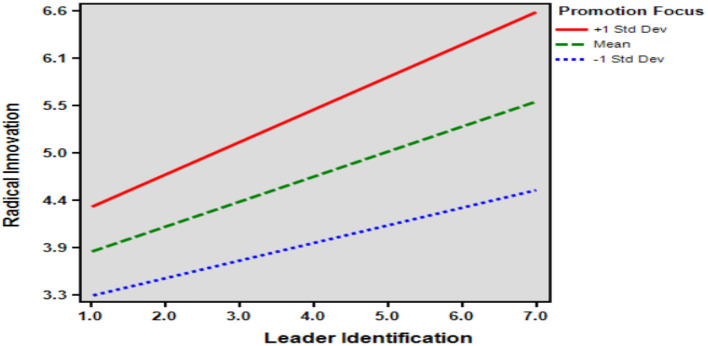
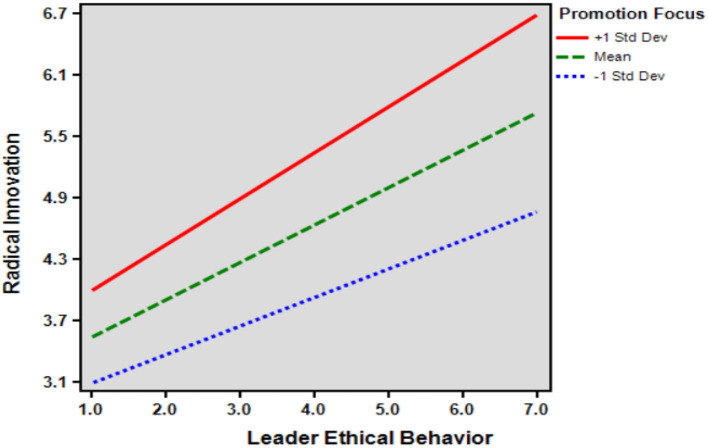
The findings reveal that leader ethical behavior positively influences both leader identification and radical innovation. Furthermore, leader identification mediates the relationship between leader ethical behavior and radical innovation. Promotion focus strengthens the effects of leader ethical behavior on radical innovation, as well as the impact of leader identification on radical innovation.
This study contributes to radical innovation research by integrating leader ethical behavior into the innovation discourse, extending theoretical perspectives beyond conventional drivers. The findings provide practical insights for organizations seeking to cultivate innovative work environments, enhance leader identification, and empower employees for radical innovation.
创新对于组织的生存和发展至关重要,激进创新推动变革性变化。尽管其意义重大,但促进员工激进创新的机制仍未得到充分探索。本研究考察领导者道德行为如何影响激进创新,为领导力在促进创新中的作用提供了新视角。
采用定量研究方法,利用来自中国中小企业371名员工的调查数据。运用结构方程模型(SEM)来检验将领导者道德行为与激进创新联系起来的研究模型,强调领导者认同的中介作用和促进焦点的调节作用。
研究结果表明,领导者道德行为对领导者认同和激进创新均有积极影响。此外,领导者认同在领导者道德行为与激进创新之间起中介作用。促进焦点增强了领导者道德行为对激进创新的影响,以及领导者认同对激进创新的影响。
本研究通过将领导者道德行为纳入创新论述,为激进创新研究做出了贡献,拓展了超越传统驱动因素的理论视角。研究结果为寻求培育创新工作环境、增强领导者认同并激励员工进行激进创新的组织提供了实际见解。