Onoiu Alina-Iuliana, Domínguez David Parada, Joven Jorge
Unitat de Recerca Biomèdica, Hospital Universitari Sant Joan, Universitat Rovira i Virgili, 43204 Reus, Spain.
Department of Medicine and Surgery, Faculty of Medicine, Universitat Rovira i Virgili, 43201 Reus, Spain.
Biomedicines. 2025 Apr 1;13(4):846. doi: 10.3390/biomedicines13040846.
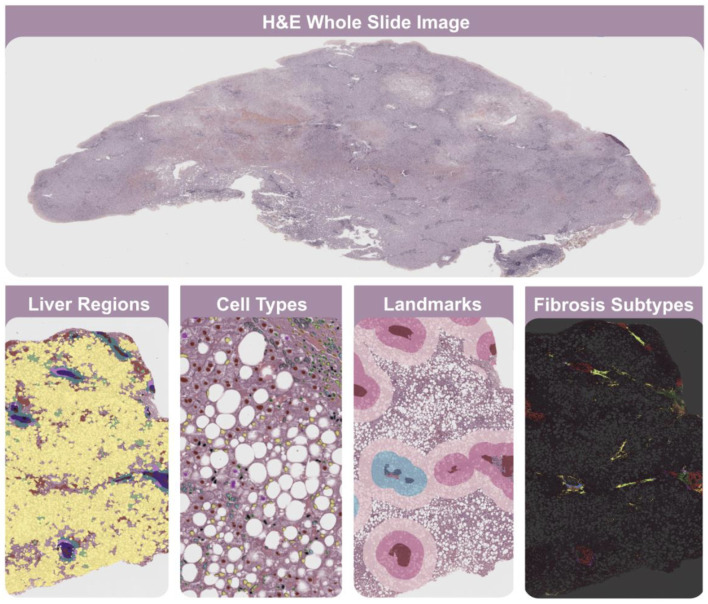
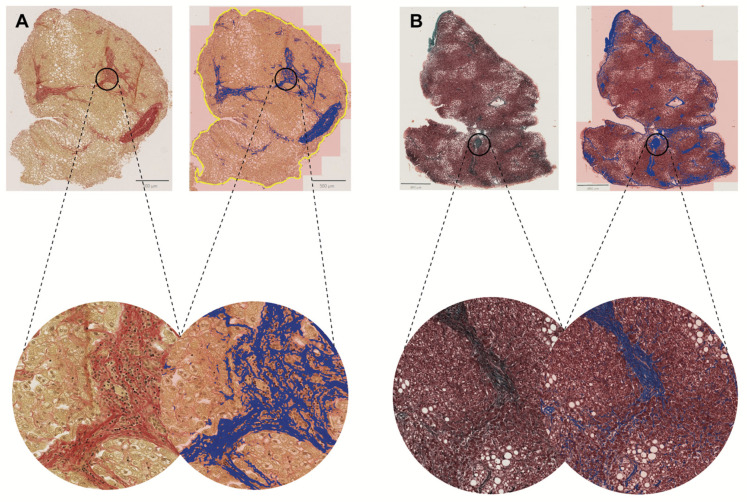
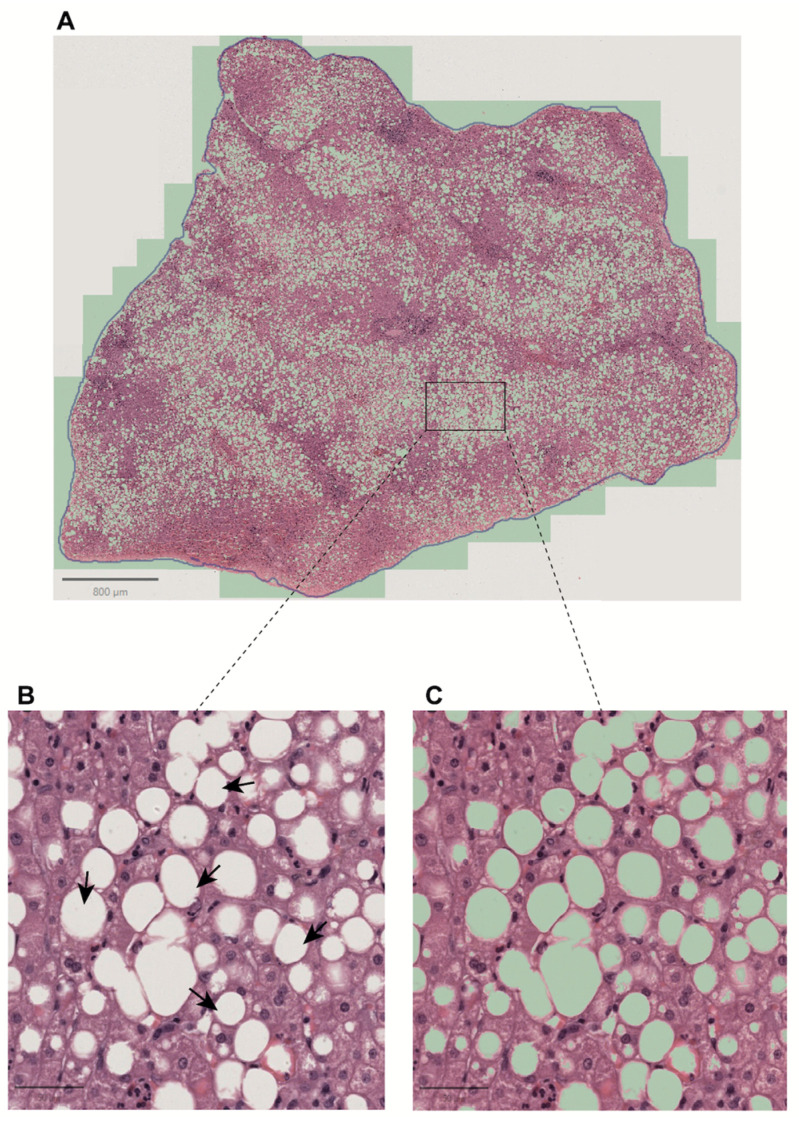
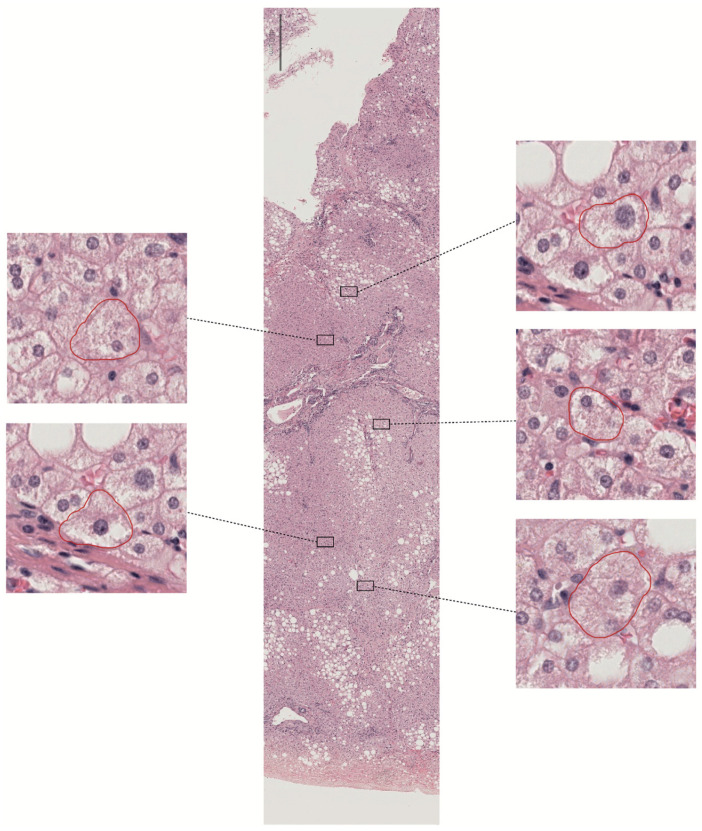
Improved image quality, better scanners, innovative software technologies, enhanced computational power, superior network connectivity, and the ease of virtual image reproduction and distribution are driving the potential use of digital pathology for diagnosis and education. Although relatively common in clinical oncology, its application in liver pathology is under development. Digital pathology and improving subjective histologic scoring systems could be essential in managing obesity-associated steatotic liver disease. The increasing use of digital pathology in analyzing liver specimens is particularly intriguing as it may offer a more detailed view of liver biology and eliminate the incomplete measurement of treatment responses in clinical trials. The objective and automated quantification of histological results may help establish standardized diagnosis, treatment, and assessment protocols, providing a foundation for personalized patient care. Our experience with artificial intelligence (AI)-based software enhances reproducibility and accuracy, enabling continuous scoring and detecting subtle changes that indicate disease progression or regression. Ongoing validation highlights the need for collaboration between pathologists and AI developers. Concurrently, automated image analysis can address issues related to the historical failure of clinical trials stemming from challenges in histologic assessment. We discuss how these novel tools can be incorporated into liver research and complement post-diagnosis scenarios where quantification is necessary, thus clarifying the evolving role of digital pathology in the field.
图像质量的提高、更好的扫描仪、创新的软件技术、增强的计算能力、卓越的网络连接以及虚拟图像再现和分发的便捷性,正推动着数字病理学在诊断和教育方面的潜在应用。尽管在临床肿瘤学中相对常见,但其在肝脏病理学中的应用仍在发展中。数字病理学以及改进主观组织学评分系统对于管理肥胖相关脂肪性肝病可能至关重要。数字病理学在分析肝脏标本中的使用日益增加,这尤其引人关注,因为它可能提供肝脏生物学更详细的视图,并消除临床试验中治疗反应测量不完整的问题。组织学结果的客观和自动量化可能有助于建立标准化的诊断、治疗和评估方案,为个性化患者护理提供基础。我们使用基于人工智能(AI)的软件的经验提高了可重复性和准确性,能够进行连续评分并检测表明疾病进展或消退的细微变化。正在进行的验证突出了病理学家和AI开发者之间合作的必要性。同时,自动图像分析可以解决与临床试验历史上因组织学评估挑战而失败相关的问题。我们讨论了如何将这些新工具纳入肝脏研究,并补充诊断后需要量化的情况,从而阐明数字病理学在该领域不断演变的作用。