Hong Liang, Huang Qian, Zhou Yuhang, Zheng Qi, Wang Shipeng, Chen Fangfang, Chang Xinyue, Jiang Guosheng, Zha Lisha
International Immunology Centre College of Animal Science and Technology Anhui Agricultural University, Hefei 230036, Anhui, China.
Institute of Basic Medicine Shandong Academy of Medical Sciences, Jinan 250062, Shandong, China.
Transbound Emerg Dis. 2024 Aug 24;2024:3680778. doi: 10.1155/2024/3680778. eCollection 2024.
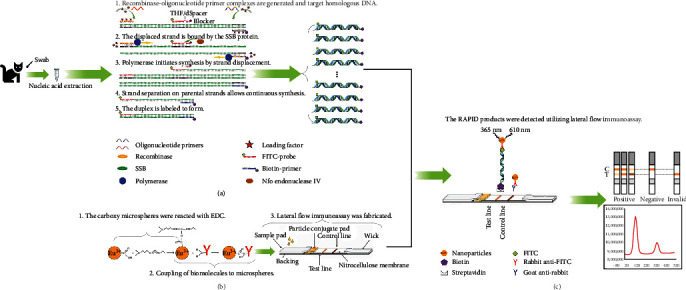
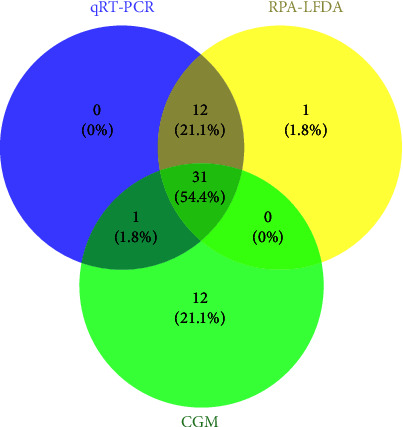
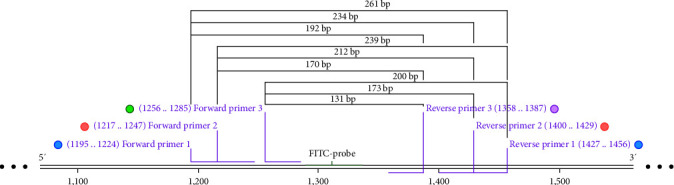
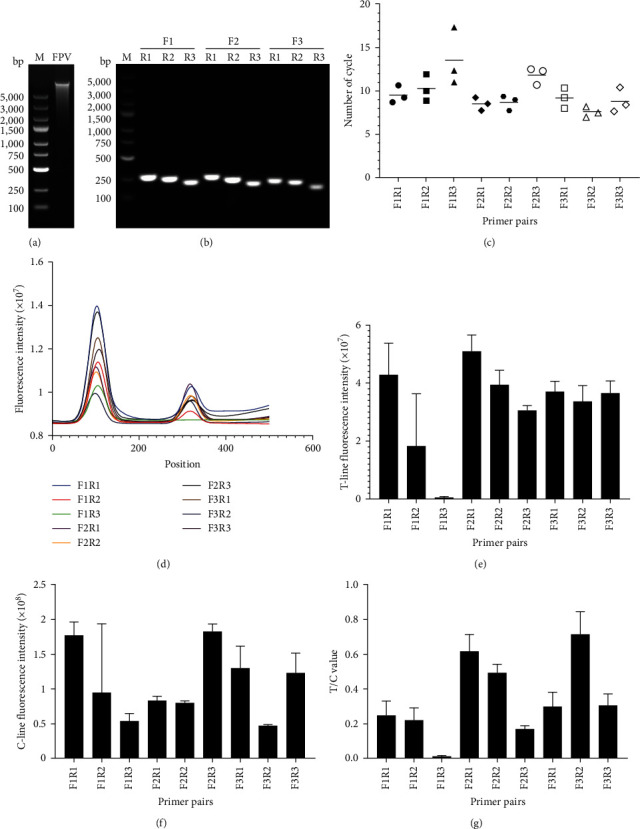
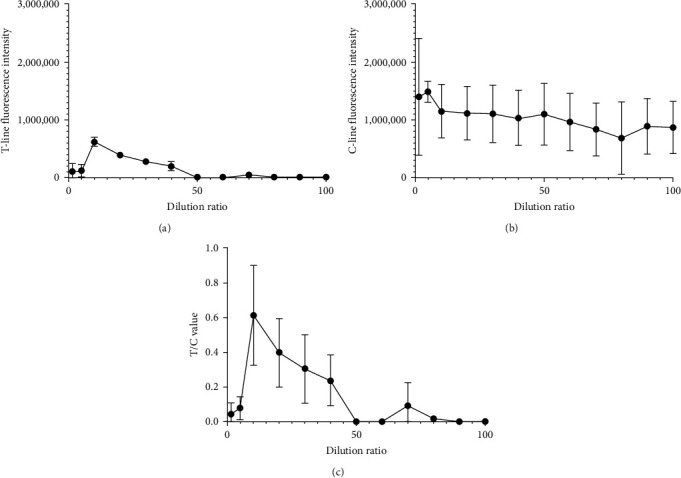
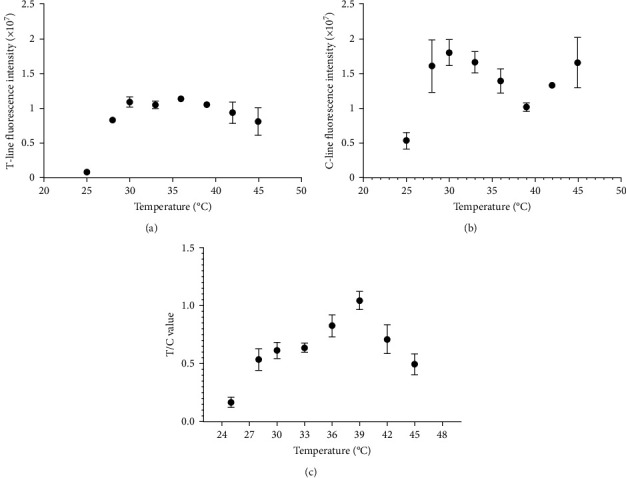
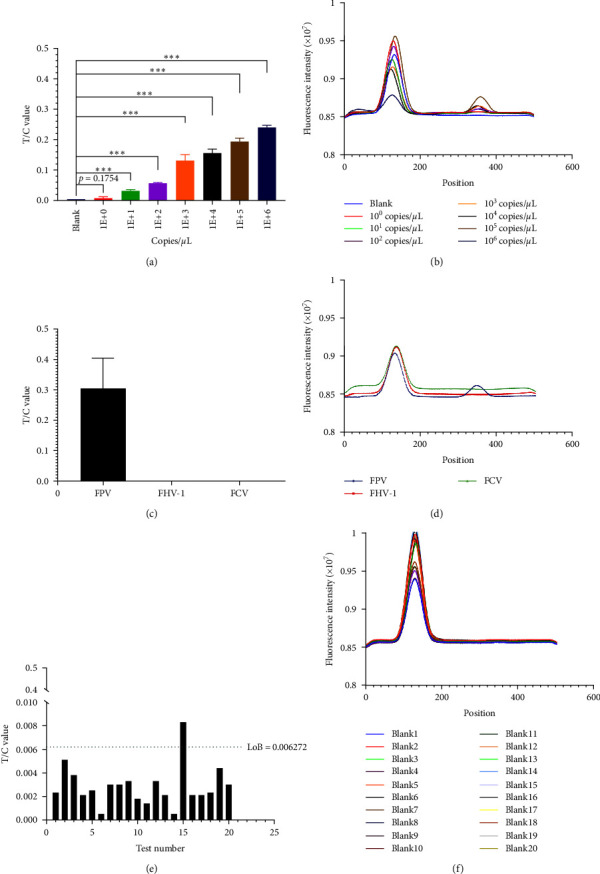
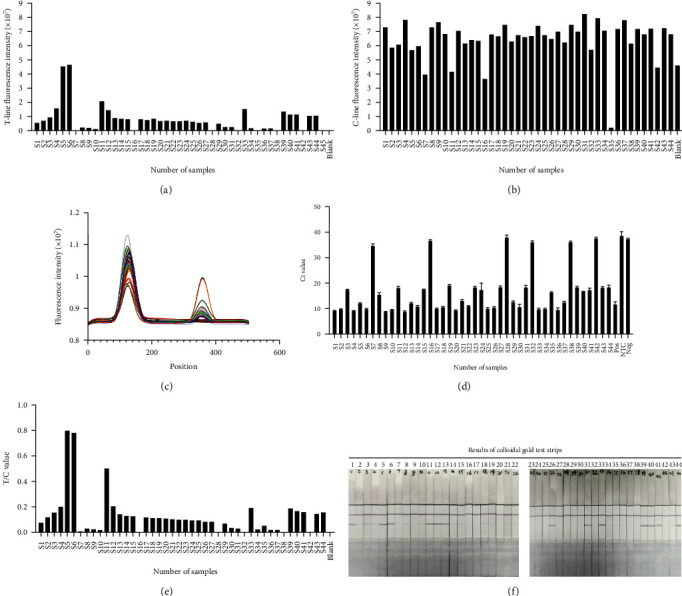
Feline panleukopenia (FP) is a highly prevalent and consequential disease that poses a substantial threat to both adult and juvenile cats across all geographical regions. The causative agent responsible for this disease is the feline panleukopenia virus (FPV). Therefore, it is imperative to develop a facile, efficient, and accurate detection method for FPV. Hence, a recombinase polymerase amplification-lateral flow dipstick assay (RPA-LFDA) method was specifically designed for the detection of FPV. The amplification process was optimized. This investigation focused on evaluating the expansion temperature detection system and revealed an optimal reaction temperature of 39°C. Then, primer combination screening involving nine groups identified F3R2 as the most effective primer set, while dilution ratio experiments determined that a 10-fold dilution yielded the best amplification products. Our findings demonstrated that the RPA-LFDA assay had an analytical sensitivity that was capable of detecting as low as 10 target copies per reaction. Furthermore, cross-reactivity tests demonstrated no interference between feline herpesvirus-1 (FHV-1) and feline calicivirus (FCV). To validate our newly developed method against existing techniques in clinical samples from three common sources on the market, we observed superior sensitivity and specificity compared to those of the colloidal gold method (CGM), with a higher positive detection rate using our nucleic acid detection system than CGM. Compared to qPCR as a reference standard, RPA-LFDA detected 39 out of 44 positive samples (including one false positive), whereas CGM detected 26 out of 44 positive samples. Based on the RPA-LFDA, the sensitivity was calculated to be 100%, the specificity was 83.33%, the mistake diagnostic rate was 16.67%, the omission diagnostic rate was 0%, and the overall accuracy reached 97.73%. Moreover, the positive coincidence rate was 97.44%, while the negative coincidence rate reached 100%. The agreement value was 0.8962. In conclusion, this approach exhibits greater sensitivity than CGM and offers greater convenience and cost-effectiveness than the qPCR methodology, making it a viable option for the clinical detection of FPV.
猫泛白细胞减少症(FP)是一种高度流行且后果严重的疾病,对所有地理区域的成年猫和幼猫都构成了重大威胁。引发这种疾病的病原体是猫泛白细胞减少症病毒(FPV)。因此,开发一种简便、高效且准确的FPV检测方法势在必行。于是,专门设计了一种重组酶聚合酶扩增-侧向流动试纸条检测法(RPA-LFDA)用于检测FPV。对扩增过程进行了优化。本研究着重评估扩增温度检测系统,发现最佳反应温度为39°C。然后,通过涉及九组的引物组合筛选确定F3R2为最有效的引物组,而稀释比例实验确定10倍稀释产生的扩增产物最佳。我们的研究结果表明,RPA-LFDA检测法的分析灵敏度能够低至每个反应检测10个目标拷贝。此外,交叉反应测试表明猫疱疹病毒1型(FHV-1)和猫杯状病毒(FCV)之间无干扰。为了在市场上三种常见来源的临床样本中,将我们新开发的方法与现有技术进行验证比较,我们观察到与胶体金法(CGM)相比,其具有更高的灵敏度和特异性,使用我们的核酸检测系统的阳性检出率高于CGM。与作为参考标准的qPCR相比,RPA-LFDA在44个阳性样本中检测出39个(包括1例假阳性),而CGM在44个阳性样本中检测出26个。基于RPA-LFDA,计算得出灵敏度为100%,特异性为83.33%,误诊率为16.67%,漏诊率为0%,总体准确率达到97.73%。此外,阳性符合率为97.44%,阴性符合率达到100%。一致性值为0.8962。总之,这种方法比CGM具有更高的灵敏度,并且比qPCR方法更方便、更具成本效益,使其成为临床检测FPV的可行选择。