Kim Jongmin, Orozaliev Ajymurat, Sahloul Sarah, Van Anh-Duc, Dang Van-Truong, Pham Van-Sang, Oh Yujeong, Chehade Ibrahim, Al-Sayegh Mohamed, Song Yong-Ak
Division of Engineering, New York University Abu Dhabi, P.O. Box 129188, Abu Dhabi, UAE.
Department of Mechanical and Aerospace Engineering, New York University Tandon School of Engineering, New York, New York 11201, United States.
Anal Chem. 2025 May 13;97(18):9858-9865. doi: 10.1021/acs.analchem.5c00256. Epub 2025 Apr 30.
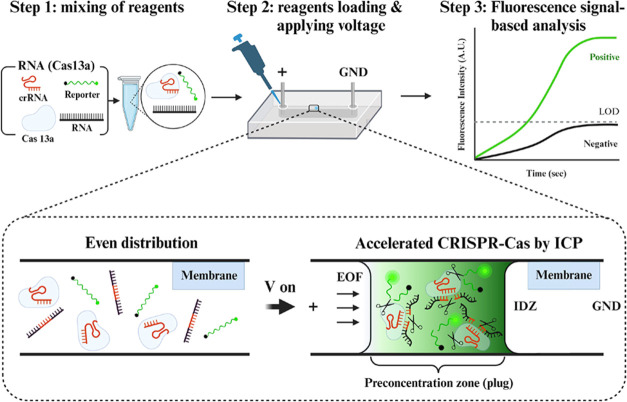
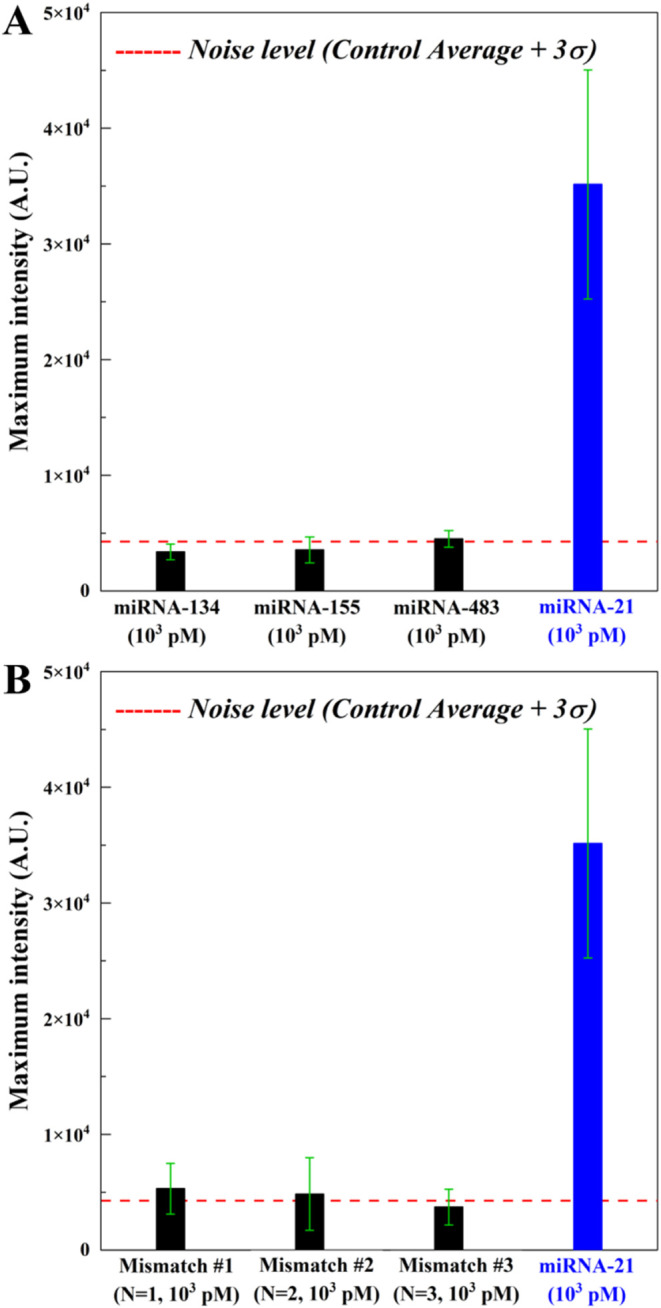
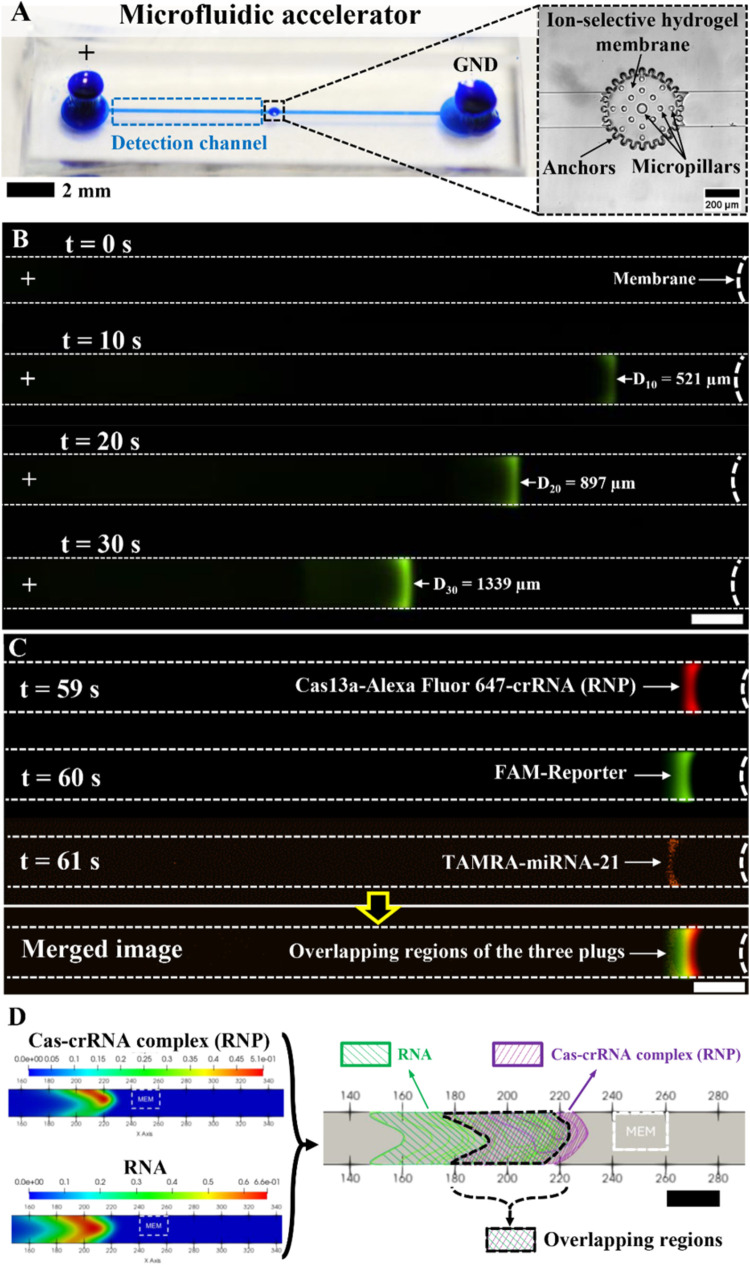
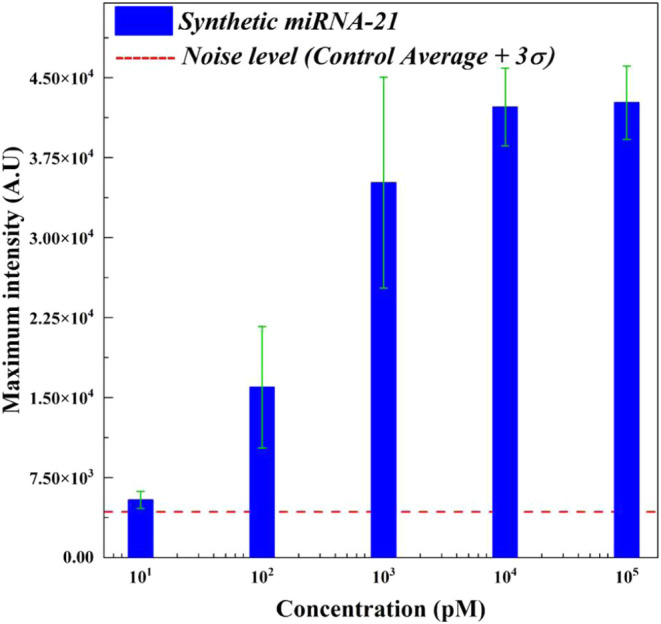
It is extremely advantageous to detect nucleic acid levels in the early phases of disease management; such early detection facilitates timely treatment, and it can prevent altogether certain cancers and infectious diseases. A simple, rapid, and versatile detection platform without enzymatic amplification for both short and long sequences would be highly desirable in this regard. Our study addresses this need by introducing IMACC, an CP-based icrofluidic ccelerator ombined with RISPR, for amplification-free nucleic acid detection. It exploits electrokinetically induced ion concentration polarization (ICP) to concentrate target nucleic acids and CRISPR reagents near the depletion zone boundary within a microfluidic channel. This localized accumulation accelerates the CRISPR-guided promiscuous cleavage of reporter molecules while enhancing their fluorescence signals simultaneously. Simultaneous accumulation of RNA and ribonucleoproteins (RNP) in confined spaces was validated experimentally and numerically, showing overlapping regions. IMACC enabled detection of miRNA-21 (22 bp) down to 10 pM within 2 min of ICP. IMACC ensured CRISPR specificity (single mismatch ( = 1) sensitivity) during ICP, as shown by off-target and mismatch sequence experiments. IMACC was applied to long RNA samples (i.e., SARS-CoV-2), but it statistically remained challenging at this point due to nonlinear intensity trends with copy numbers and large deviations. IMACC enabled rapid detection of short RNAs such as microRNAs using only basic CRISPR reagents in a single microfluidic channel, eliminating the need for extra enzymes or buffer sets, streamlining workflow and reducing turnaround time. IMACC has the potential to advance CRISPR diagnostics and holds promise for improved detection and future prescreening applications.
在疾病管理的早期阶段检测核酸水平具有极大优势;这种早期检测有助于及时治疗,并且可以完全预防某些癌症和传染病。在这方面,一个简单、快速且通用的无需酶扩增即可检测短序列和长序列的检测平台将是非常理想的。我们的研究通过引入IMACC来满足这一需求,IMACC是一种基于CP的微流控加速器与RISPR相结合的技术,用于无扩增核酸检测。它利用电动诱导离子浓度极化(ICP)将目标核酸和CRISPR试剂浓缩在微流控通道内的耗尽区边界附近。这种局部积累加速了CRISPR引导的报告分子的混杂切割,同时增强了它们的荧光信号。实验和数值验证了RNA和核糖核蛋白(RNP)在受限空间中的同时积累,显示出重叠区域。IMACC在ICP的2分钟内能够检测低至10 pM的miRNA-21(22 bp)。如脱靶和错配序列实验所示,IMACC在ICP期间确保了CRISPR特异性(单错配(=1)灵敏度)。IMACC被应用于长RNA样本(即SARS-CoV-2),但由于拷贝数的非线性强度趋势和较大偏差,在这一点上从统计学角度来看仍然具有挑战性。IMACC能够在单个微流控通道中仅使用基本的CRISPR试剂快速检测短RNA,如微小RNA,无需额外的酶或缓冲液组,简化了工作流程并减少了周转时间。IMACC有潜力推动CRISPR诊断,并有望改善检测和未来的预筛查应用。