Yang Kai, Zhang Wenyan, Li Ying, Wang Xianbin, Jiang Zhongliang, Hu Shujin, Jun JinHyun, Yang Qinghao, Li Jingyi, Hong Xu, Cui Yonghua, Lei Tianyuan
Department of Psychiatry, Beijing Children's Hospital, Capital Medical University, National Center for Children's Health, Beijing, 100045, China.
Laboratory for Clinical Medicine, Capital Medical University, Beijing, 100045, China.
BMC Pediatr. 2025 May 2;25(1):349. doi: 10.1186/s12887-025-05698-2.
Tic disorder (TD) is a diverse neurodevelopmental disorder with various symptoms and comorbidities. Traditional classifications based on age onset and duration fail to adequately characterize the full clinical features of TD. This study aims to redefine TD subtypes by a comprehensive analysis of clinical features and comorbidities.
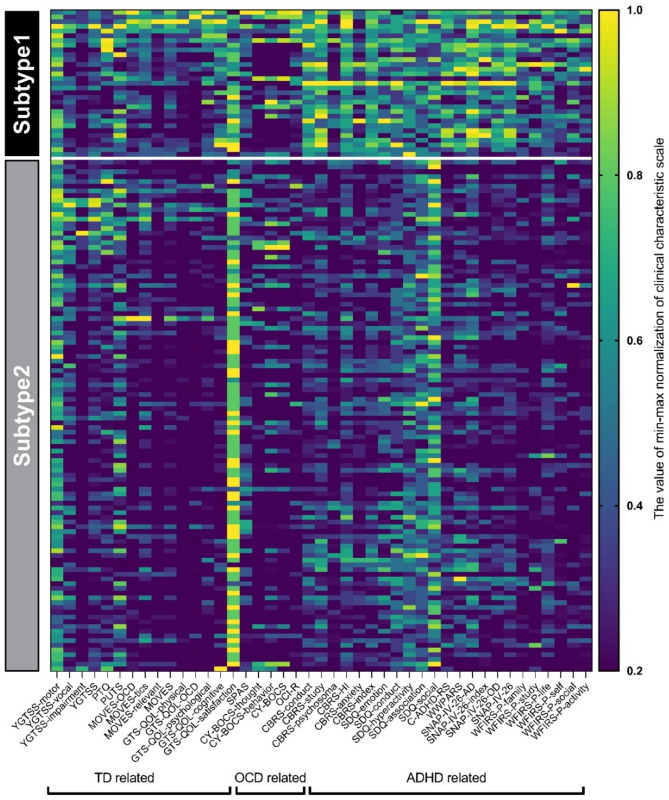
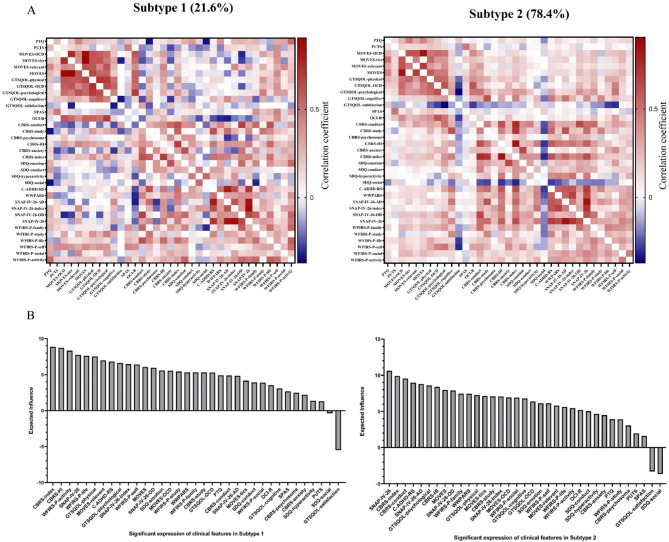
We assessed 139 children and adolescents aged 6-18 years using 14 scales covering 43 dimensions. The k-means clustering algorithm was used to identify distinct TD subtypes. Differences between these subtypes were analyzed using t-tests and network analysis, with high expected influence (EI) metric representing key symptoms within each subtype.
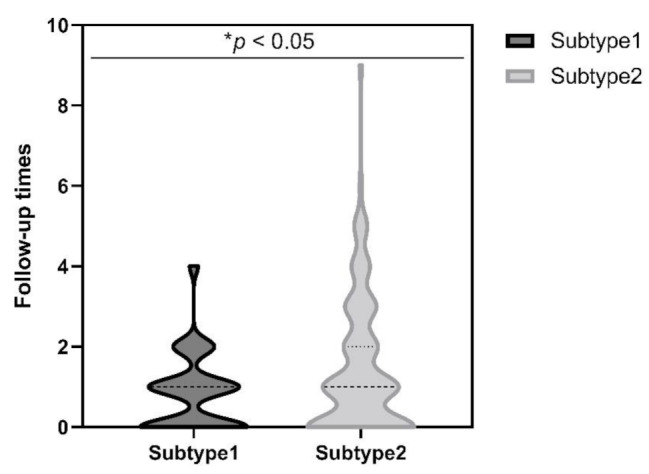
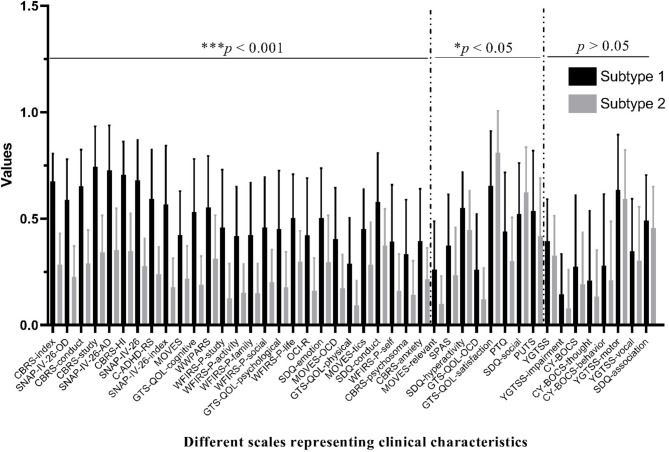
We identified two distinct subtypes of TD, with 21.6% of participants classified as subtype1 and 78.4% as subtype2. Subtype1 exhibited more severe symptoms across TD, obsessive-compulsive spectrum disorders, and attention deficit hyperactivity disorder assessments compared to subtype2, with significant differences observed in 81.4% of the scale features. Network analysis revealed differences in core symptoms between the two subtypes; subtype1 primarily involved hyperactivity and vital activities, whereas subtype2 primarily involved attention deficit, hyperactivity and conduct. Furthermore, comparisons with DSM-5 classifications revealed distinct patterns, indicating the novel nature of the identified subtypes.
Our study identified two novel TD subtypes, highlighting its heterogeneity. Subtype 1 had more severe attention deficits and impulsivity, requiring comprehensive treatment, while subtype 2 had milder symptoms, focusing on support and monitoring. These findings provide insights into TD classification and may help refine treatment strategies. However, the cross-sectional design limits causal interpretations, and reliance on parent-reported data may introduce bias.
抽动障碍(TD)是一种具有多种症状和共病的复杂神经发育障碍。基于发病年龄和病程的传统分类方法无法充分描述TD的全部临床特征。本研究旨在通过对临床特征和共病的综合分析重新定义TD亚型。
我们使用涵盖43个维度的14个量表对139名6至18岁的儿童和青少年进行了评估。采用k均值聚类算法识别不同的TD亚型。使用t检验和网络分析来分析这些亚型之间的差异,高预期影响(EI)指标代表每个亚型中的关键症状。
我们确定了两种不同的TD亚型,21.6%的参与者被归类为亚型1,78.4%为亚型2。与亚型2相比,亚型1在抽动障碍、强迫症谱系障碍和注意力缺陷多动障碍评估中表现出更严重的症状,在81.4%的量表特征上存在显著差异。网络分析揭示了两种亚型在核心症状上的差异;亚型1主要涉及多动和重要活动,而亚型2主要涉及注意力缺陷、多动和行为。此外,与《精神疾病诊断与统计手册》第5版(DSM-5)分类的比较显示出不同的模式,表明所确定亚型的新颖性。
我们的研究确定了两种新的TD亚型,突出了其异质性。亚型1有更严重的注意力缺陷和冲动性,需要综合治疗,而亚型2症状较轻,重点是支持和监测。这些发现为TD分类提供了见解,并可能有助于完善治疗策略。然而,横断面设计限制了因果解释,且依赖家长报告的数据可能会引入偏差。