Jiang Ning, Jiang Mingyan, Chen Jianshu, Mohsin Ali, Mu Yuqing, Yi Xiaoping, Zhuang Yingping, Qian Jiangchao, Huang Jiaofang
State Key Laboratory of Bioreactor Engineering, East China University of Science and Technology, Shanghai, China.
College of Life Sciences, Jiangxi Normal University, Nanchang, Jiangxi Province, China.
Biomater Transl. 2025 Mar 25;6(1):73-84. doi: 10.12336/biomatertransl.2025.01.006. eCollection 2025.
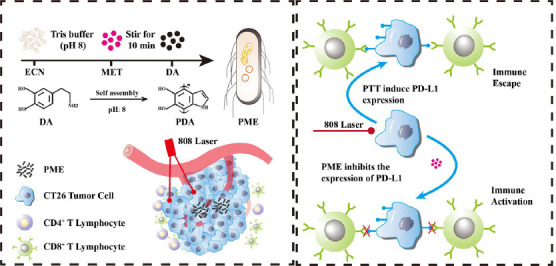
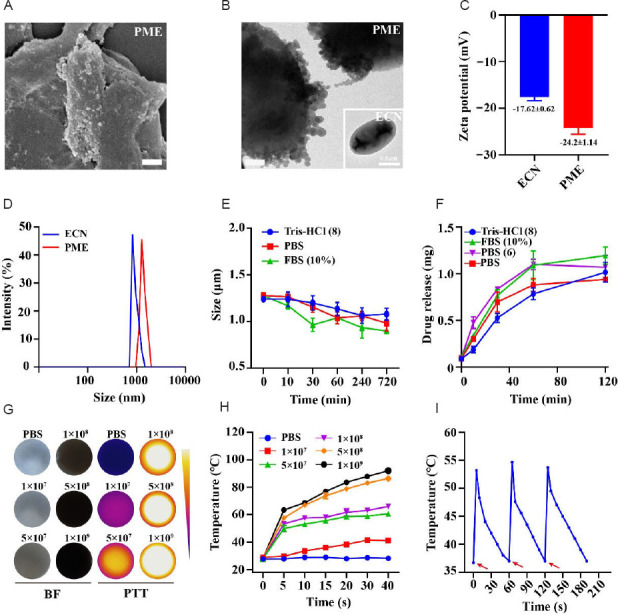
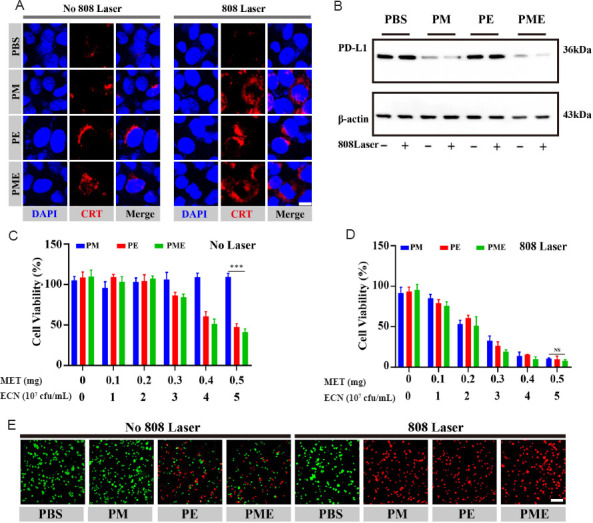
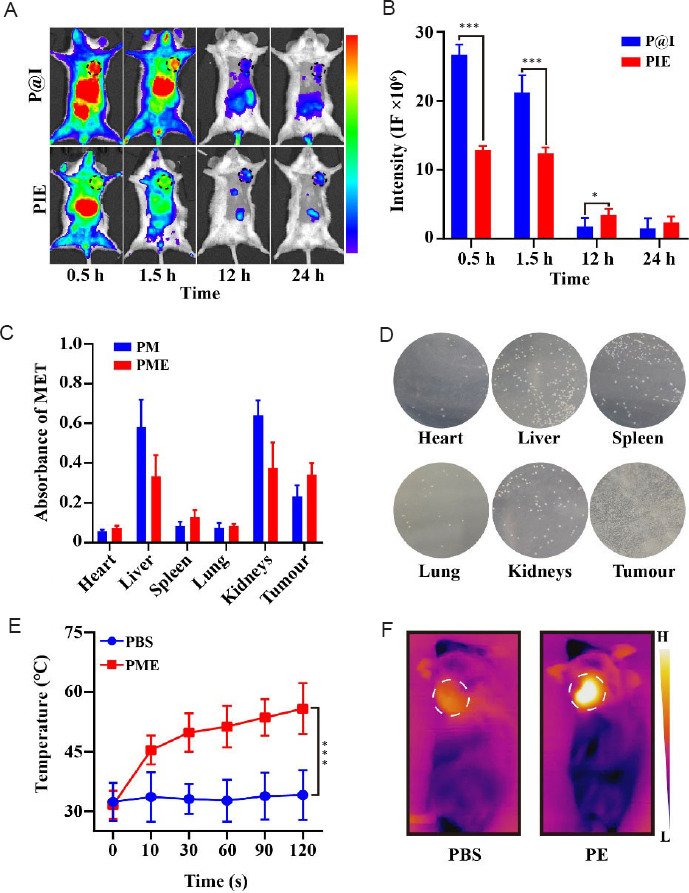
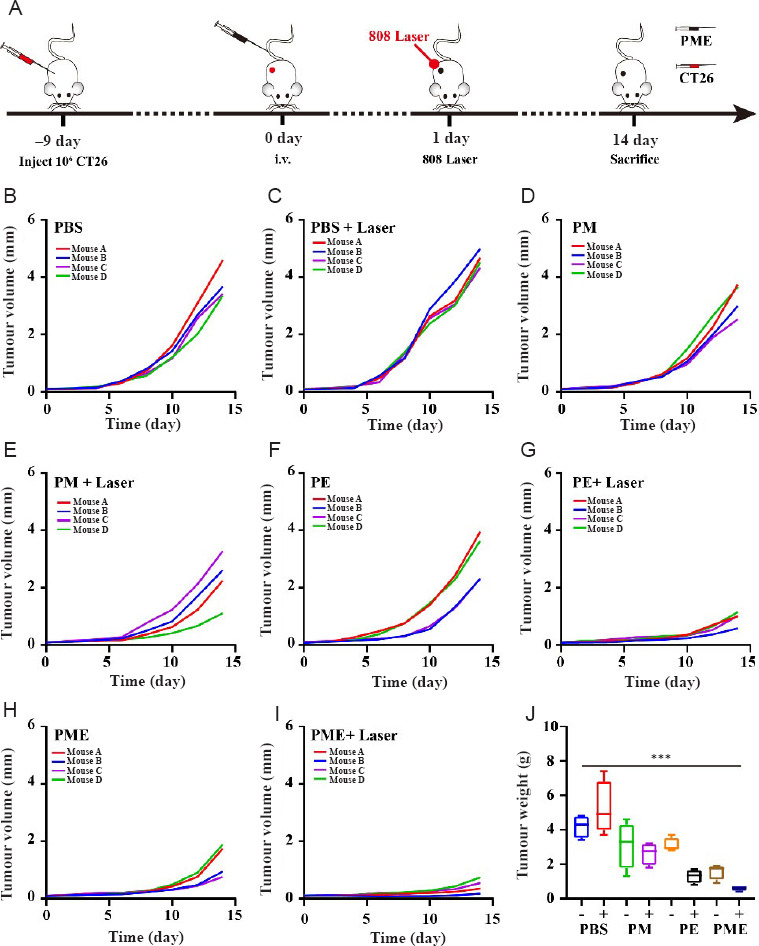
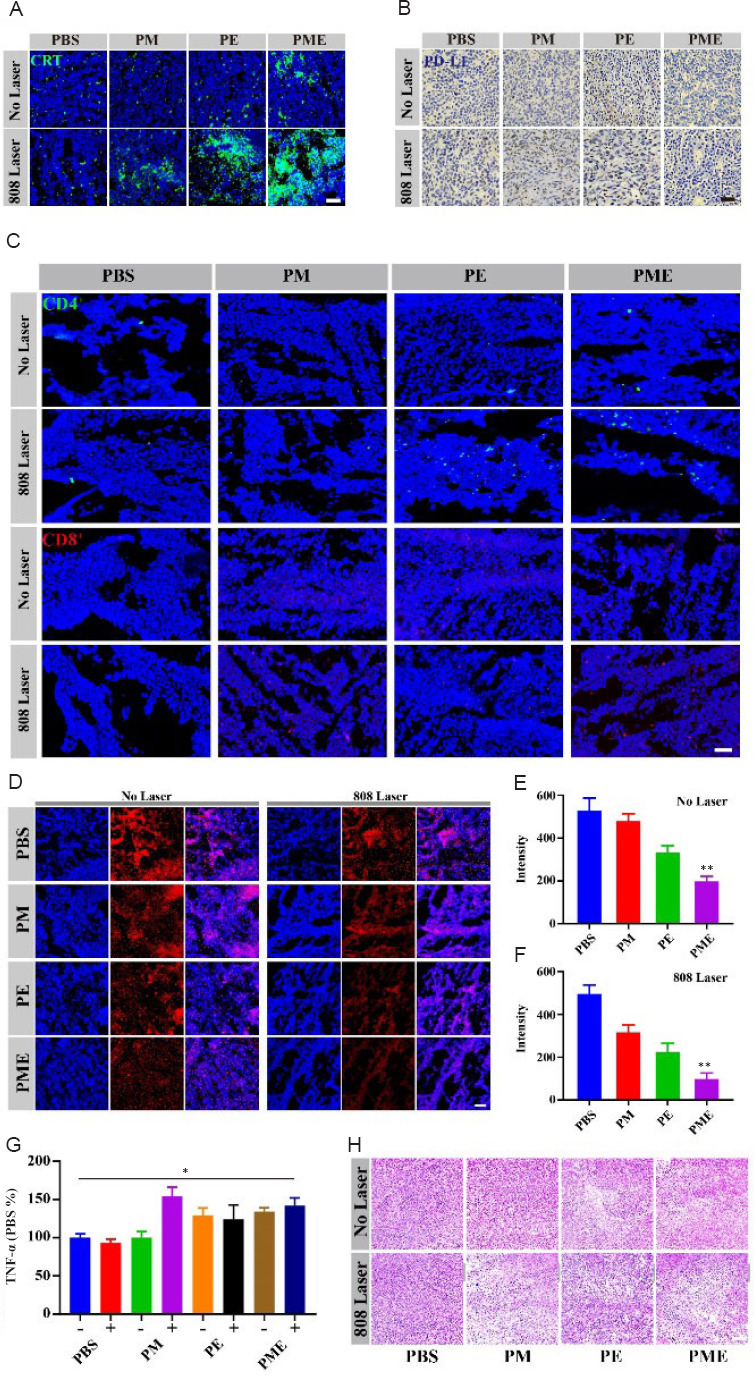
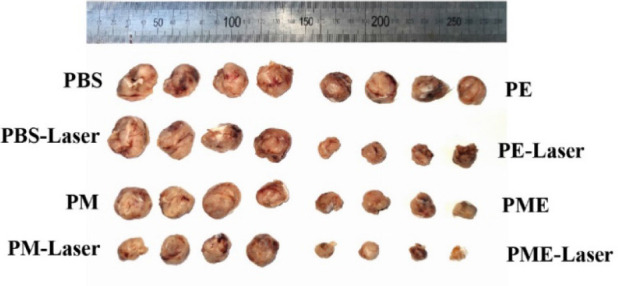
Photothermal therapy is a safe and effective tumour treatment strategy due to its excellent spatiotemporal controllability. However, interferon gamma in the tumour microenvironment is upregulated after photothermal therapy, which enhances the expression of programmed cell death ligand 1 (PD-L1) in tumour cells. This further promotes immunosuppression and tumour metastasis, resulting in a poor prognosis in cancer therapy. Traditional nanodrugs often face challenges in penetrating the dense extracellular matrix of solid tumours, whereas certain probiotics possess the ability to specifically colonise the core regions of tumours. In this research, we used Escherichia coli Nissle 1917 (ECN) as a chassis cell and self-assembly polydopamine (PDA) on the ECN surface. The black PDA@ECN (notes as PE) actively colonises at the tumour site and produces a photothermal effect under 808 nm laser irradiation to kill tumour cells. To overcome the high expression of PD-L1 induced after photothermal therapy, metformin (MET) was also encapsulated in PE to form PDA@MET@ECN (notes as PME). In vivo experiments demonstrated that PME effectively inhibited the PD-L1 expression and growth of CT26 tumour cells. Overall, PME reverses the immunosuppressive tumour microenvironment and enhances the effect of photothermal/immune therapy in tumour treatment.
光热疗法因其出色的时空可控性而成为一种安全有效的肿瘤治疗策略。然而,光热疗法后肿瘤微环境中的γ干扰素会上调,这会增强肿瘤细胞中程序性细胞死亡配体1(PD-L1)的表达。这进一步促进免疫抑制和肿瘤转移,导致癌症治疗预后不良。传统纳米药物在穿透实体瘤致密的细胞外基质时常常面临挑战,而某些益生菌具有特异性定殖于肿瘤核心区域的能力。在本研究中,我们使用大肠杆菌Nissle 1917(ECN)作为底盘细胞,并在ECN表面自组装聚多巴胺(PDA)。黑色的PDA@ECN(记为PE)在肿瘤部位积极定殖,并在808 nm激光照射下产生光热效应以杀死肿瘤细胞。为了克服光热疗法后诱导的PD-L1高表达,还将二甲双胍(MET)包裹在PE中以形成PDA@MET@ECN(记为PME)。体内实验表明,PME有效地抑制了CT26肿瘤细胞的PD-L1表达和生长。总体而言,PME逆转了免疫抑制性肿瘤微环境,并增强了光热/免疫疗法在肿瘤治疗中的效果。