Leduc Andrew, Xu Yanxin, Shipkovenska Gergana, Dou Zhixun, Slavov Nikolai
Departments of Bioengineering, Biology, Chemistry and Chemical Biology, Single Cell Proteomics Center, Northeastern University, Boston, MA, USA.
Center for Regenerative Medicine, Massachusetts General Hospital, Boston, MA, USA.
Nat Commun. 2025 May 5;16(1):4169. doi: 10.1038/s41467-025-56736-7.
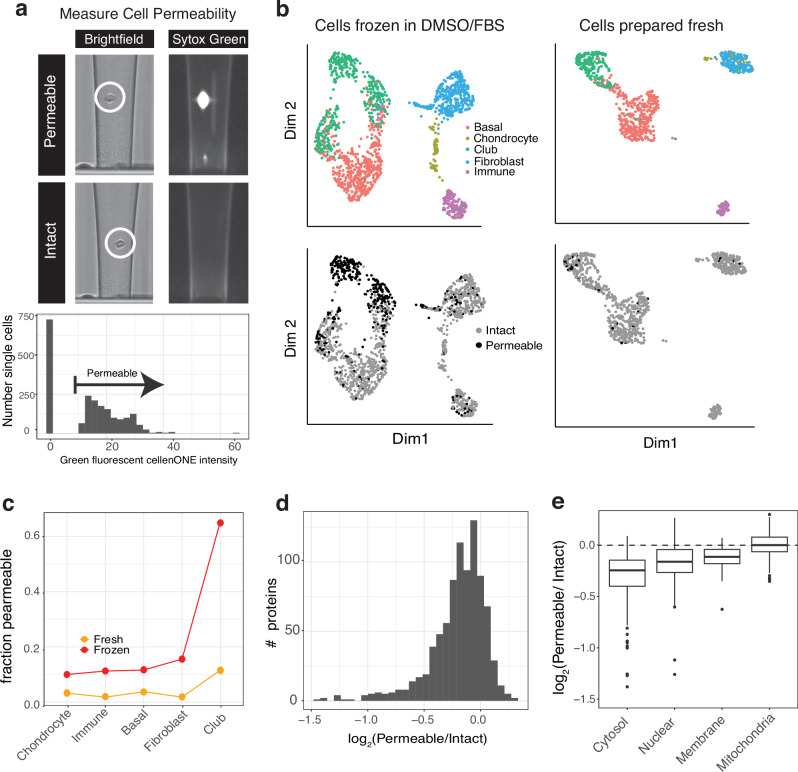
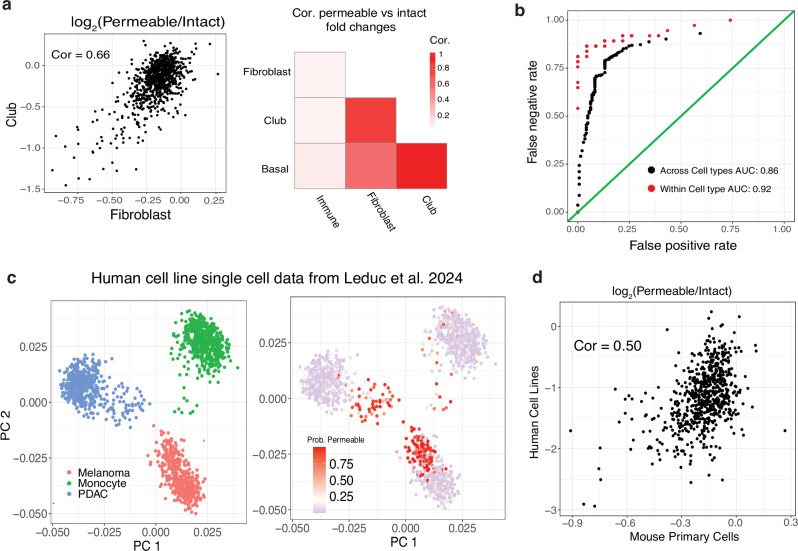
Limiting artifacts during sample preparation can significantly increase data quality in single-cell proteomics experiments. Towards this goal, we characterize the impact of protein leakage by analyzing thousands of primary single cells from mouse trachea. The cells were prepared either fresh immediately after dissociation or first cryopreserved and prepared at a later date. We directly identify permeabilized cells by imaging a cell permeable dye and use the data to define a signature for protein leakage. This signature is similar across diverse cell types and reflects increased leakage propensities for cytosolic and nuclear proteins compared to membrane and mitochondrial proteins. A classifier based on the signature allowed for the accurate identification of permeabilized cells across cell types and species. The classifier is integrated into QuantQC ( scp.slavovlab.net/QuantQC ) to support its application to diverse samples and workflows.
在单细胞蛋白质组学实验中,限制样品制备过程中的假象可显著提高数据质量。为实现这一目标,我们通过分析来自小鼠气管的数千个原代单细胞,来表征蛋白质渗漏的影响。这些细胞要么在解离后立即新鲜制备,要么先冷冻保存,随后再进行制备。我们通过对一种细胞可渗透染料成像来直接识别通透化细胞,并利用这些数据定义蛋白质渗漏的特征。这种特征在不同细胞类型中相似,并且与膜蛋白和线粒体蛋白相比,反映出胞质蛋白和核蛋白渗漏倾向增加。基于该特征的分类器能够准确识别不同细胞类型和物种中的通透化细胞。该分类器已集成到QuantQC(scp.slavovlab.net/QuantQC)中,以支持其应用于各种样品和工作流程。