Mrcela Dina, Deng Shuyu, Li You, Jukic Ivana, Markic Josko
Department of Pediatrics, University Hospital of Split, Spinčićeva 1, Split, Croatia.
Department of Epidemiology, National Vaccine Innovation Platform, School of Public Health, Nanjing Medical University, Nanjing, China.
Sci Rep. 2025 May 6;15(1):15838. doi: 10.1038/s41598-025-01021-2.
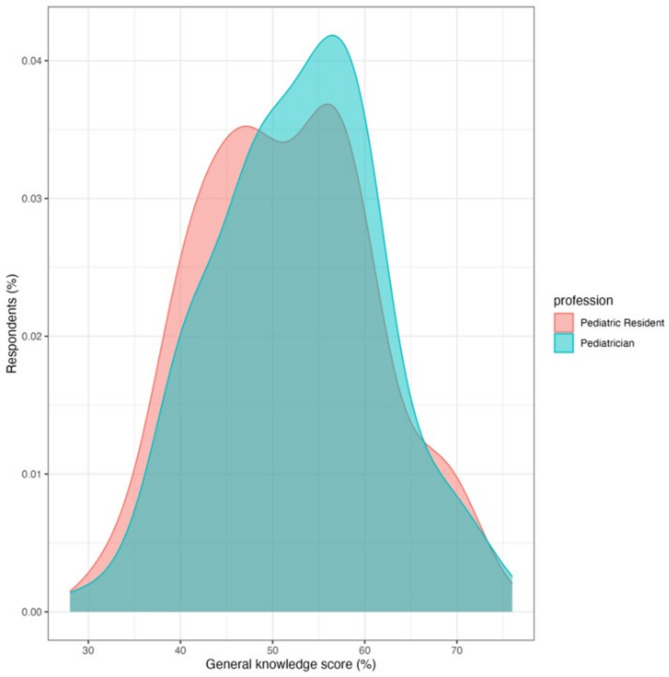
Respiratory syncytial virus (RSV) remains a significant global health challenge, particularly for young children and the elderly. This study examines Croatian pediatricians' and pediatric residents' knowledge, attitudes, and practices regarding RSV infection and its prevention. A cross-sectional survey was conducted among members of the Croatian Pediatric Association from June to August 2023. The survey included demographic data, knowledge about RSV, risk perception across age groups, and attitudes toward RSV vaccines and monoclonal antibodies (mAbs). Logistic regression analyses were conducted to identify factors influencing knowledge, attitudes, and practice outcomes. A total of 196 participants fulfilled the survey. General knowledge scores were comparable between pediatricians and residents. Pediatricians demonstrated higher risk perception for RSV in adults (OR = 4.89, 95% CI 1.91-12.54, p = 0.001). Attitudes toward RSV vaccines and mAbs were largely favorable, with prior experience in mAb use emerging as a key predictor of positive attitudes (OR = 2.10, 95% CI 1.07-4.12, p = 0.032). Regional differences were notable, with participants from Adriatic Croatia exhibiting more favorable attitudes toward mAb use than those in Pannonian Croatia (OR = 3.82, 95% CI 1.66-8.79, p = 0.002). Gender also influenced attitudes, with male physicians more likely to recognize mAb efficacy in preventing RSV infections (OR = 3.07, 95% CI 1.44-6.54, p = 0.004). The findings highlight favorable attitudes toward RSV prevention among Croatian pediatricians and residents, with variations influenced by mAb experience, regional factors, and gender. These insights emphasize the importance of targeted educational efforts to enhance the adoption of RSV preventive strategies.
呼吸道合胞病毒(RSV)仍然是一项重大的全球健康挑战,尤其是对幼儿和老年人而言。本研究调查了克罗地亚儿科医生和儿科住院医师对RSV感染及其预防的知识、态度和实践。2023年6月至8月,对克罗地亚儿科学会成员进行了一项横断面调查。该调查包括人口统计学数据、关于RSV的知识、各年龄组的风险认知以及对RSV疫苗和单克隆抗体(mAb)的态度。进行了逻辑回归分析,以确定影响知识、态度和实践结果的因素。共有196名参与者完成了调查。儿科医生和住院医师的一般知识得分相当。儿科医生对成人RSV的风险认知更高(OR = 4.89,95% CI 1.91 - 12.54,p = 0.001)。对RSV疫苗和mAb的态度总体上是积极的,使用mAb的既往经验是积极态度的关键预测因素(OR = 2.10,95% CI 1.07 - 4.12,p = 0.032)。地区差异显著,亚得里亚海克罗地亚地区的参与者对使用mAb的态度比潘诺尼亚克罗地亚地区的参与者更积极(OR = 3.82,95% CI 1.66 - 8.79,p = 0.002)。性别也影响态度,男医生更有可能认识到mAb在预防RSV感染方面的功效(OR = 3.07,95% CI 1.44 - 6.54,p = 0.004)。研究结果凸显了克罗地亚儿科医生和住院医师对RSV预防的积极态度,这些态度因mAb经验、地区因素和性别而有所不同。这些见解强调了有针对性的教育努力对于加强RSV预防策略采用的重要性。