Łosiński Karol, Bryndal Aleksandra, Grochulska Agnieszka, Nawos-Wysocki Wojciech, Glowinski Sebastian
Institute of Health Sciences, Pomeranian University in Slupsk, Westerplatte 64, 76-200, Slupsk, Poland.
State Higher School of Vocational Education in Koszalin, Koszalin, Poland.
Sci Rep. 2025 May 8;15(1):16126. doi: 10.1038/s41598-025-00510-8.
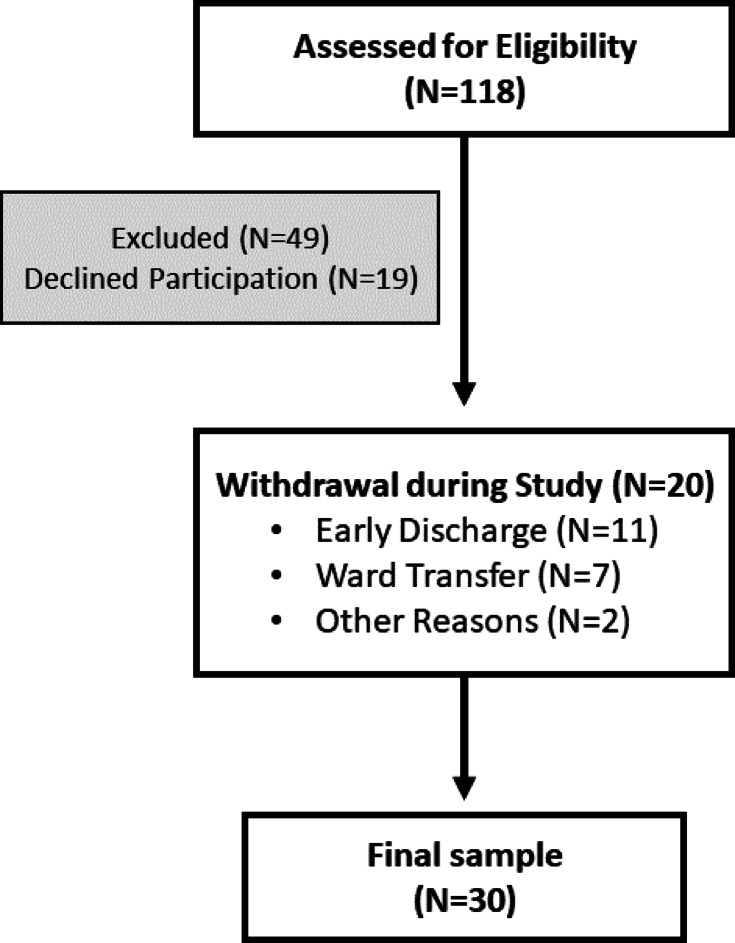
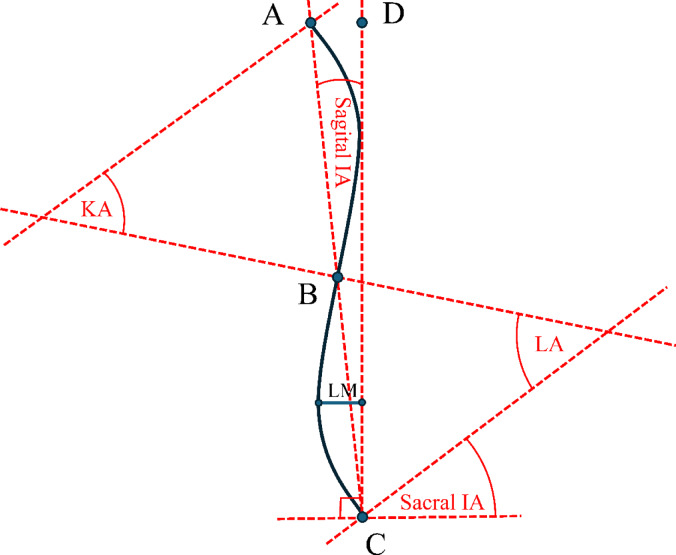
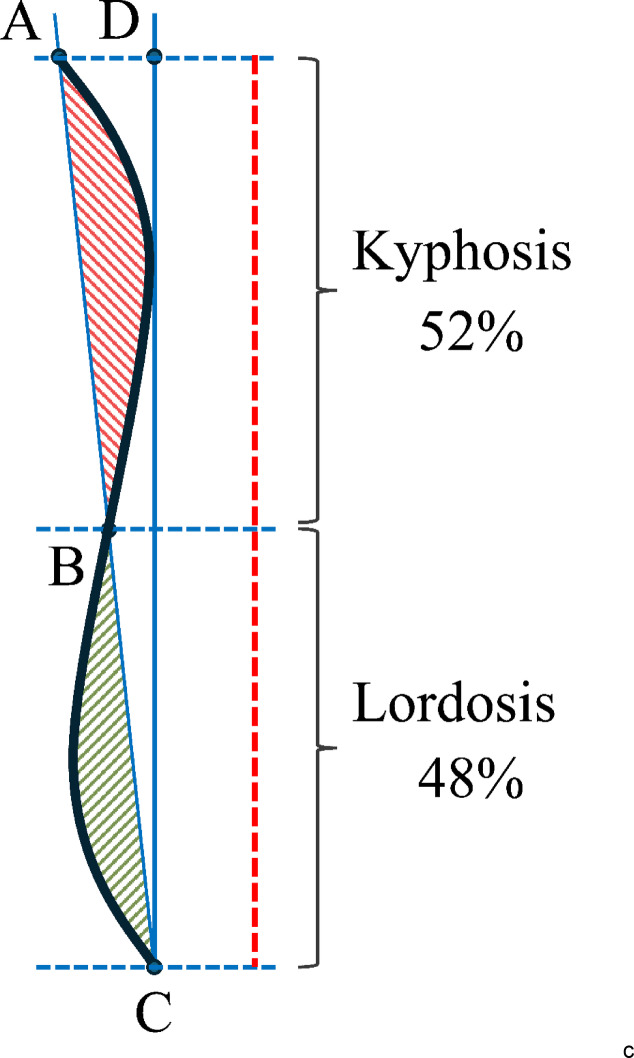
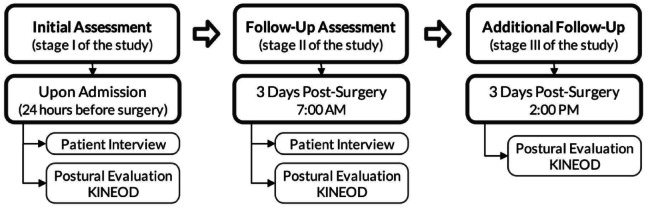
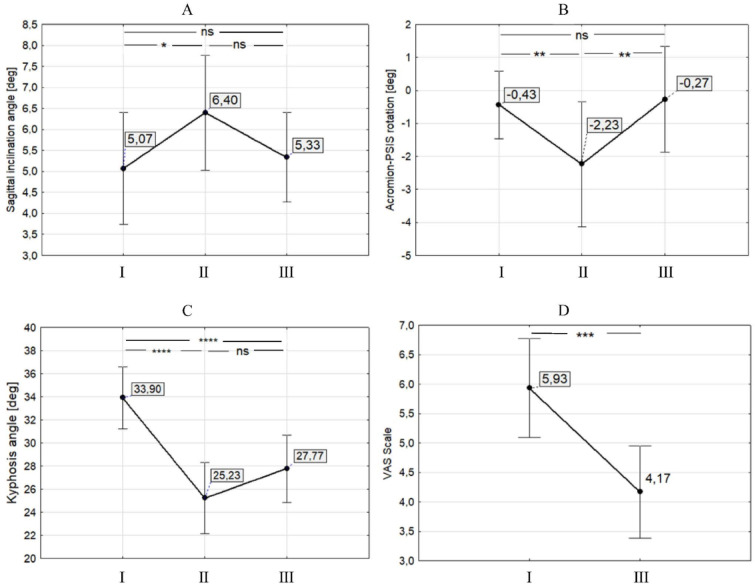
Open discectomy remains the standard procedure for decompressing neural structures in cases of intervertebral disc herniation. Early postoperative rehabilitation emphasizes protecting the surgical site while restoring functional independence in daily activities. In the absence of possibilities for performing any spinal control tests within the first few days post-surgery, the dynamism of curvature changes may be the sole criterion for evaluating rehabilitation progress. This study aims to evaluate the feasibility of utilizing the non-invasive KINEOD device to measure the dynamics of lumbosacral spinal alignment parameters in the sagittal plane before and immediately after surgical intervention. The study involved 30 patients (14 women [46.67%] and 16 men [53.33%]) from the Neurosurgical Department of the Wojewódzki Szpital Specjalistyczny in Słupsk, Poland. Data were collected using a custom questionnaire and KINEOD 3D posturography to assess body posture. The following parameters were analyzed: Sagittal Inclination Angle (Sagittal IA), Kyphosis Angle (KA), Lordosis Angle (LA), Sacral Inclination Angle (Sacral IA), Lordosis Measure (LM), Inflection Point (IP), and the Angle of Acromion-Posterior Superior Iliac Spine Rotation (A-PSIS). Measurements were conducted at three stages: Stage I - one day before surgery (2:00 PM); Stage II - on the third postoperative day (7:00 AM); and Stage III - on the third postoperative day (2:00 PM). Measurements utilizing the KINEOD device revealed statistically significant changes between Stage I and Stage II for the following parameters: Sagittal IA, KA, LA, Sacral IA, LM, IP, and A-PSIS. Significant changes were also noted between Stage I and Stage III for KA, LA, Sacral IA, LM, A-PSIS, and VAS. The study highlights that the reliability of KINEOD 3D assessment diminishes when relying solely on parameters such as Sacral IA and IP for postoperative lordosis evaluation. For rapid, non-invasive assessment of the lumbosacral spine post-surgery, Sacral IA may serve as a more accurate indicator of dynamic changes in the lower lumbar region. Postoperative alterations in all sagittal plane angles are influenced by both surgical intervention and, to a lesser extent, the diurnal adaptation rhythm.
对于椎间盘突出症患者,开放式椎间盘切除术仍然是减压神经结构的标准手术。术后早期康复强调在保护手术部位的同时,恢复日常活动中的功能独立性。在术后头几天无法进行任何脊柱控制测试的情况下,脊柱曲度变化的动态情况可能是评估康复进展的唯一标准。本研究旨在评估使用非侵入性KINEOD设备测量手术干预前后矢状面腰骶部脊柱排列参数动态变化的可行性。该研究纳入了波兰斯武普斯克 Wojewódzki Szpital Specjalistyczny神经外科的30例患者(14名女性[46.67%]和16名男性[53.33%])。通过定制问卷和KINEOD 3D姿势描记法收集数据以评估身体姿势。分析了以下参数:矢状面倾斜角(Sagittal IA)、后凸角(KA)、前凸角(LA)、骶骨倾斜角(Sacral IA)、前凸测量值(LM)、拐点(IP)以及肩峰-后上棘旋转角(A-PSIS)。测量在三个阶段进行:第一阶段——手术前一天下午2点;第二阶段——术后第三天上午7点;第三阶段——术后第三天下午2点。使用KINEOD设备进行的测量显示,在第一阶段和第二阶段之间,以下参数存在统计学上的显著变化:矢状面IA、KA、LA、骶骨IA、LM、IP和A-PSIS。在第一阶段和第三阶段之间,KA、LA、骶骨IA、LM、A-PSIS和视觉模拟评分(VAS)也有显著变化。该研究强调,仅依靠骶骨IA和IP等参数进行术后前凸评估时,KINEOD 3D评估的可靠性会降低。对于术后腰骶部脊柱的快速、非侵入性评估,骶骨IA可能是下腰椎区域动态变化更准确的指标。矢状面所有角度的术后改变均受手术干预影响,且在较小程度上受昼夜适应节律影响。