Maguire Tessa, Young Maicee, Najda Monica, Jackson Hannah, Ryan Jo, Furness Trentham, McKenna Brian
Centre for Forensic Behavioural Science, Swinburne University of Technology, Melbourne, Victoria, Australia.
The Victorian Institute of Forensic Mental Health (Forensicare), Melbourne, Victoria, Australia.
Int J Ment Health Nurs. 2025 Jun;34(3):e70036. doi: 10.1111/inm.70036.
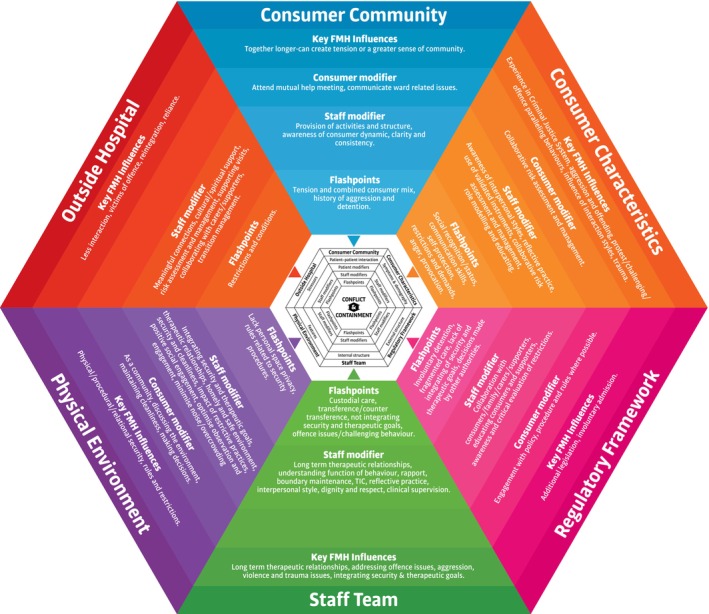
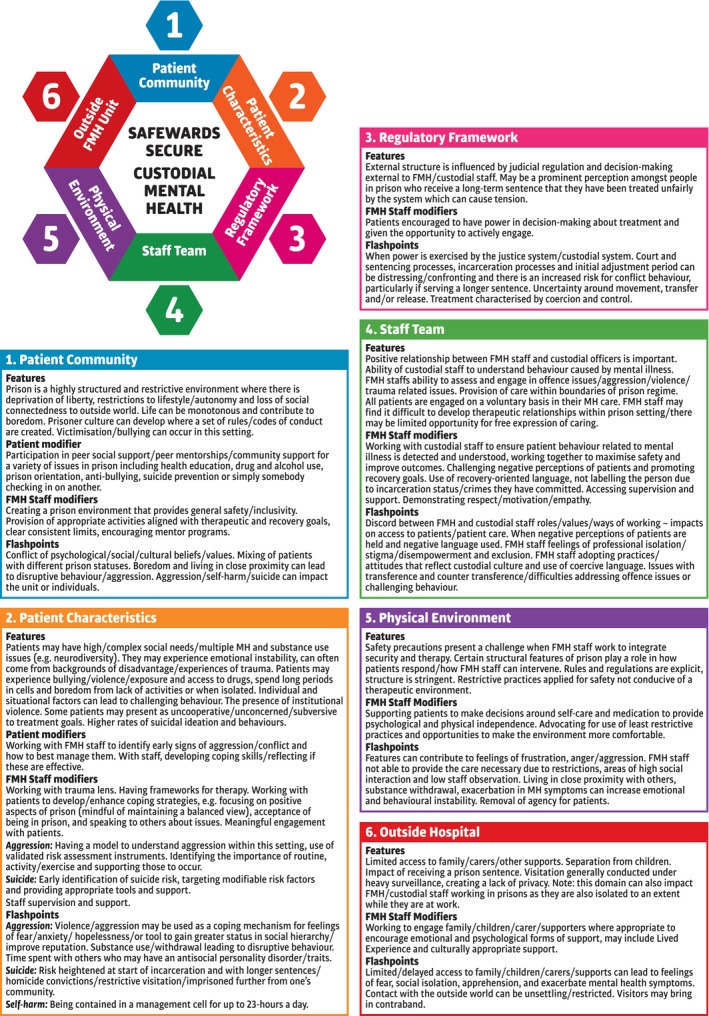
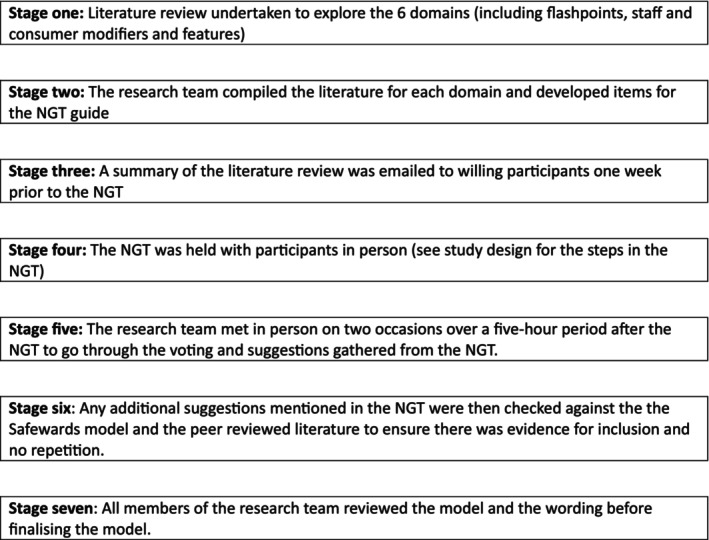
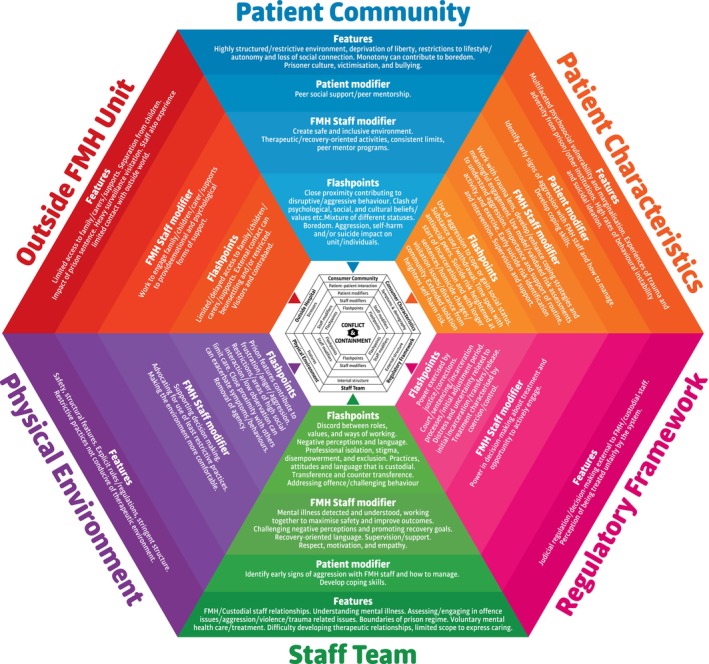
The introduction of Safewards has resulted in the reduction of conflict and containment in general mental health units, and an adaptation has been developed for secure hospitals in forensic mental health services. Forensic mental health nurses working in bed-based prison mental health units could benefit from having a model to assist conflict and containment reduction in their unique context. The aim of this study was to develop a version of Safewards for bed-based prison mental health nurses. A literature review was conducted to identify relevant features of bed-based prison mental health units including flashpoints, and staff and consumer modifiers. A summary of the review was presented to participants prior to a Nominal Group Technique (NGT) with nurses and other disciplines (working in bed-based prison mental health units) (n = 12). The NGT was used to elicit feedback about the proposed model and achieve agreement on several questions related to the proposed version. Data collected were analysed thematically. Two themes were interpreted: (1) 'Square peg, round hole': the stark difference between custodial and Forensic Mental Health staff values and aims; and (2) nothing can happen without custodial staff support. Consensus was reached on all suggested changes/additions to the model. Findings support the need for an adapted version of Safewards (Safewards Secure-Custodial Mental Health) to assist nurses working in this setting. However, modifiers for custodial staff require development and collaboration with Correctional services will also be essential for successful implementation in this setting.
“安全保障措施”的引入已使普通精神科病房的冲突和约束减少,并且已针对法医精神卫生服务中的安全医院开发了一种适应性措施。在基于床位的监狱精神卫生病房工作的法医精神卫生护士可能会受益于一种能在其独特环境中协助减少冲突和约束的模式。本研究的目的是为基于床位的监狱精神卫生护士开发一个“安全保障措施”版本。进行了文献综述,以确定基于床位的监狱精神卫生病房的相关特征,包括冲突爆发点以及工作人员和患者的影响因素。在与护士及其他学科(在基于床位的监狱精神卫生病房工作)(n = 12)进行名义小组技术(NGT)之前,向参与者展示了综述摘要。使用NGT来征求对提议模式的反馈,并就与提议版本相关的几个问题达成一致。对收集到的数据进行了主题分析。解读出两个主题:(1)“方枘圆凿”:监管人员与法医精神卫生工作人员的价值观和目标之间存在明显差异;(2)没有监管人员的支持,什么都做不成。就对该模式所有建议的更改/补充达成了共识。研究结果支持需要一个“安全保障措施”的改编版本(安全保障措施——安全监管精神卫生)来协助在此环境中工作的护士。然而,监管人员的影响因素需要进一步制定,并且与惩教服务部门的合作对于在该环境中的成功实施也至关重要。