Krishnamurthy Shivani, Gunasegaran Bavani, Paul-Heng Moumita, Mohamedali Abidali, P Klare William, Pang C N Ignatius, Gluch Laurence, Shin Joo-Shik, Chan Charles, Baker Mark S, Ahn Seong Beom, Heng Benjamin
Macquarie Medical School, Faculty of Medicine, Health and Human Sciences, Macquarie University, Sydney, Australia.
Transplantation Immunobiology Research Group, Charles Perkins Centre, The University of Sydney, Sydney, Australia.
Commun Chem. 2025 May 10;8(1):141. doi: 10.1038/s42004-025-01531-0.
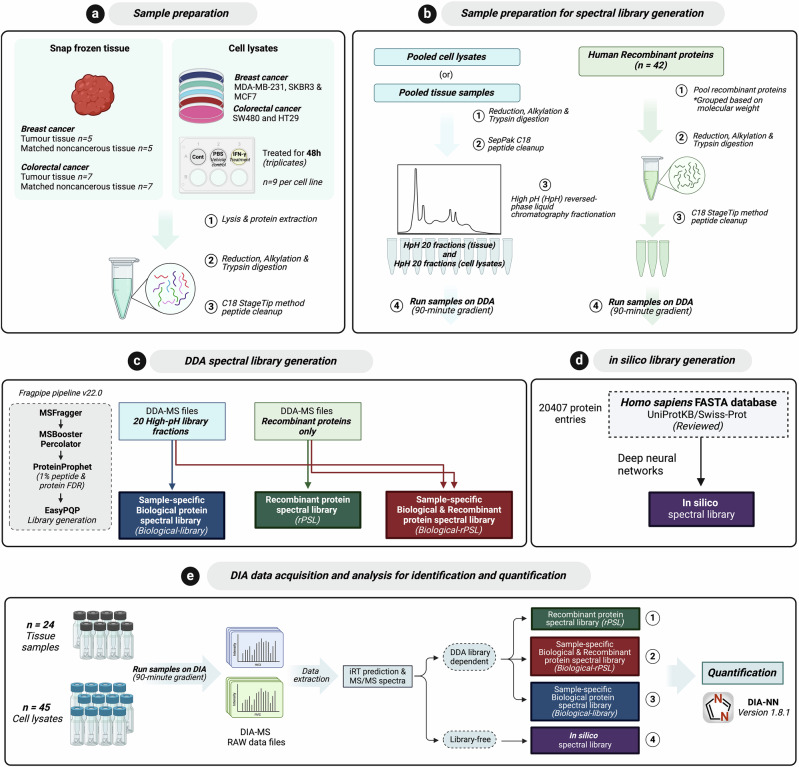
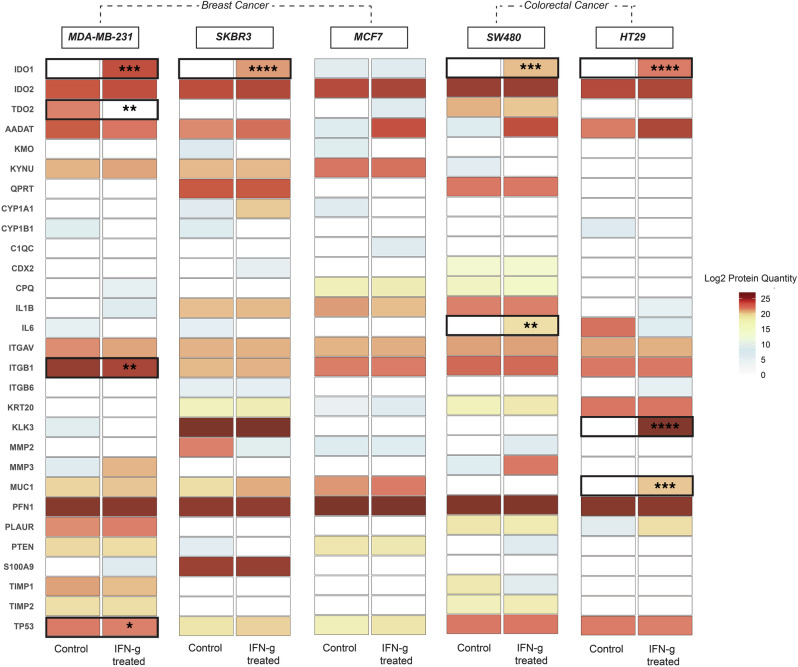
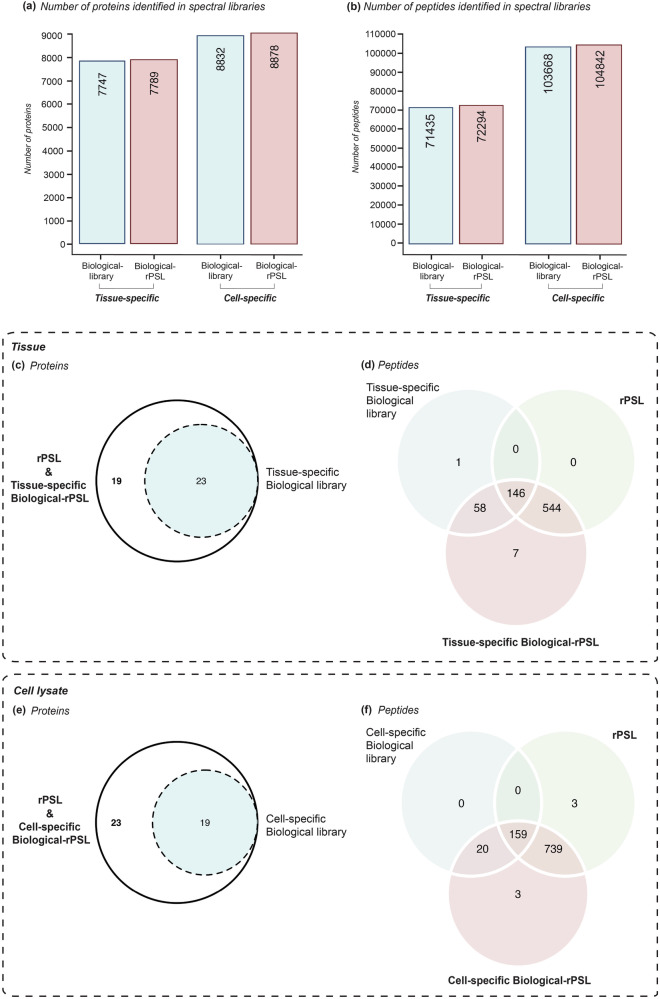
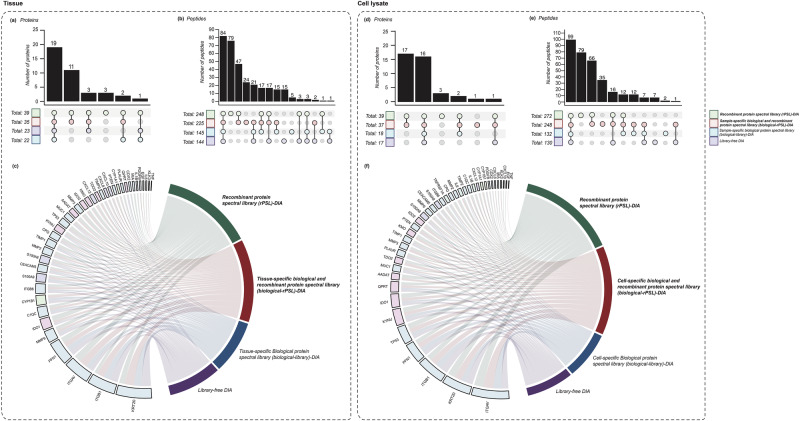
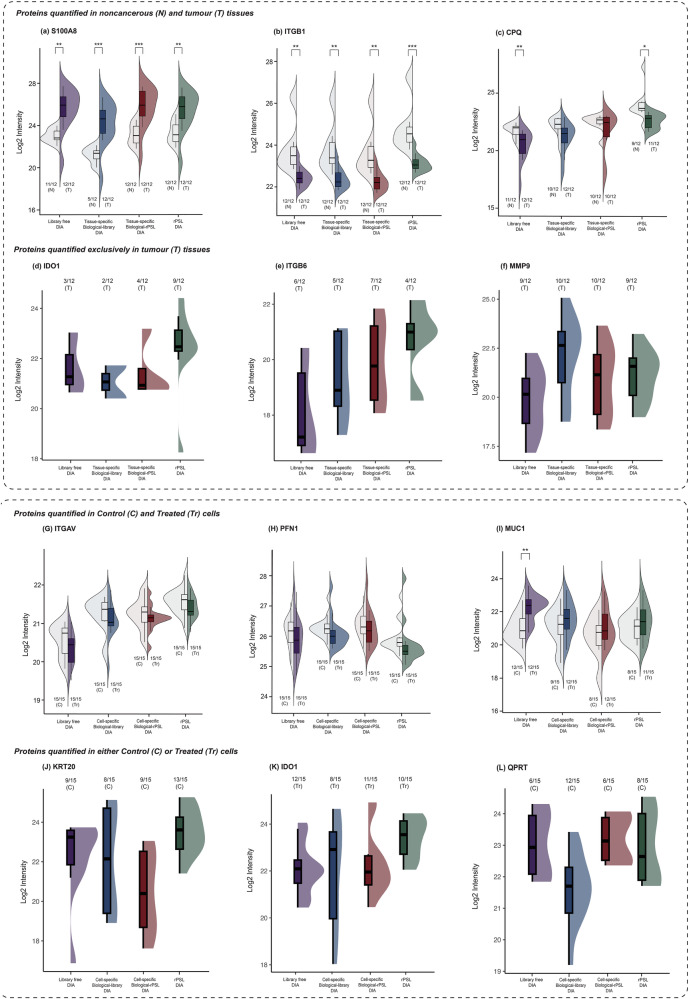
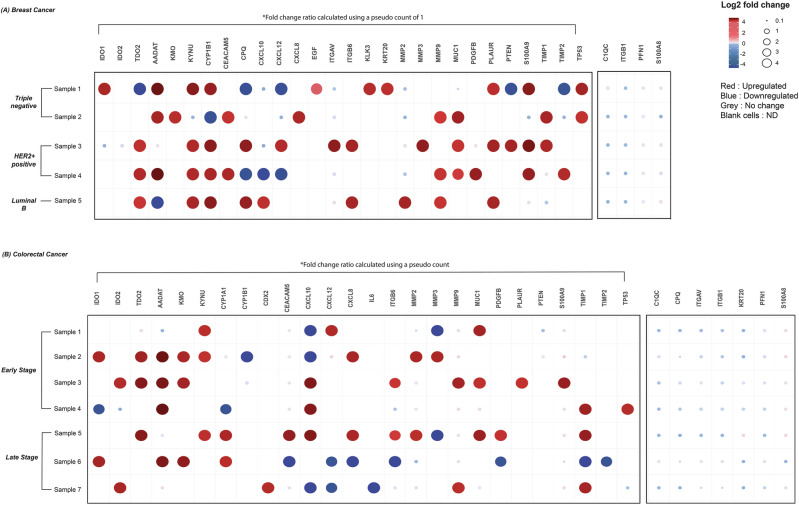
Data-independent acquisition mass spectrometry (DIA-MS) is a powerful tool for quantitative proteomics, but a well-constructed reference spectral library is crucial to optimize DIA analysis, particularly for low-abundance proteins. In this study, we evaluate the efficacy of a recombinant protein spectral library (rPSL), generated from tryptic digestion of 42 human recombinant proteins, in enhancing the detection and quantification of lower-abundance cancer-associated proteins. Additionally, we generated a combined sample-specific biological-rPSL by integrating the rPSL with a spectral library derived from pooled biological samples. We compared the performance of these libraries for DIA data extraction with standard methods, including sample-specific biological spectral library and library-free DIA methods. Our specific focus was on quantifying cancer-associated proteins, including key enzymes involved in kynurenine pathway, across patient-derived tissues and cell lines. Both rPSL and biological-rPSL-DIA approaches provided significantly improved coverage of lower-abundance proteins, enhancing sensitivity and more consistent protein quantification across matched tumour and adjacent noncancerous tissues from breast and colorectal cancer patients and in cancer cell lines. Overall, our study demonstrates that rPSL and biological-rPSL coupled with DIA-MS workflows, can address the limitations of both biological library-based and library-free DIA methods, offering a robust approach for quantifying low-abundance cancer-associated proteins in complex biological samples.
数据非依赖型采集质谱(DIA-MS)是定量蛋白质组学的一种强大工具,但构建良好的参考光谱库对于优化DIA分析至关重要,特别是对于低丰度蛋白质。在本研究中,我们评估了由42种人类重组蛋白的胰蛋白酶消化产生的重组蛋白光谱库(rPSL)在增强低丰度癌症相关蛋白的检测和定量方面的功效。此外,我们通过将rPSL与来自混合生物样品的光谱库整合,生成了一个组合的样本特异性生物-rPSL。我们将这些库用于DIA数据提取的性能与标准方法进行了比较,包括样本特异性生物光谱库和无库DIA方法。我们特别关注的是在患者来源的组织和细胞系中对癌症相关蛋白进行定量,包括参与犬尿氨酸途径的关键酶。rPSL和生物-rPSL-DIA方法都显著提高了低丰度蛋白的覆盖范围,增强了灵敏度,并在来自乳腺癌和结直肠癌患者的匹配肿瘤组织和相邻非癌组织以及癌细胞系中实现了更一致的蛋白定量。总体而言,我们的研究表明,rPSL和生物-rPSL与DIA-MS工作流程相结合,可以解决基于生物库和无库DIA方法的局限性,为在复杂生物样品中定量低丰度癌症相关蛋白提供了一种强大的方法。