Li Yun, Zhu Hui, Zhou Fei, Zheng YuZhong, Zhang Yiyan, Zheng Yinhua
School of Life Sciences and Food Engineering, Hanshan Normal University, Qiaodong, Chaozhou, 521041, Guangdong, China.
Guangdong Provincial Key Laboratory of Functional Substances in Medicinal Edible Resources and Healthcare Products, Chaozhou, 521041, Guangdong, China.
Sci Rep. 2025 May 12;15(1):16497. doi: 10.1038/s41598-025-98265-9.
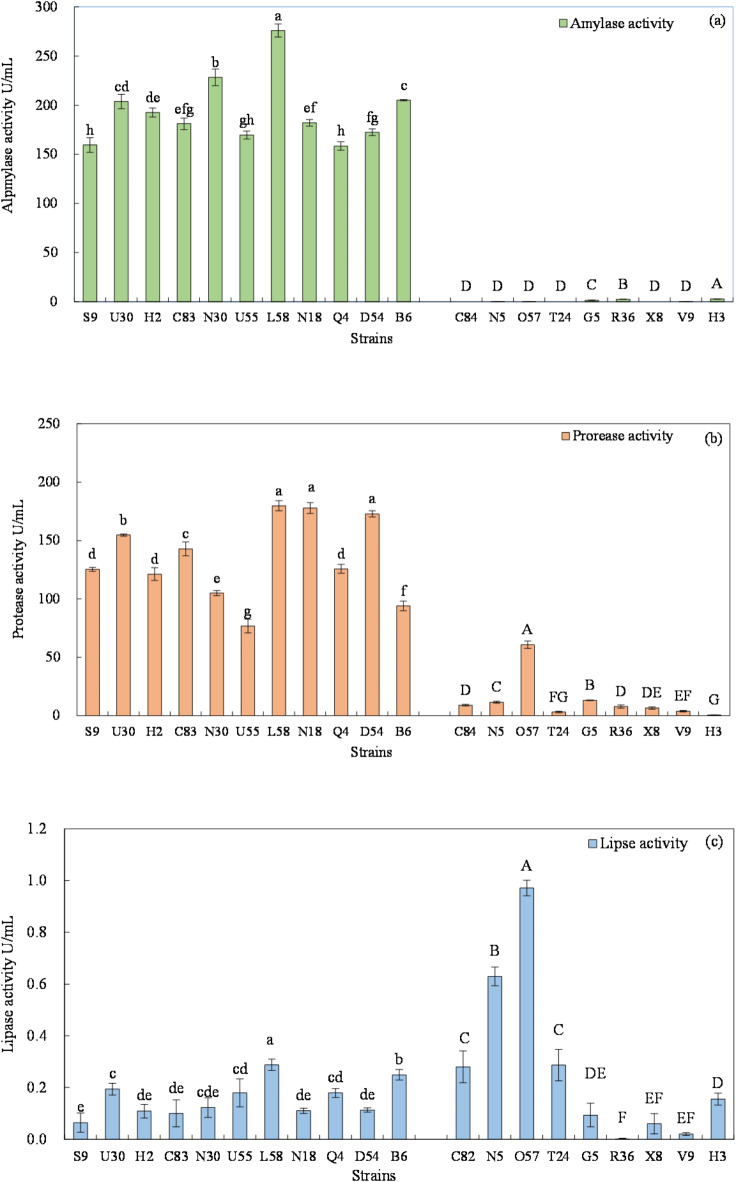
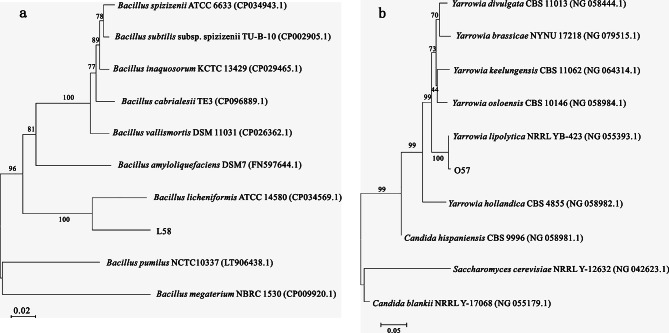
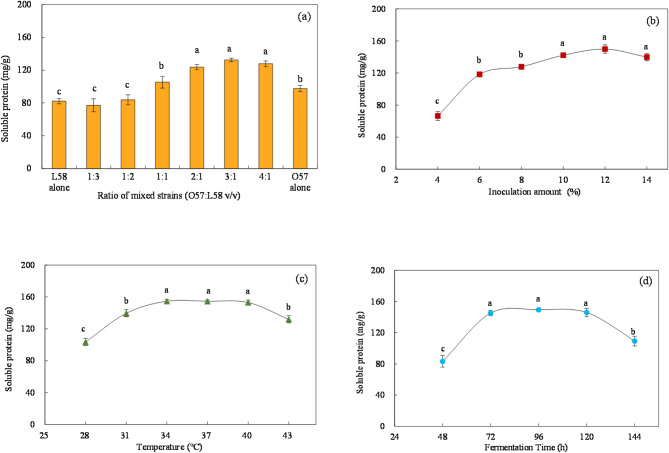
The increasing global population and urbanization have led to a rise in kitchen food waste (KW), posing significant environmental and economic challenges. Converting KW into fish feed offers a sustainable solution for managing KW. This study investigates the conversion of KW to aquatic feed via fermentation, and the innovative use of fermented kitchen waste (FKW) as an alternative protein source in aquaculture feed. Strains L58 and O57, identified as Bacillus licheniformis and Yarrowia lipolytica, were initially screened for high enzymatic activities and salt tolerance. A mixed-strain fermentation approach was employed, with process parameters optimized through central composite designs to maximize soluble protein yield. Fermentation significantly increased the contents of soluble protein, crude protein, and crude fat while reducing total carbohydrates and crude fiber. The total amino acid content increased by 45.5%, with significant gains in 19 amino acids. Feeding trials with juvenile yellow catfish demonstrated that replacing 15-30% of fish meal with FKW significantly improved growth performance, feed utilization, and enhanced the crude protein content in fish flesh. These findings indicate that co-fermenting KW with the two strains efficiently produces high-protein aquaculture feed, offering a sustainable alternative protein source that reduces reliance on fish meal and aids in waste management.
全球人口增长和城市化进程的加快导致厨房食物垃圾(KW)增多,带来了重大的环境和经济挑战。将KW转化为鱼饲料为管理KW提供了一种可持续的解决方案。本研究调查了通过发酵将KW转化为水产饲料,以及将发酵厨房垃圾(FKW)作为水产养殖饲料中替代蛋白质来源的创新用途。最初筛选出被鉴定为地衣芽孢杆菌和解脂耶氏酵母的L58和O57菌株,以获得高酶活性和耐盐性。采用混合菌株发酵方法,通过中心复合设计优化工艺参数,以最大限度提高可溶性蛋白质产量。发酵显著增加了可溶性蛋白质、粗蛋白质和粗脂肪的含量,同时降低了总碳水化合物和粗纤维含量。总氨基酸含量增加了45.5%,19种氨基酸有显著增加。对幼鱼黄颡鱼的饲养试验表明,用FKW替代15%-30%的鱼粉可显著提高生长性能、饲料利用率,并提高鱼肉中的粗蛋白质含量。这些发现表明,将KW与这两种菌株共同发酵可有效生产高蛋白水产养殖饲料,提供一种可持续的替代蛋白质来源,减少对鱼粉的依赖并有助于废物管理。