Raviv Tal, Shteinfer-Kuzmine Anna, Moyal Meital M, Shoshan-Barmatz Varda
Department of Life Sciences, Ben-Gurion University of the Negev, Beer-Sheva 84105, Israel.
National Institute for Biotechnology in the Negev, Ben-Gurion University of the Negev, Beer-Sheva 84105, Israel.
Int J Mol Sci. 2025 Apr 22;26(9):3963. doi: 10.3390/ijms26093963.
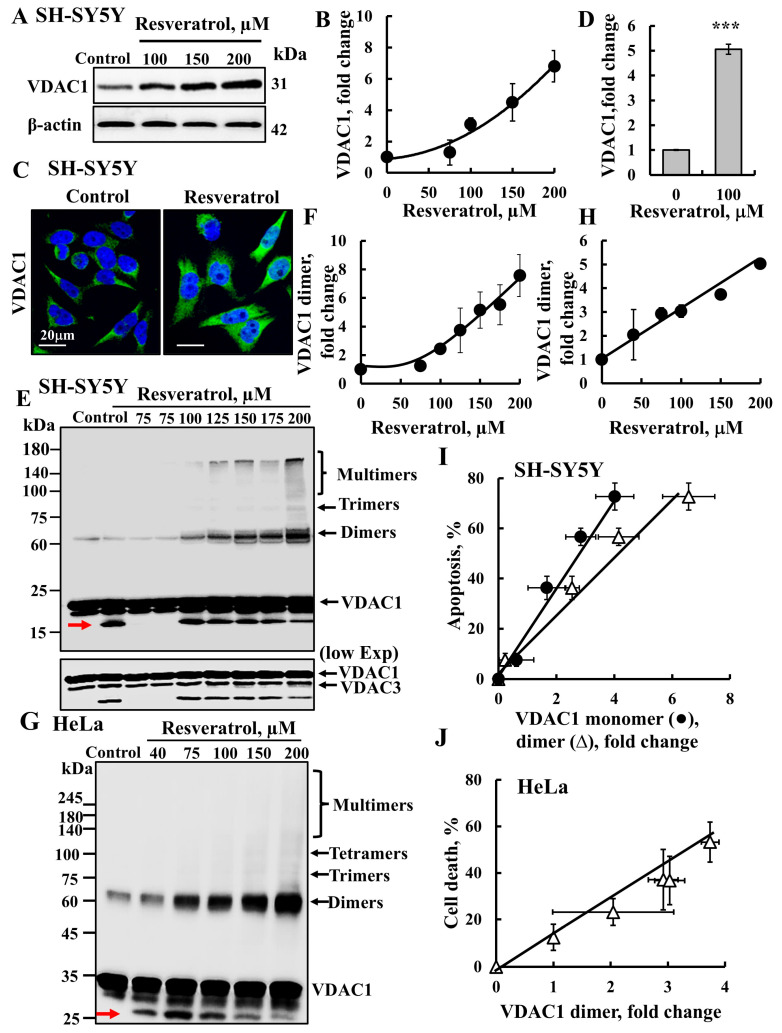
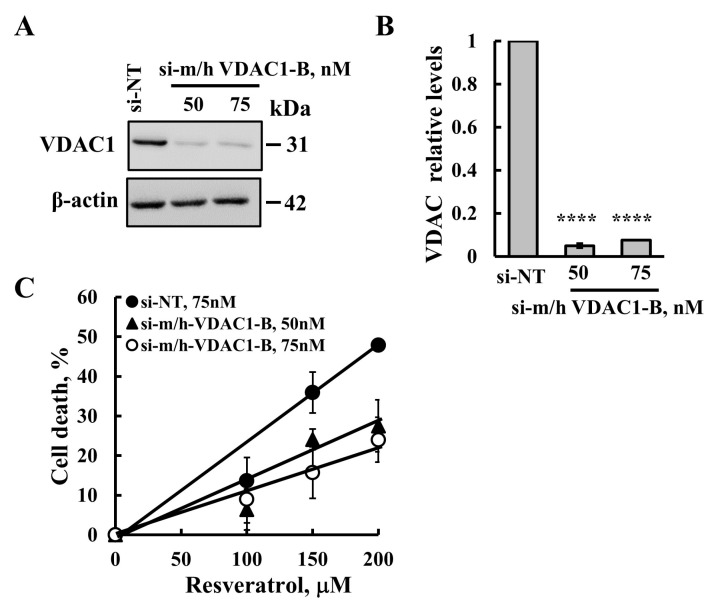
Resveratrol is a naturally occurring phenolic compound found in various foods such as red wine, chocolate, peanuts, and blueberries. Both in-vitro and in-vivo studies have shown that it has a broad spectrum of pharmacological effects such as providing cellular protection and promoting longevity. These effects include antioxidant, anti-inflammatory, neuroprotective, and anti-viral properties, as well as improvements in cardio-metabolic health and anti-aging benefits. Additionally, resveratrol has demonstrated the ability to induce cell death and inhibit tumor growth across different types and stages of cancer. However, the dual effects of resveratrol-acting to support cell survival in some contexts, while inducing cell death in others-is still not fully understood. In this study, we identify a novel target for resveratrol: the voltage-dependent anion channel 1 (VDAC1), a multi-functional outer mitochondrial membrane protein that plays a key role in regulating both cell survival and death. Our findings show that resveratrol increased VDAC1 expression levels and promoted its oligomerization, leading to apoptotic cell death. Additionally, resveratrol elevated intracellular Ca levels and enhanced the production of reactive oxygen species (ROS). Resveratrol also induced the detachment of hexokinase I from VDAC1, a key enzyme in metabolism, and regulating apoptosis. When VDAC1 expression was silenced using specific siRNA, resveratrol-induced cell death was significantly reduced, indicating that VDAC1 is essential for its pro-apoptotic effects. Additionally, both resveratrol and its analog, trans-2,3,5,4'-tetrahydroxystilbene-2-O-glucoside (TSG), directly interacted with purified VDAC1, as revealed by microscale thermophoresis, with similar binding affinities. However, unlike resveratrol, TSG did not induce VDAC1 overexpression or apoptosis. These results demonstrate that resveratrol-induced apoptosis is linked to increased VDAC1 expression and its oligomerization. This positions resveratrol not only as a protective agent, but also as a pro-apoptotic compound. Consequently, resveratrol offers a promising therapeutic approach for cancer, with potentially fewer side effects compared to conventional treatments, due to its natural origins in plants and food products.
白藜芦醇是一种天然存在的酚类化合物,存在于各种食物中,如红酒、巧克力、花生和蓝莓。体外和体内研究均表明,它具有广泛的药理作用,如提供细胞保护和促进长寿。这些作用包括抗氧化、抗炎、神经保护和抗病毒特性,以及改善心脏代谢健康和抗衰老益处。此外,白藜芦醇已证明能够在不同类型和阶段的癌症中诱导细胞死亡并抑制肿瘤生长。然而,白藜芦醇的双重作用——在某些情况下支持细胞存活,而在其他情况下诱导细胞死亡——仍未完全了解。在本研究中,我们确定了白藜芦醇的一个新靶点:电压依赖性阴离子通道1(VDAC1),一种多功能线粒体外膜蛋白,在调节细胞存活和死亡中起关键作用。我们的研究结果表明,白藜芦醇增加了VDAC1的表达水平并促进其寡聚化,导致凋亡性细胞死亡。此外,白藜芦醇提高了细胞内钙水平并增强了活性氧(ROS)的产生。白藜芦醇还诱导己糖激酶I从VDAC1上脱离,己糖激酶I是代谢中的关键酶,并调节细胞凋亡。当使用特异性小干扰RNA(siRNA)使VDAC1表达沉默时,白藜芦醇诱导的细胞死亡显著减少,表明VDAC1对其促凋亡作用至关重要。此外,微量热泳分析显示,白藜芦醇及其类似物反式-2,3,5,4'-四羟基二苯乙烯-2-O-葡萄糖苷(TSG)均与纯化的VDAC1直接相互作用,且结合亲和力相似。然而,与白藜芦醇不同,TSG不会诱导VDAC1过表达或凋亡。这些结果表明,白藜芦醇诱导的凋亡与VDAC1表达增加及其寡聚化有关。这不仅将白藜芦醇定位为一种保护剂,还定位为一种促凋亡化合物。因此,由于白藜芦醇天然存在于植物和食品中,与传统治疗相比,它为癌症提供了一种有前景的治疗方法,且副作用可能更少。