Inthavong D, Elsayed H, Keonakhone P, Seevisay V, Souksanh S, Suthepmany S, Siphanthong P, Sengmany P, Sisounon B, Sebert J, Yanagawa M, Morishita F, Nishikiori N, Yamanaka T
National Tuberculosis Control Centre, Vientiane, Lao People's Democratic Republic.
Integrated Communicable Disease Control, World Health Organization Regional Office for the Western Pacific, Manila, The Philippines.
IJTLD Open. 2025 May 12;2(5):260-268. doi: 10.5588/ijtldopen.25.0079. eCollection 2025 May.
Costs for nutritional supplements and food were the main driver of costs incurred by TB-affected households in Lao People's Democratic Republic. This study assessed the impact of nutritional counselling and support on costs incurred by TB-affected households.
We conducted longitudinal data collection of costs, income, and coping mechanisms of TB-affected households within an intervention study providing nutritional counselling and support for people diagnosed with TB and having a body mass index (BMI) <18.5 kg/m. Data collection tools were adapted from the WHO's generic national TB patient cost survey questionnaire to fit a longitudinal study design. Costs were considered catastrophic when they exceeded 20% of annual household income before TB.
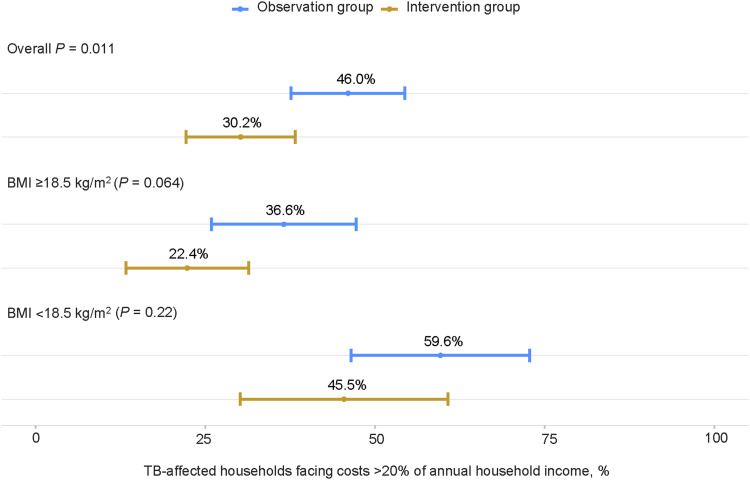
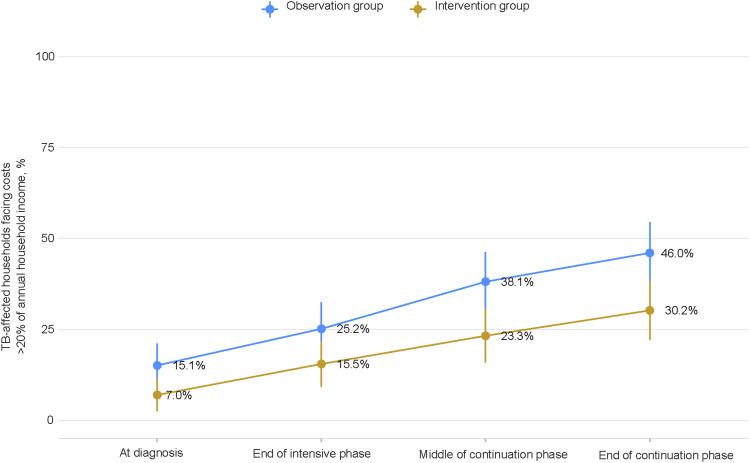
A total of 268 people treated for drug-susceptible TB were included in the analysis, and the prevalence of BMI <18.5 kg/m was 38%. The intervention group had significantly lower nutritional supplement costs and direct non-medical costs after TB diagnosis than the observation group. The intervention group had less progressive catastrophic costs (+23.3 percentage points) than the observation group (+30.9 percentage points).
Nutritional counselling and support were significantly associated with a reduction in the proportion of TB-affected households facing catastrophic costs due to TB.
营养补充剂和食品费用是老挝人民民主共和国结核病患者家庭支出的主要驱动因素。本研究评估了营养咨询与支持对结核病患者家庭支出的影响。
在一项干预研究中,我们对结核病患者家庭的费用、收入及应对机制进行了纵向数据收集,该研究为确诊结核病且体重指数(BMI)<18.5kg/m²的患者提供营养咨询与支持。数据收集工具改编自世界卫生组织通用的国家结核病患者费用调查问卷,以适应纵向研究设计。当费用超过结核病发病前家庭年收入的20%时,即被视为灾难性支出。
共有268例接受药物敏感型结核病治疗的患者纳入分析,BMI<18.5kg/m²的患病率为38%。与观察组相比,干预组在结核病诊断后的营养补充剂费用和直接非医疗费用显著更低。干预组的灾难性支出进展比例(+23.3个百分点)低于观察组(+30.9个百分点)。
营养咨询与支持与结核病患者家庭因结核病面临灾难性支出的比例降低显著相关。