Purse C, Parker A, James S A, Baker D J, Moss C J, Evans R, Durham J, Funnell S G P, Carding S R
Food, Microbiome and Health, Quadram Institute Bioscience, Norwich Research Park, Norwich, NR4 7UQ, UK.
UK Health Security Agency, Porton Down, Salisbury, SP4 0JG, UK.
Anim Microbiome. 2025 May 14;7(1):47. doi: 10.1186/s42523-025-00409-9.
Age-associated changes to the intestinal microbiome may be linked to inflammageing and the development of age-related chronic diseases. Cynomolgus macaques, a common animal model in biomedical research, have strong genetic physiological similarities to humans and may serve as beneficial models for the effect of age on the human microbiome. However, age-associated changes to their intestinal microbiome have previously only been investigated in faecal samples. Here, we have characterised and investigated the effects of age in the cynomolgus macaque intestinal tract in luminal samples from both the small and large intestine.
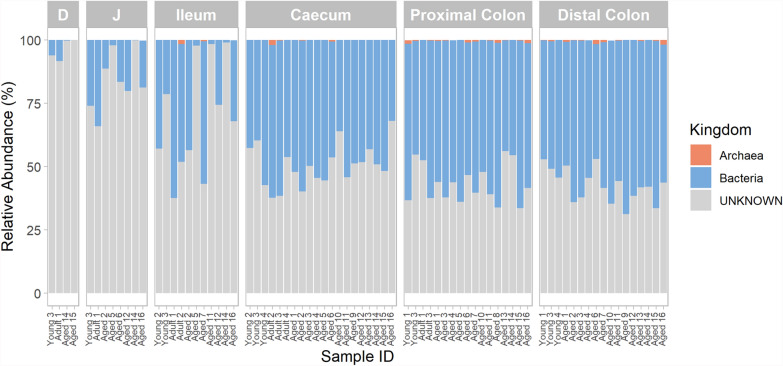
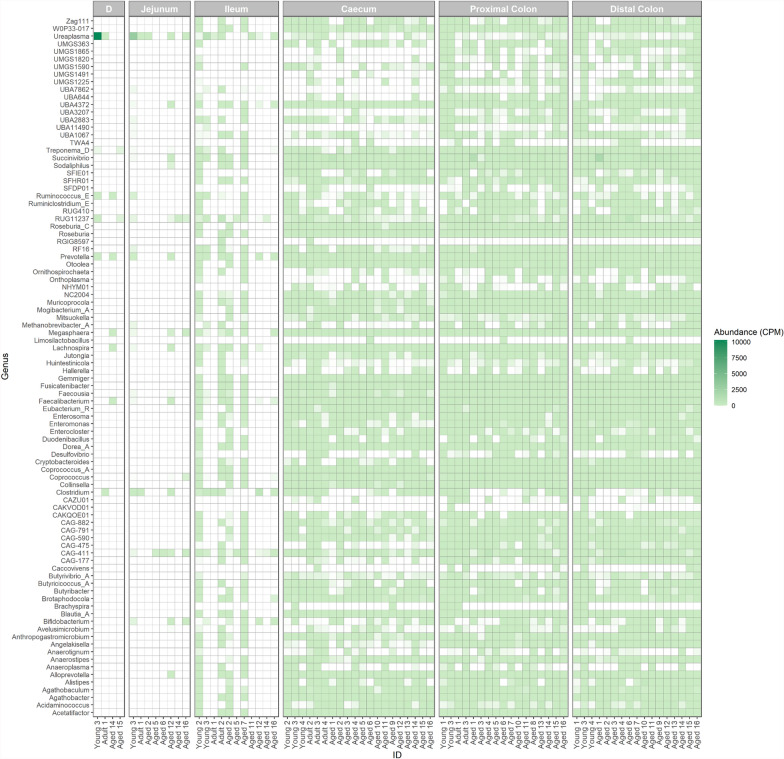
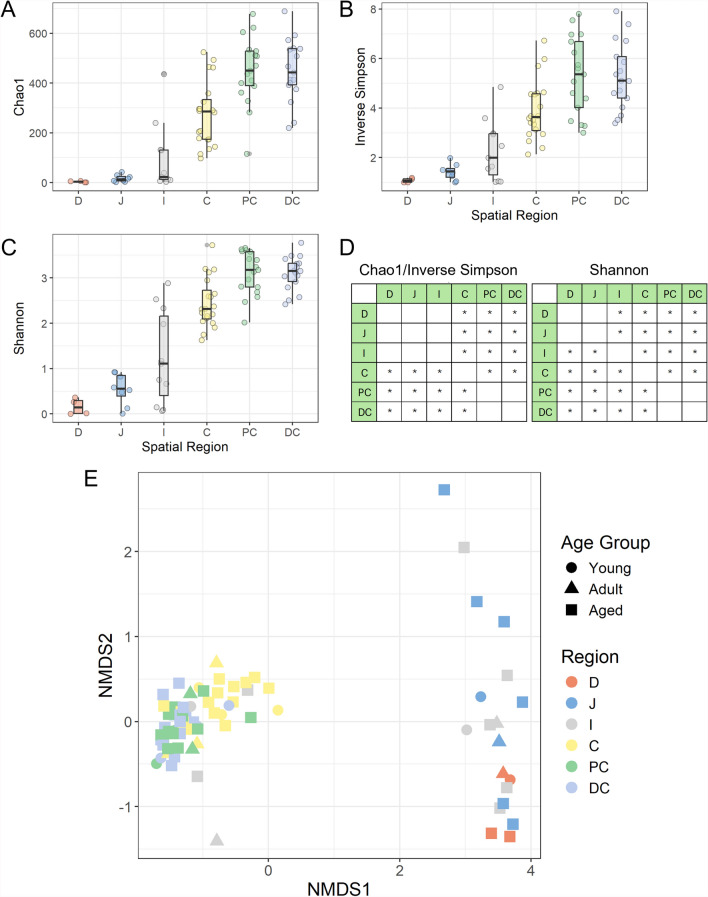
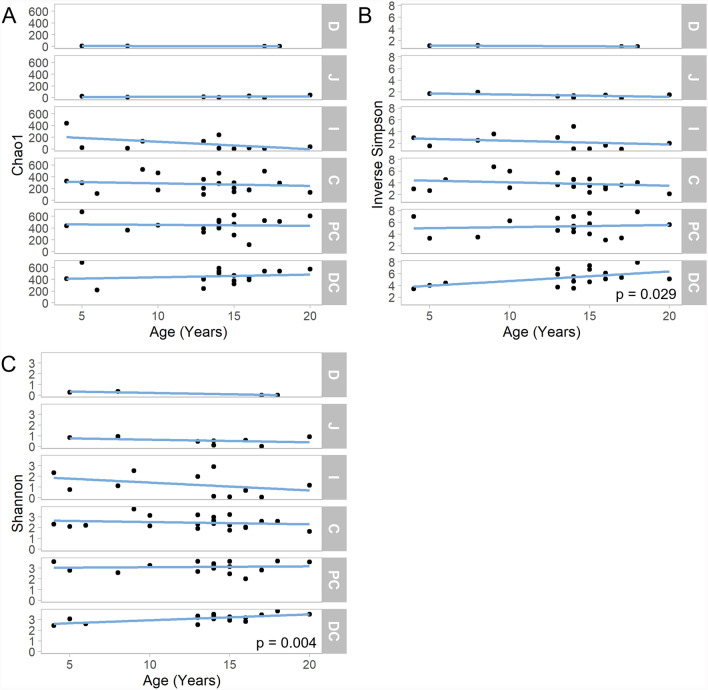
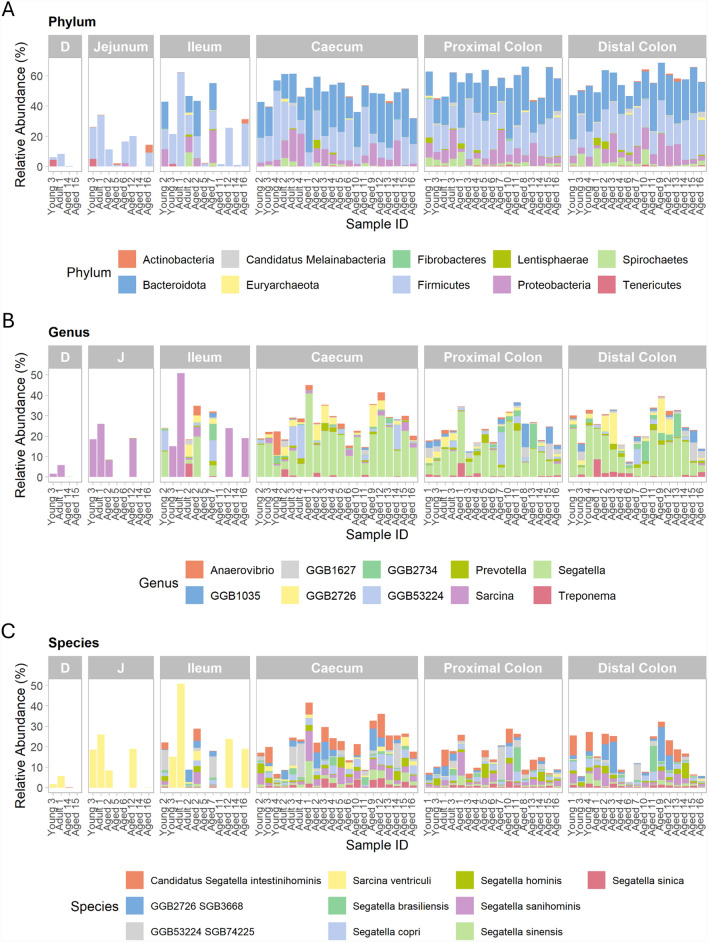
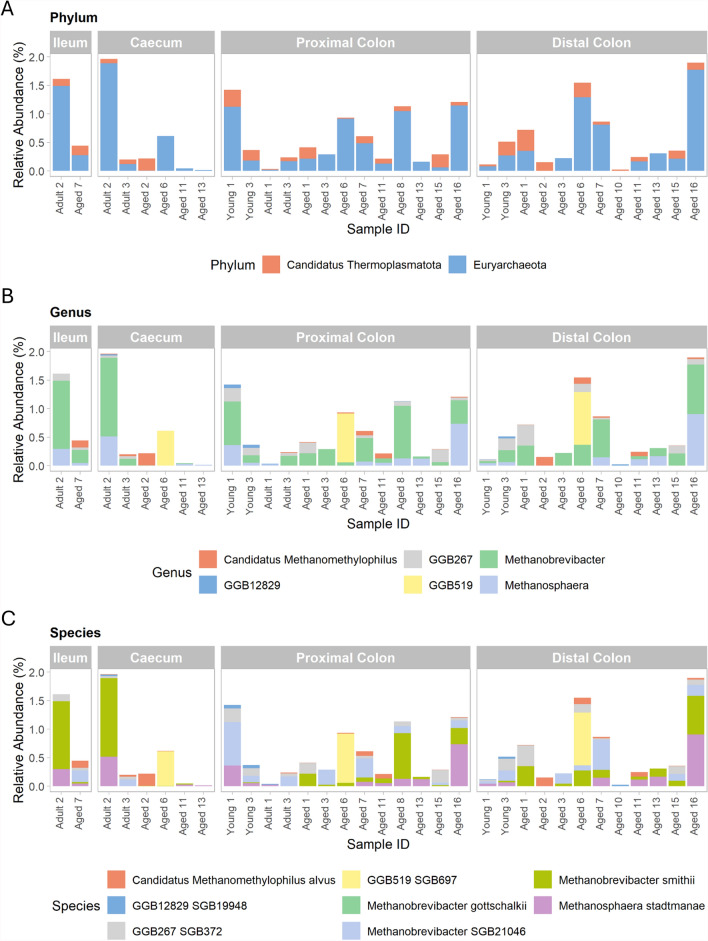
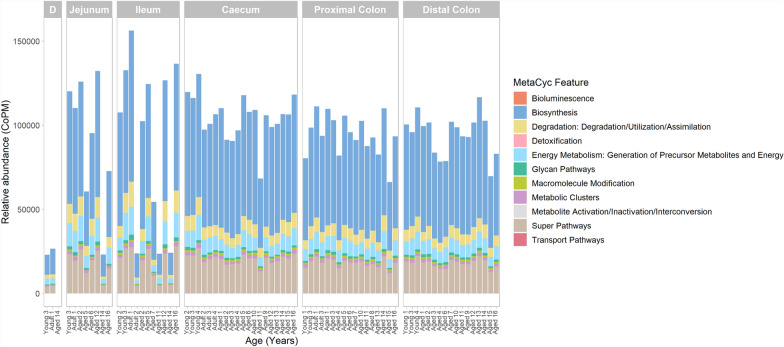
Whole metagenomic shotgun sequencing was used to analyse the microbial communities in intestinal content obtained from six different intestinal regions, covering the duodenum to distal colon, of 24 healthy, captive-bred cynomolgus macaques, ranging in age from 4 to 20 years. Both reference-based and assembly-based computational profiling approaches were used to analyse changes to intestinal microbiota composition and metabolic potential associated with intestinal biogeography and age. Reference-based computational profiling revealed a significant and progressive increase in both species richness and evenness along the intestinal tract. The microbial community composition also significantly differed between the small intestine, caecum, and colon. Notably, no significant changes in the taxonomic abundance of individual taxa with age were found except when sex was included as a covariate. Additionally, using an assembly-based computational profiling approach, 156 putative novel bacterial and archaeal species were identified.
We observed limited effects of age on the composition of the luminal microbiota in the profiled regions of the intestinal tract except when sex was included as a covariate. The enteric microbial communities of the small and the large intestine were, however, distinct, highlighting the limitations of frequently used faecal microbial profiling as a proxy for the intestinal microbiota. The identification of a number of putative novel microbial taxa contributes to knowledge of the full diversity of the cynomolgus macaque intestinal microbiome.
肠道微生物群与年龄相关的变化可能与炎症衰老以及年龄相关慢性病的发展有关。食蟹猕猴是生物医学研究中常用的动物模型,与人类在遗传生理上有很强的相似性,可能是研究年龄对人类微生物群影响的有益模型。然而,此前对其肠道微生物群与年龄相关变化的研究仅在粪便样本中进行。在此,我们对来自24只年龄在4至20岁之间的健康圈养食蟹猕猴的小肠和大肠腔样本进行了表征,并研究了年龄对其肠道的影响。
采用全基因组鸟枪法测序分析了从24只健康圈养食蟹猕猴的六个不同肠道区域(从十二指肠到结肠远端)获取的肠道内容物中的微生物群落。基于参考和基于组装的计算分析方法均用于分析与肠道生物地理学和年龄相关的肠道微生物群组成和代谢潜力的变化。基于参考的计算分析显示,沿肠道的物种丰富度和均匀度均显著且逐渐增加。小肠、盲肠和结肠之间的微生物群落组成也有显著差异。值得注意的是,除了将性别作为协变量纳入分析时,未发现个体分类群的分类丰度随年龄有显著变化。此外,采用基于组装的计算分析方法,鉴定出了156种假定的新型细菌和古菌物种。
我们观察到,除了将性别作为协变量纳入分析时,年龄对所分析肠道区域的腔微生物群组成影响有限。然而,小肠和大肠的肠道微生物群落是不同的,这突出了常用的粪便微生物分析作为肠道微生物群替代指标的局限性。大量假定的新型微生物分类群的鉴定有助于了解食蟹猕猴肠道微生物组的完整多样性。