Samah Tawil, Samar Merhi
Gilbert and Rose-Marie Chagoury School of Medicine, Lebanese American University, Beirut, Lebanon.
Institut National de Santé Publique d'Épidémiologie Clinique et de Toxicologie-Liban (INSPECT-LB), Beirut, Lebanon.
PLoS One. 2025 May 15;20(5):e0322197. doi: 10.1371/journal.pone.0322197. eCollection 2025.
The use of Artificial Intelligence (AI) is exponentially rising in the healthcare sector. This change influences various domains of early identification, diagnosis, and treatment of diseases.
This study examines the integration of AI in healthcare, focusing on its transformative potential in diagnostics and treatment, and the challenges and methodologies. shaping its future development.
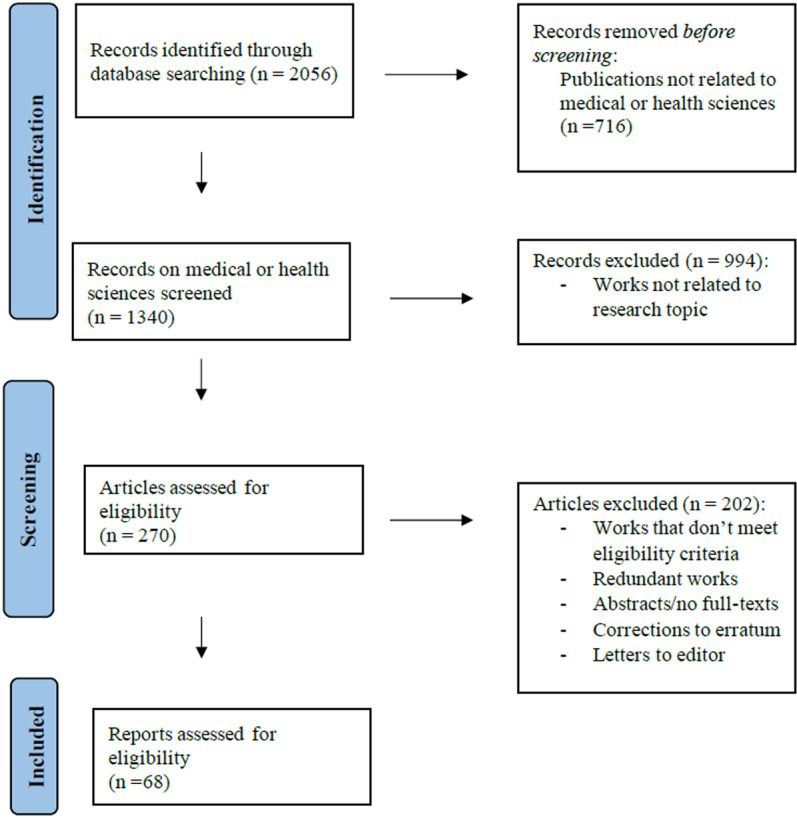
The review included 68 academic studies retracted from different databases (WOS, Scopus and Pubmed) from January 2020 and April 2024. After careful review and data analysis, AI methodologies, benefits and challenges, were summarized.
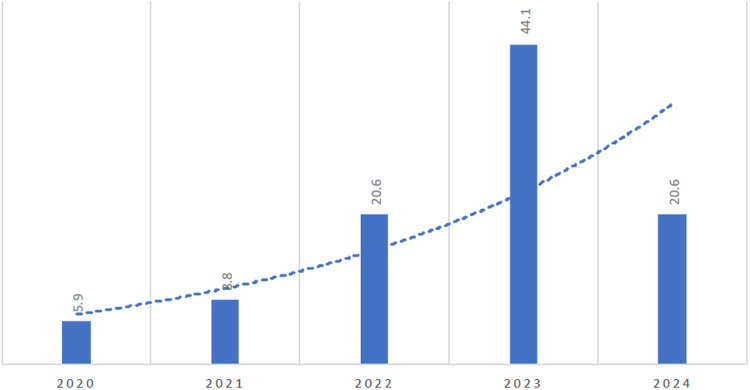
The number of studies showed a steady rise from 2020 to 2023. Most of them were the results of a collaborative work with international universities (92.1%). The majority (66.7%) were published in top-tier (Q1) journals and 40% were cited 2-10 times. The results have shown that AI tools such as deep learning methods and machine learning continue to significantly improve accuracy and timely execution of medical processes. Benefits were discussed from both the organizational and the patient perspective in the categories of diagnosis, treatment, consultation and health monitoring of diseases. However, some challenges may exist, despite these benefits, and are related to data integration, errors related to data processing and decision making, and patient safety.
The article examines the present status of AI in medical applications and explores its potential future applications. The findings of this review are useful for healthcare professionals to acquire deeper knowledge on the use of medical AI from design to implementation stage. However, a thorough assessment is essential to gather more insights into whether AI benefits outweigh its risks. Additionally, ethical and privacy issues need careful consideration.
人工智能(AI)在医疗保健领域的应用正在呈指数级增长。这一变化影响着疾病早期识别、诊断和治疗的各个领域。
本研究考察了人工智能在医疗保健中的整合情况,重点关注其在诊断和治疗方面的变革潜力以及塑造其未来发展的挑战和方法。
该综述纳入了2020年1月至2024年4月从不同数据库(Web of Science、Scopus和PubMed)中检索到的68项学术研究。经过仔细审查和数据分析,总结了人工智能的方法、益处和挑战。
研究数量从2020年到2023年呈稳步上升趋势。其中大部分是与国际大学合作的成果(92.1%)。大多数研究(66.7%)发表在顶级(Q1)期刊上,40%的研究被引用2至10次。结果表明,深度学习方法和机器学习等人工智能工具继续显著提高医疗流程的准确性和及时性。从疾病诊断、治疗、咨询和健康监测等类别,从组织和患者两个角度讨论了益处。然而,尽管有这些益处,仍可能存在一些挑战,这些挑战与数据整合、数据处理和决策相关的错误以及患者安全有关。
本文考察了人工智能在医疗应用中的现状,并探讨了其未来可能的应用。本综述的结果有助于医疗保健专业人员在从设计到实施阶段更深入地了解医疗人工智能的使用。然而,进行全面评估对于更深入了解人工智能的益处是否超过其风险至关重要。此外,伦理和隐私问题需要仔细考虑。