Mahmoud Ahmed R, Farahat Emad A, Hassan Loutfy M, Halmy Marwa Waseem A
Botany and Microbiology Department, Faculty of Science, Helwan University, P.O. Box: 11795, Helwan, Egypt.
Department of Environmental Sciences, Faculty of Science, Alexandria University, P.O. Box: 21511, Alexandria, Egypt.
BMC Plant Biol. 2025 May 15;25(1):644. doi: 10.1186/s12870-025-06630-7.
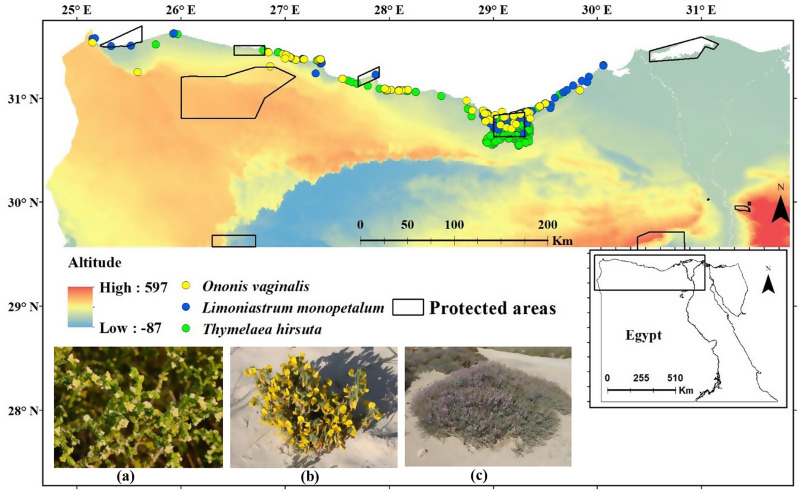
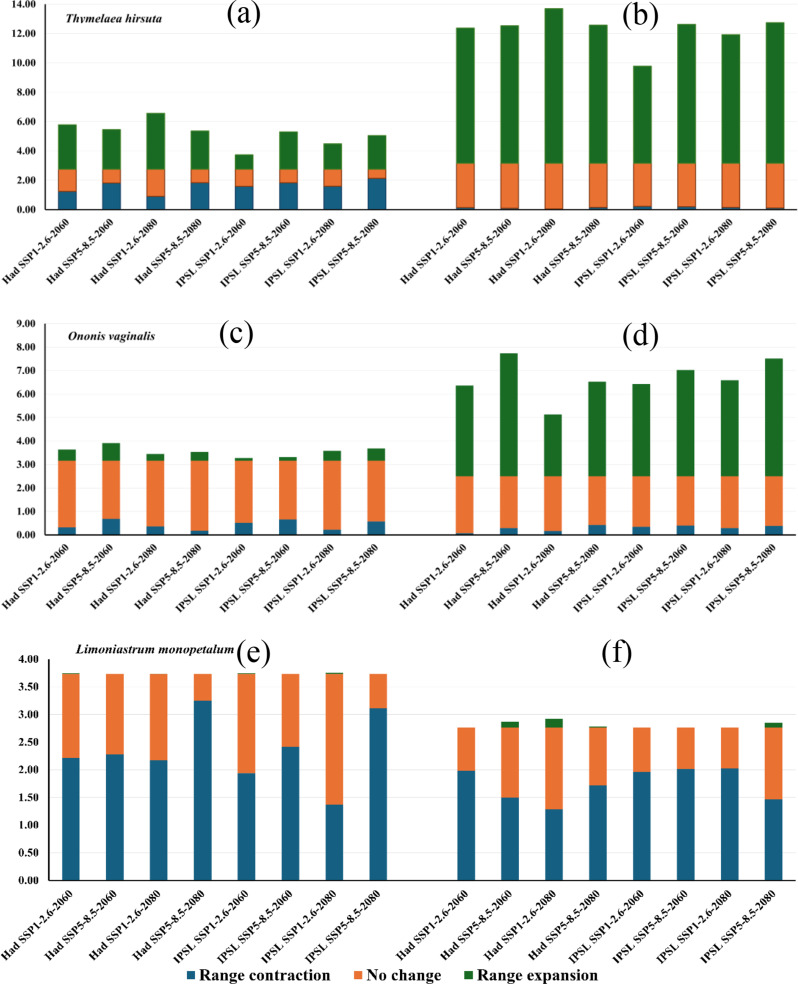
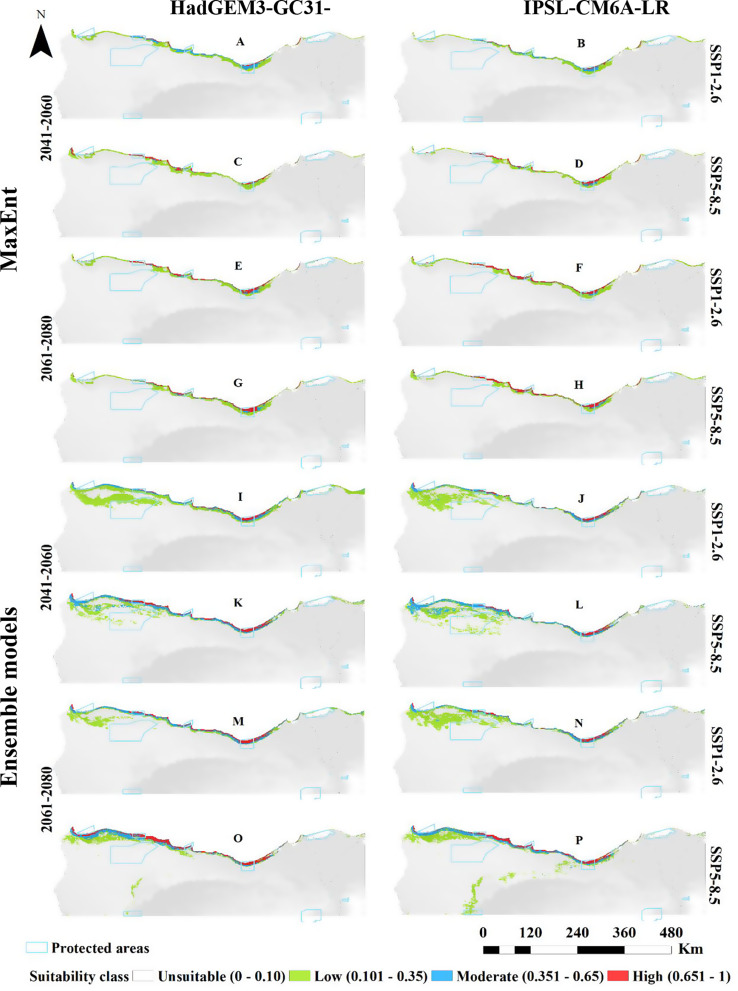
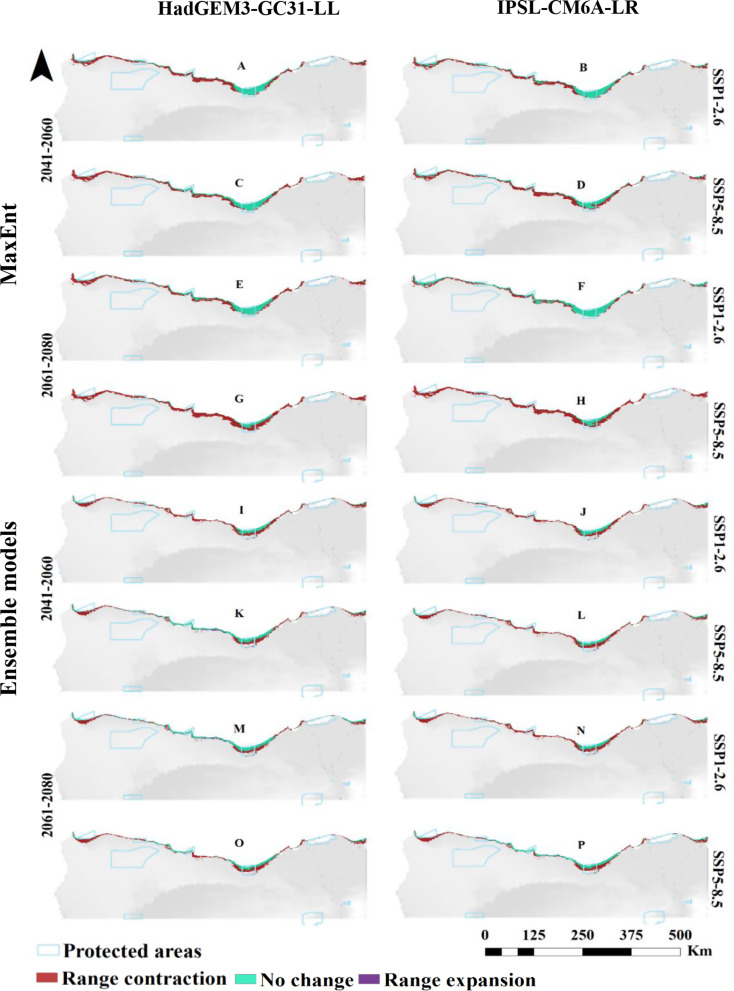
As climate change accelerates, it may significantly alter species distributions and endanger many species. The use of species distribution modeling (SDM) has become increasingly vital for assessing the likely effects of climatic changes on biodiversity. This approach is especially relevant as our understanding of environmental shifts and their ecological implications deepens. SDMs are frequently employed to forecast future shifts in species' geographic ranges, estimate extinction risks, evaluate the effectiveness of existing conservation areas, and prioritize conservation efforts. The urgency of these assessments is highlighted by the fact that the Mediterranean area is heating up 20% quicker than the universal average. Given that species have varying ecological tolerances and attributes, their biological responses to environmental changes are likely to differ significantly. This study aimed to assess the potential future distribution of three native Mediterranean species- Thymelaea hirsuta (L.) Endl., Ononis vaginalis Vahl, and Limoniastrum monopetalum (L.) Boiss.-under two GCMs of HadGEM3-GC31-LL and IPSL-CM6A-LR for the periods of 2060s and 2080s and two Shared Socioeconomic Pathway (SSP 1-2.6 and SSP5-8.5), comparing the use of MaxEnt and ensemble modelling techniques in predicting the impact of future climatic changes on these species' distribution. The results indicated that there are high similarities and agreement between MaxEnt and the ensemble models' outputs. The two modelling techniques exhibited excellent fits and performance. The distribution range of T. hirsuta and O. vaginalis will expand and migrate to the northwest direction of the Mediterranean coast of Egypt, while L. monopetalum will contract. The insights gained from species distribution modeling could guide future conservation efforts and promote the sustainable use of the studied species in the arid coastal environments of the Mediterranean region. Clinical trial number Not applicable.
随着气候变化加速,它可能会显著改变物种分布并危及许多物种。物种分布模型(SDM)的使用对于评估气候变化对生物多样性的可能影响变得越来越重要。随着我们对环境变化及其生态影响的理解不断加深,这种方法尤为相关。SDM经常被用于预测物种地理范围的未来变化、估计灭绝风险、评估现有保护区的有效性以及确定保护工作的优先级。地中海地区升温速度比全球平均水平快20%这一事实凸显了这些评估的紧迫性。鉴于物种具有不同的生态耐受性和属性,它们对环境变化的生物学反应可能会有显著差异。本研究旨在评估三种地中海本土物种——毛叶瑞香(Thymelaea hirsuta (L.) Endl.)、阴道芒柄花(Ononis vaginalis Vahl)和单瓣补血草(Limoniastrum monopetalum (L.) Boiss.)——在HadGEM3 - GC31 - LL和IPSL - CM6A - LR这两个全球气候模型下,2060年代和2080年代以及两种共享社会经济路径(SSP 1 - 2.6和SSP5 - 8.5)情景下的潜在未来分布,比较最大熵模型(MaxEnt)和集成建模技术在预测未来气候变化对这些物种分布影响方面的应用。结果表明,MaxEnt和集成模型的输出结果具有高度相似性和一致性。这两种建模技术都表现出良好的拟合度和性能。毛叶瑞香和阴道芒柄花的分布范围将扩大并向埃及地中海沿岸的西北方向迁移,而单瓣补血草的分布范围将缩小。从物种分布建模中获得的见解可以指导未来的保护工作,并促进地中海地区干旱沿海环境中所研究物种的可持续利用。临床试验编号 不适用。