Charvin Laurent, Akinyemi Alexis, Mariette Jean-Yves, Mizzi Claire, Cardoso Thierry, Grufeille Ciaran, Brun Clémence, Bagnis Corinne Isnard
Nephrology Department, APHP-Sorbonne University, Paris, France.
Adhoc Lab, 13 Rue Hispano Suiza, Bois-Colombes, 92270, France.
BMC Psychol. 2025 May 19;13(1):523. doi: 10.1186/s40359-025-02745-6.
Mindfulness and compassion training have individually shown significant effects on health care professionals' (HCPs') skills, reducing stress, anxiety, and burnout. This study evaluated the impact of a combined mindfulness and self-compassion intervention on HCPs' wellness.
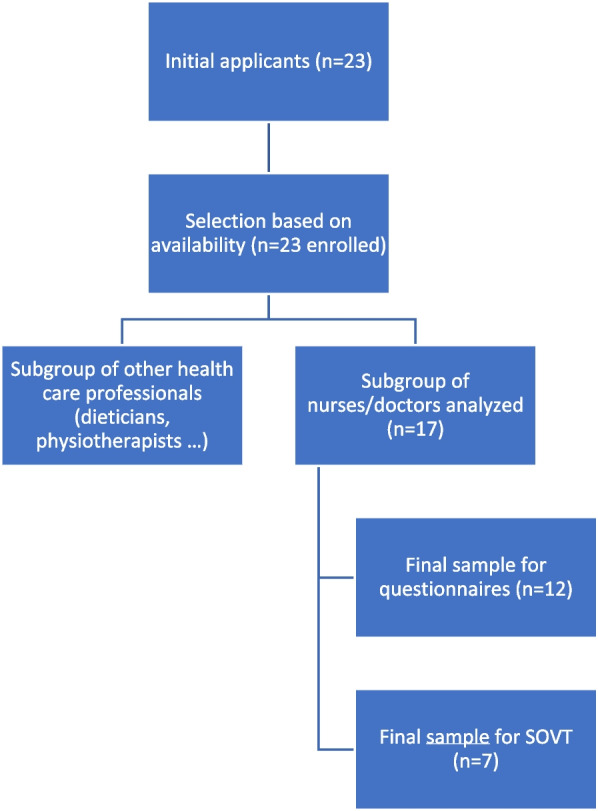
Seventeen nurses and doctors at a teaching university hospital in France volunteered for the Mindfulness-Based Compassion and Resilience Enhancement (MBCARE) program, a four-week mindfulness and self-compassion training delivered in eight three-hour sessions over four days (one day per week), with 100% attendance. We collected primary data (mindfulness skills, burnout scores, self-compassion, and emotional coping via face-reader evaluations) before and after the intervention.
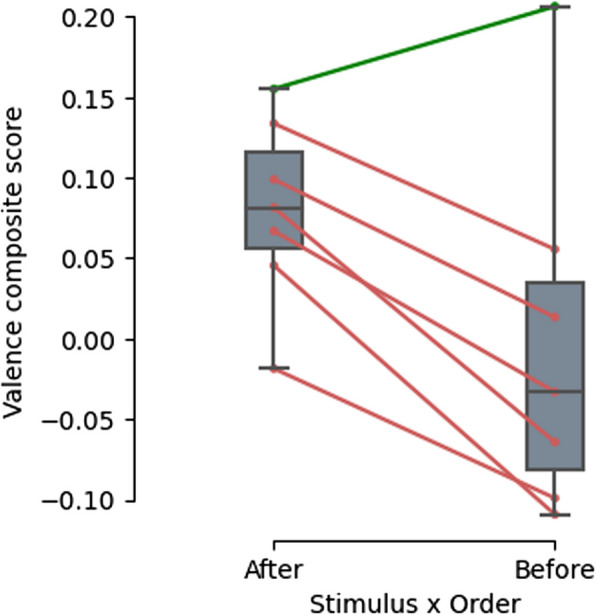
MBCARE was associated with reduced burnout, with emotional exhaustion scores decreasing (MΔ = -4.27, t = 1.95, p = .04) and personal accomplishment scores increasing (MΔ = 2.73, z = 2.48, p = .007) among 12 health care professionals. Patient-perceived centeredness of care showed a ceiling effect, with no significant changes. In a socio-affective video task (n = 7), positive affect increased post-training (p < .05), while negative affect remained stable. Time and availability constraints limited participation, but the program was feasible. Professional contextualization may support skill application, potentially improving emotional regulation and self-compassion, though further research is needed to confirm these effects.
Implementing mindfulness and compassion training for HCPs faces time and availability constraints but meets their needs. Contextualizing the training to professional settings enhances HCPs' ability to apply new skills, yielding benefits in emotional stability and self-compassion.
正念训练和自我同情训练已分别显示出对医护人员技能有显著影响,可减轻压力、焦虑和职业倦怠。本研究评估了正念与自我同情相结合的干预措施对医护人员健康状况的影响。
法国一所教学大学医院的17名护士和医生自愿参加了基于正念的同情与复原力增强(MBCARE)项目,这是一项为期四周的正念和自我同情训练,在四天内(每周一天)分八个三小时课程进行,出勤率为100%。我们在干预前后收集了主要数据(正念技能、职业倦怠得分、自我同情以及通过面部表情评估的情绪应对能力)。
12名医护人员中,MBCARE与职业倦怠减轻相关,情绪耗竭得分降低(MΔ = -4.27,t = 1.95,p = 0.04),个人成就感得分提高(MΔ = 2.73,z = 2.48,p = 0.007)。患者感知的护理专注度显示出上限效应,无显著变化。在一项社会情感视频任务中(n = 7),训练后积极情绪增加(p < 0.05),而消极情绪保持稳定。时间和可用性限制了参与度,但该项目是可行的。专业情境化可能有助于技能应用,潜在地改善情绪调节和自我同情,不过需要进一步研究来证实这些效果。
为医护人员实施正念和同情训练面临时间和可用性限制,但满足了他们的需求。将训练与专业环境相结合可增强医护人员应用新技能的能力,在情绪稳定性和自我同情方面产生益处。