Iswanto Arya Bagus Boedi, Kang Hobin, Park Seonyeong, Son Geon Hui, Pike Sharon M, Kim Sang Hee
Plant Molecular Biology and Biotechnology Research Center, Gyeongsang National University, Jinju, 52828, Korea.
Division of Applied Life Science (BK21 Four Program), Research Institute of Molecular Alchemy, Gyeongsang National University, Jinju, 52828, Korea.
J Integr Plant Biol. 2025 Aug;67(8):2005-2027. doi: 10.1111/jipb.13932. Epub 2025 May 21.
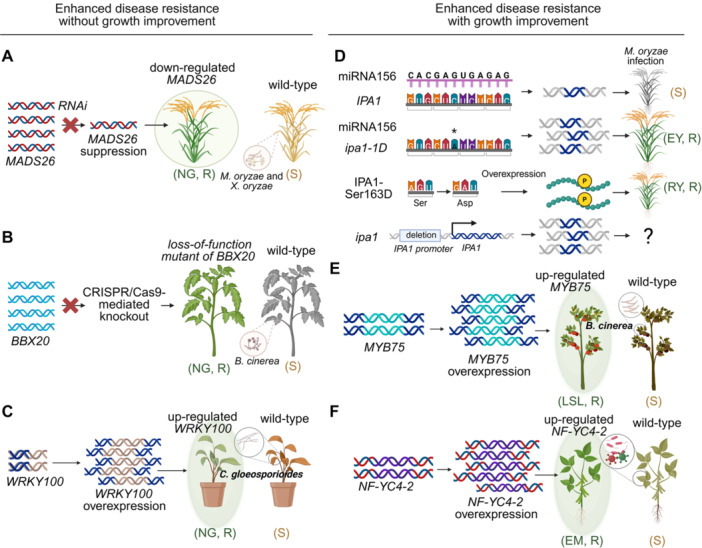
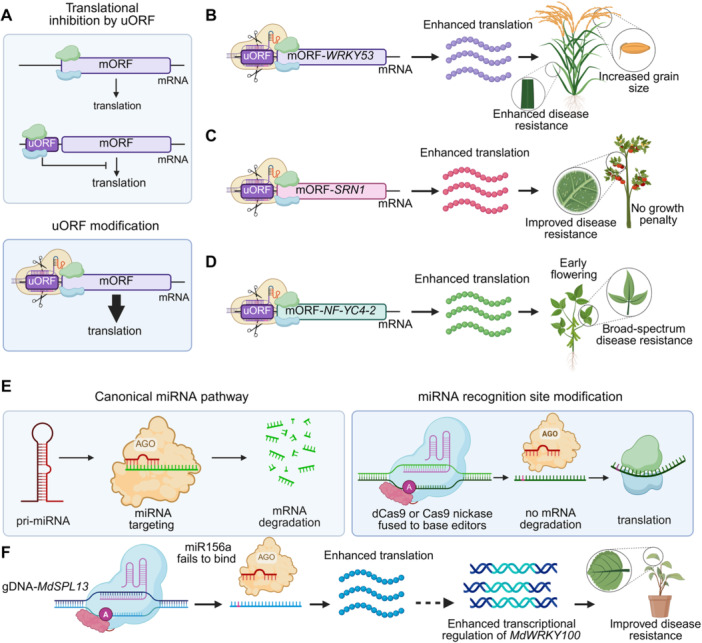
Transcription factors (TFs) function as master regulators in multiple signaling pathways and govern diverse developmental and adaptive processes in plants. Some TFs identified in crop plants play critical roles in regulating yield through changes in plant architecture, including roots, stems, leaves, flowers, fruits, and grains. Although altering crop architecture can increase yields, the extent of yield enhancement is frequently hampered by diseases. Developing new crop varieties with improved yields and enhanced disease resistance remains challenging because immune system activation often impairs plant growth. Recently, approaches using TF engineering have made substantial progress in elevating both growth performance and disease resistance. However, most of these techniques rely on traditional transgenic methods. This review highlights discoveries in the last decade demonstrating improvements in growth performance, yield and immunity through TF engineering. We focus mainly on changes in plant architecture related to improved yield and disease resistance. We conclude with perspectives on the potential application of these discoveries for generating desirable crop traits by merging the most noteworthy biotechnology approaches, such as clustered regularly interspaced small palindromic repeats (CRISPR)/CRISPR-associated protein 9-mediated genome editing, with canonical molecular biology.
转录因子(TFs)在多种信号通路中起主要调节作用,调控植物不同的发育和适应性过程。在作物中鉴定出的一些转录因子通过改变包括根、茎、叶、花、果实和籽粒在内的植物结构,在调节产量方面发挥关键作用。虽然改变作物结构可以提高产量,但产量提高的程度常常受到病害的阻碍。培育具有更高产量和更强抗病性的新作物品种仍然具有挑战性,因为免疫系统的激活往往会损害植物生长。最近,利用转录因子工程的方法在提高生长性能和抗病性方面取得了重大进展。然而,这些技术大多依赖传统的转基因方法。本综述重点介绍了过去十年中通过转录因子工程在生长性能、产量和免疫方面取得改善的相关发现。我们主要关注与提高产量和抗病性相关的植物结构变化。我们通过将最值得注意的生物技术方法,如成簇规律间隔短回文重复序列(CRISPR)/CRISPR相关蛋白9介导的基因组编辑,与经典分子生物学相结合,对这些发现用于产生理想作物性状的潜在应用前景进行了展望。