Susanto Febri A, Jones Arthur Daniel, Donnelly Shannon L, Lundquist Peter K
Department of Biochemistry and Molecular Biology, Michigan State University, East Lansing, MI 48824, USA.
Plant Resilience Institute, Michigan State University, East Lansing, MI 48824, USA.
Plant Cell. 2025 Jul 1;37(7). doi: 10.1093/plcell/koaf127.
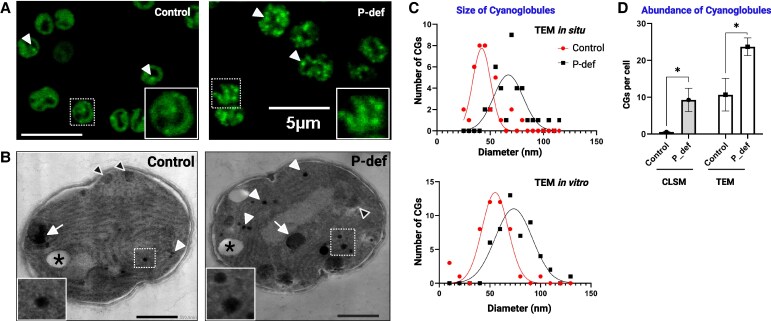
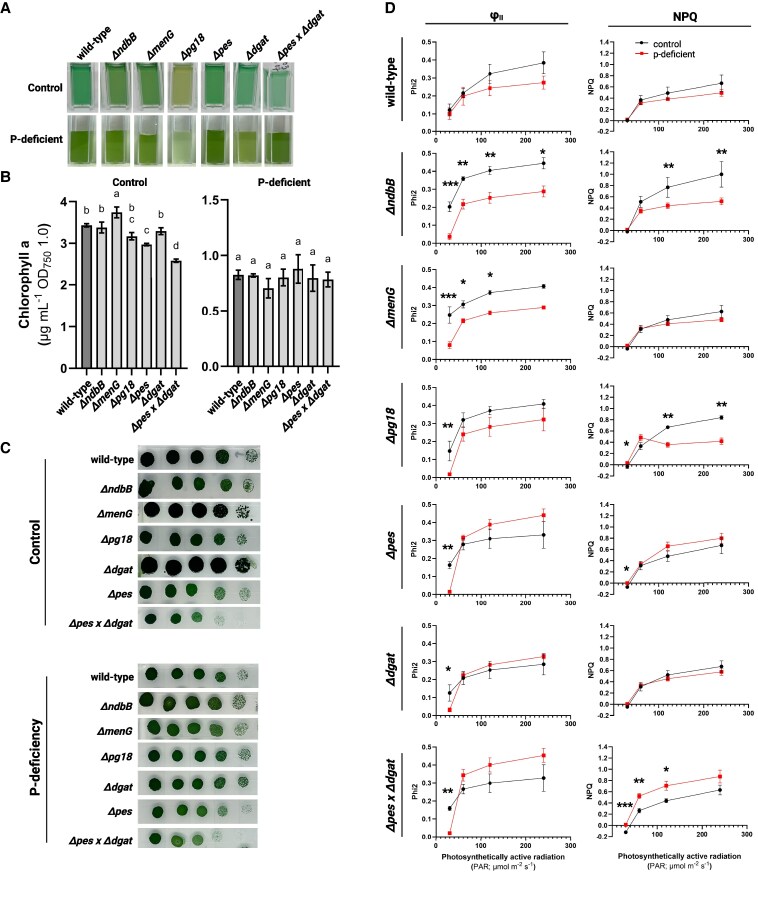
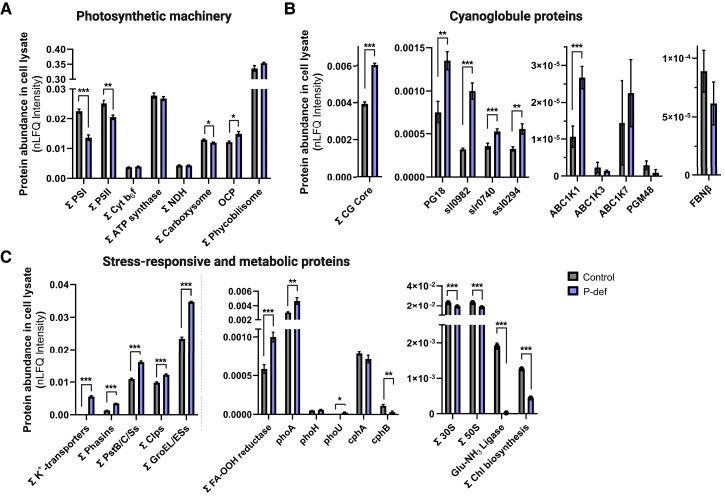
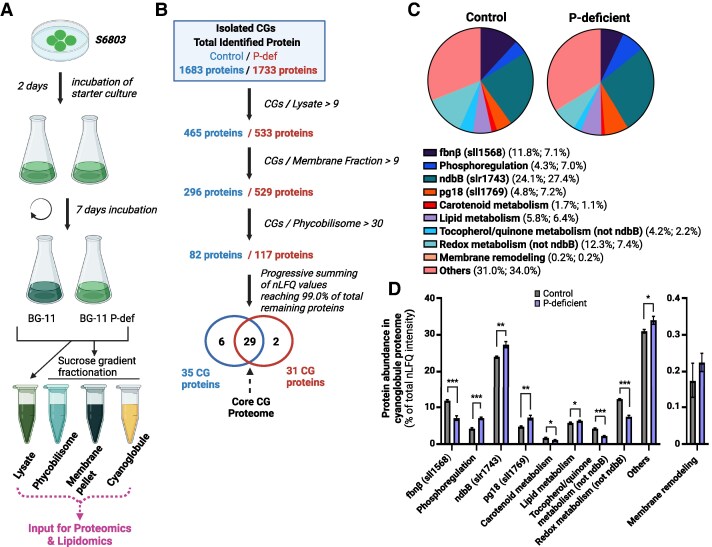
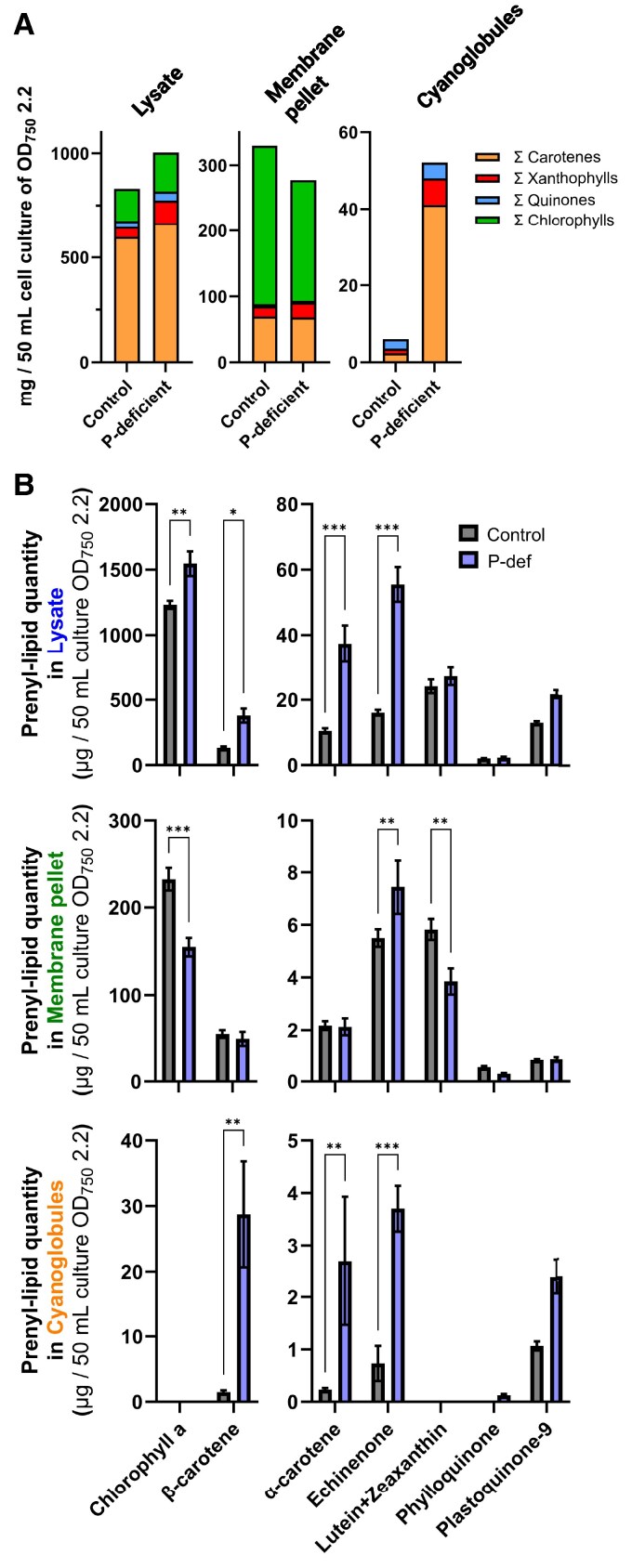
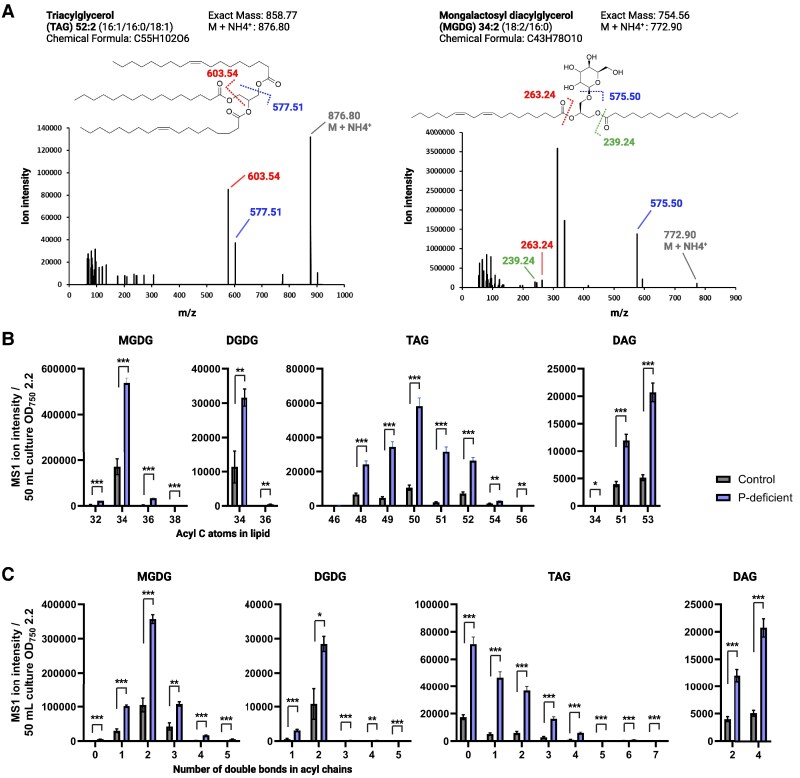
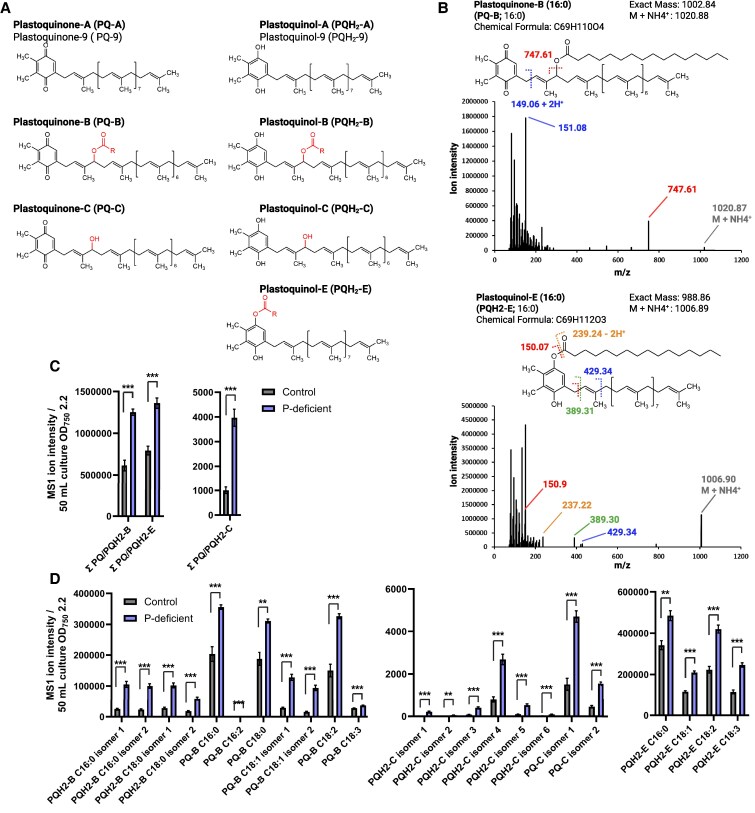
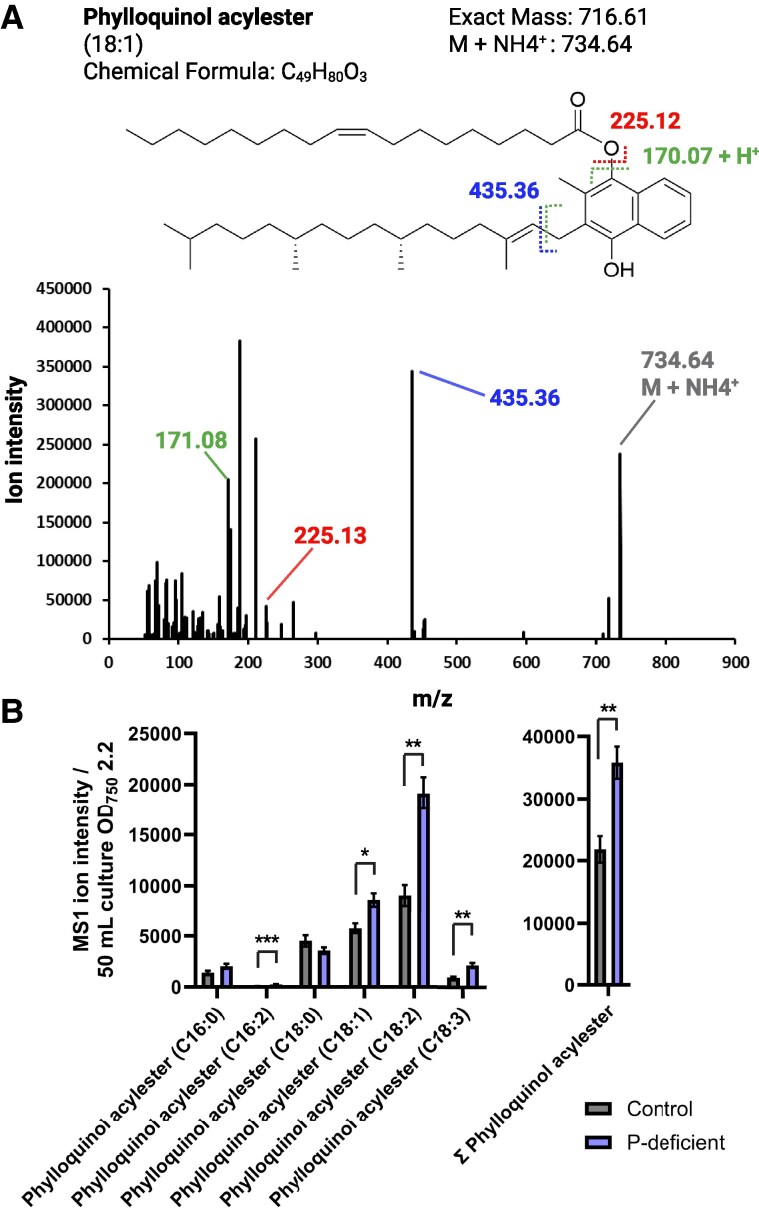
Lipid droplets (LDs) are well integrated into multiple facets of cellular physiology and potentially represent an effective platform for engineering heterologous metabolic pathways. LDs of chloroplasts, known as plastoglobules, mediate stress tolerance through dynamic and reversible changes to morphology and molecular composition. However, the dynamics and functional role(s) of cyanobacterial LDs are almost wholly unknown. Here, we have characterized the morphological behavior and quantitative proteome and lipidome of cyanobacterial LDs of Synechocystis sp. PCC 6803 grown under permissive or phosphorous-deficient media for 7 d. Our results show that cyanobacterial LDs are a metabolically active subcompartment of cyanobacteria with dynamic morphology and composition. The cyanobacterial LD proteome and lipidome are qualitatively similar to those of plant plastoglobules including an enrichment of prenyl lipids and the presence of twelve orthologs of Arabidopsis thaliana plastoglobule proteins. In view of these results, we propose that cyanobacterial LDs be named as cyanoglobules. In addition, we established that various plastoquinone derivatives containing hydroxyl and/or acyl groups on their solanesyl tail or quinone head accumulate in cyanoglobules. Deletion mutants of selected cyanoglobule proteins exhibit impairments in growth, pigmentation, and photosynthesis. Our results collectively support an evolutionary relationship between cyanoglobules and plastoglobules and reveal a possible central role for cyanoglobules in organismal physiology and stress adaptation.
脂滴(LDs)很好地融入细胞生理学的多个方面,并且可能代表了一个用于构建异源代谢途径的有效平台。叶绿体中的脂滴,即质体小球,通过形态和分子组成的动态可逆变化介导胁迫耐受性。然而,蓝细菌脂滴的动态变化及其功能作用几乎完全未知。在这里,我们对集胞藻PCC 6803在适宜或缺磷培养基中培养7天的蓝细菌脂滴的形态行为、定量蛋白质组和脂质组进行了表征。我们的结果表明,蓝细菌脂滴是蓝细菌中具有动态形态和组成的代谢活跃亚细胞区室。蓝细菌脂滴的蛋白质组和脂质组在性质上与植物质体小球相似,包括类异戊二烯脂质的富集以及拟南芥质体小球蛋白的12个直系同源物的存在。鉴于这些结果,我们建议将蓝细菌脂滴命名为蓝质体小球。此外,我们确定了各种在其茄尼基尾或醌头部含有羟基和/或酰基的质体醌衍生物在蓝质体小球中积累。选定的蓝质体小球蛋白的缺失突变体在生长、色素沉着和光合作用方面表现出缺陷。我们的结果共同支持了蓝质体小球和质体小球之间的进化关系,并揭示了蓝质体小球在生物体生理和胁迫适应中可能的核心作用。