Kondo Mimari, Aoki Motohide, Hirai Kazuho, Sagami Taku, Ito Ryo, Tsuzuki Mikio, Sato Norihiro
School of Life Sciences, Tokyo University of Pharmacy and Life Sciences, Hachioji, Tokyo, Japan.
Front Plant Sci. 2023 Apr 26;14:1181180. doi: 10.3389/fpls.2023.1181180. eCollection 2023.
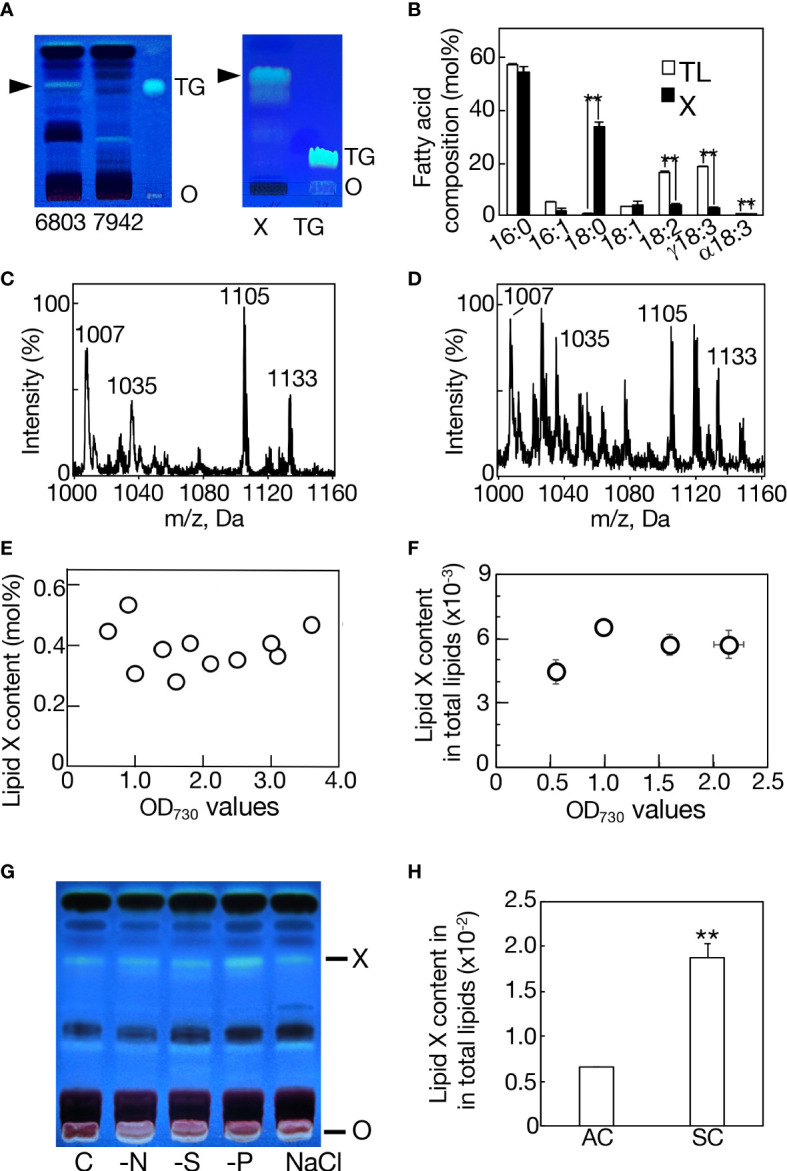
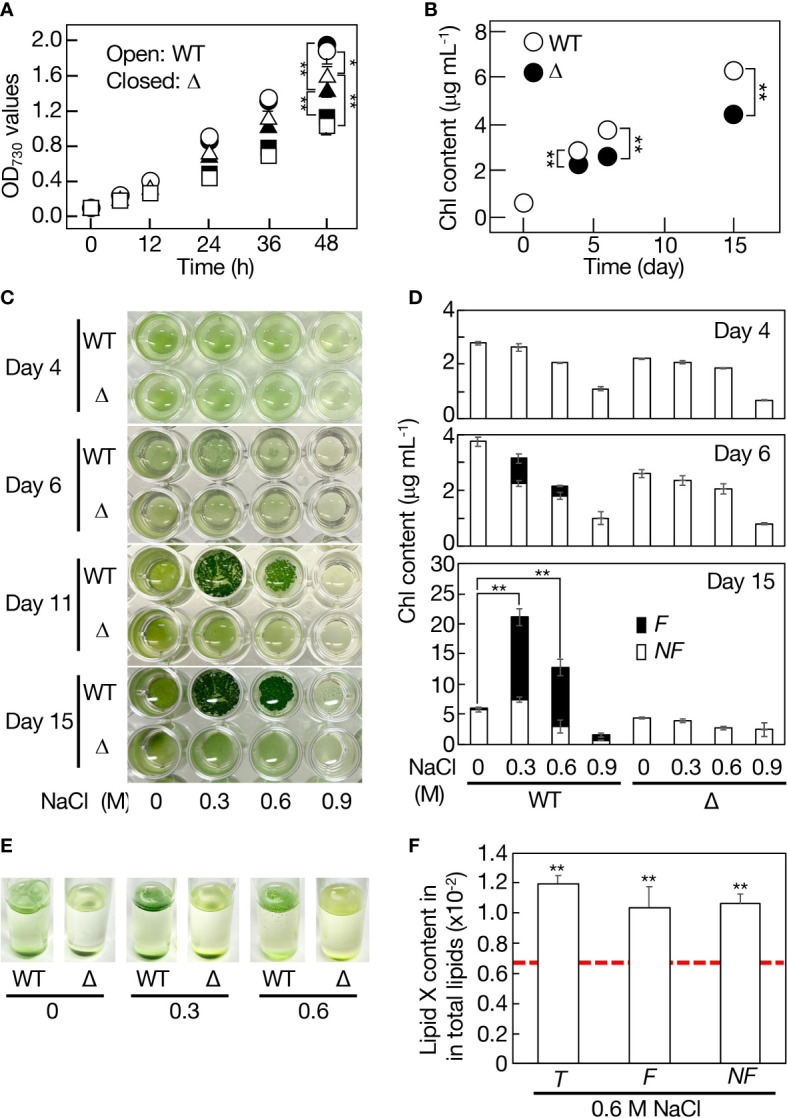
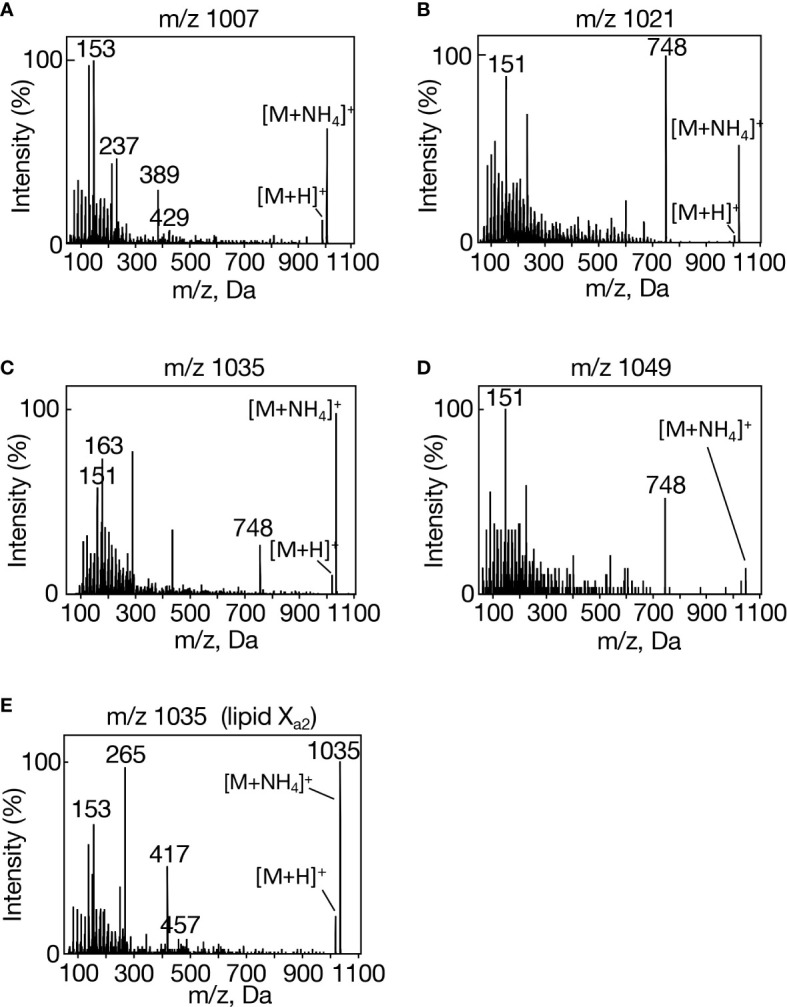
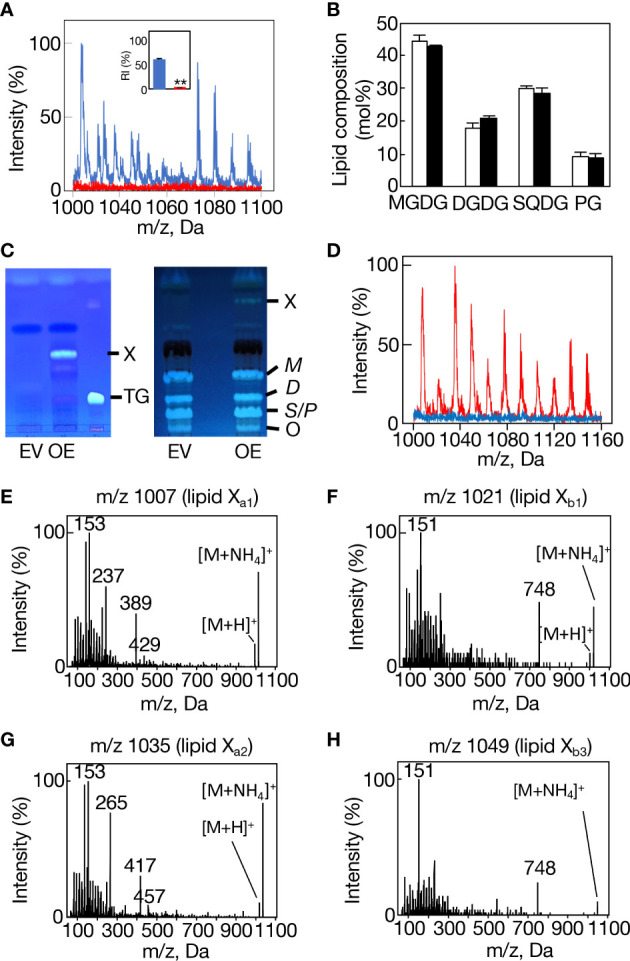
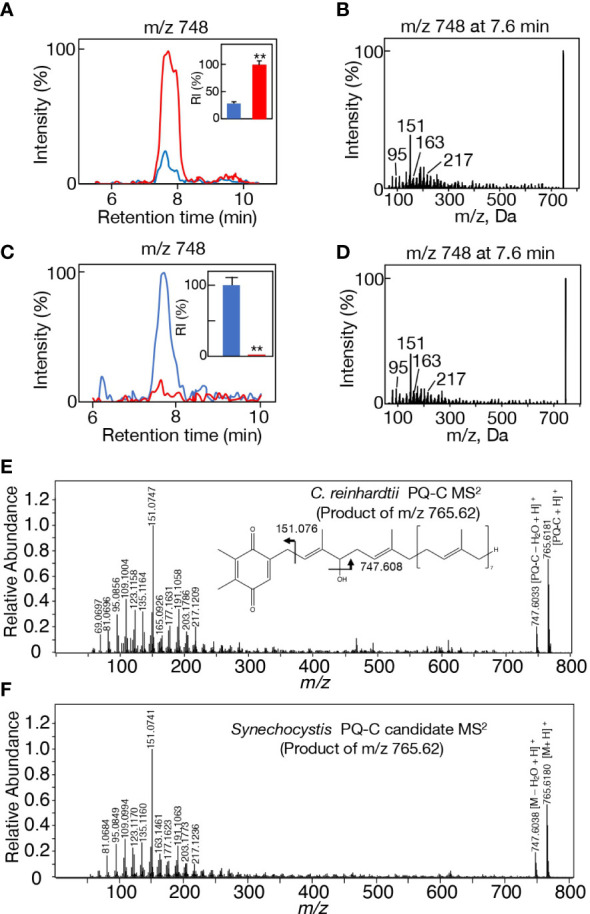
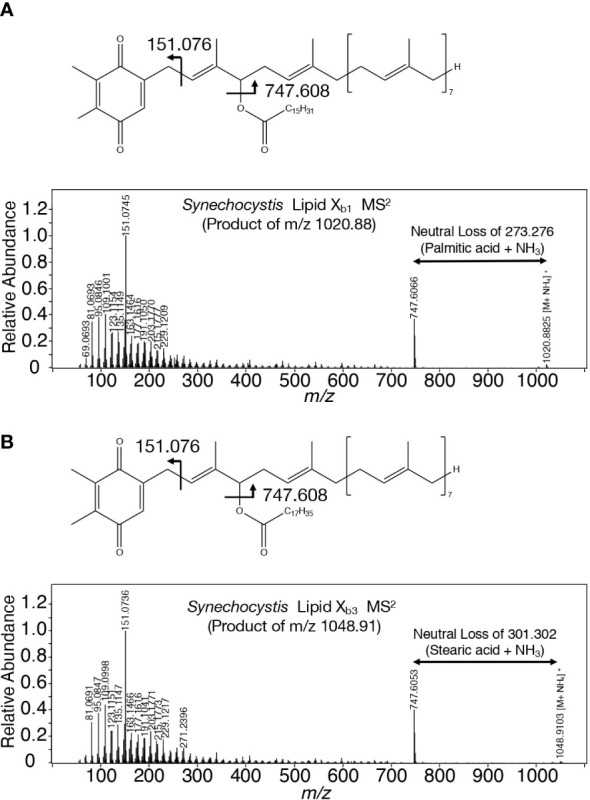
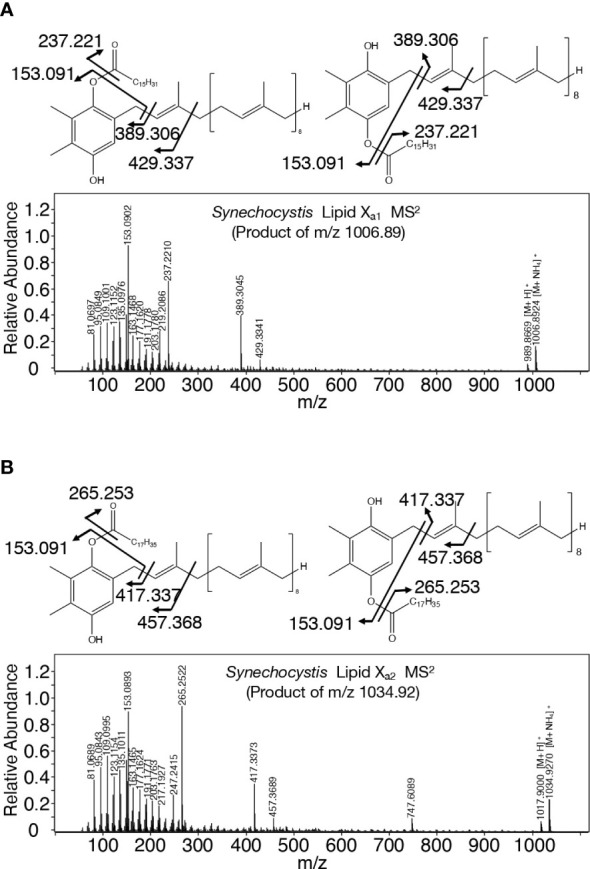
A cyanobacterium, sp. PCC 6803, contains a lipid with triacylglycerol-like TLC mobility but its identity and physiological roles remain unknown. Here, on ESI-positive LC-MS analysis, it is shown that the triacylglycerol-like lipid (lipid X) is related to plastoquinone and can be grouped into two subclasses, X and X, the latter of which is esterified by 16:0 and 18:0. This study further shows that a homolog of type-2 diacylglycerol acyltransferase genes, , is essential for lipid X synthesis: lipid X disappears in a -disruptant whereas it appears in an -overexpressing transformant (OE) of PCC 7942 that intrinsically lacks lipid X. The disruption causes cells to accumulate plastoquinone-C at an abnormally high level whereas overexpression in causes the cells to almost completely lose it. It is thus deduced that encodes a novel acyltransferase that esterifies 16:0 or 18:0 with plastoquinone-C for the synthesis of lipid X. Characterization of the -disruptant in shows that contributes to sedimented-cell growth in a static culture, and to bloom-like structure formation and its expansion by promoting cell aggregation and floatation upon imposition of saline stress (0.3-0.6 M NaCl). These observations provide a basis for elucidation of the molecular mechanism of a novel cyanobacterial strategy to acclimatize to saline stress, and one for development of a system of seawater-utilization and economical harvesting of cyanobacterial cells with high-value added compounds, or blooming control of toxic cyanobacteria.
一种蓝细菌,集胞藻属PCC 6803,含有一种具有类似三酰甘油薄层层析迁移率的脂质,但其身份和生理作用仍不清楚。在此,通过电喷雾电离正离子液相色谱-质谱分析表明,这种类似三酰甘油的脂质(脂质X)与质体醌有关,可分为两个亚类,X和X,后者被16:0和18:0酯化。本研究进一步表明,2型二酰甘油酰基转移酶基因的一个同源物,对脂质X的合成至关重要:脂质X在一个缺失突变体中消失,而在固有缺乏脂质X的集胞藻属PCC 7942的一个过表达转化体(OE)中出现。该缺失导致细胞异常高水平积累质体醌-C,而在中过表达导致细胞几乎完全失去它。因此推断编码一种新型酰基转移酶,该酶用质体醌-C酯化16:0或18:0以合成脂质X。对中缺失突变体的表征表明,有助于静态培养中沉淀细胞的生长,并通过在施加盐胁迫(0.3 - 0.6 M NaCl)时促进细胞聚集和漂浮,促进类似水华结构的形成及其扩展。这些观察结果为阐明蓝细菌适应盐胁迫的新策略的分子机制提供了基础,也为开发一种利用海水和经济收获具有高附加值化合物的蓝细菌细胞的系统,或控制有毒蓝细菌水华的系统提供了基础。