Lotfy Walid A, Ali Amira M, Abdou Heba M, Ghanem Khaled M
Department of Microbiology, Faculty of Dentistry, Pharos University in Alexandria, Alexandria, Egypt.
Department of Botany and Microbiology, Faculty of Science, Alexandria University, Alexandria, Egypt.
BMC Microbiol. 2025 May 22;25(1):317. doi: 10.1186/s12866-025-04017-0.
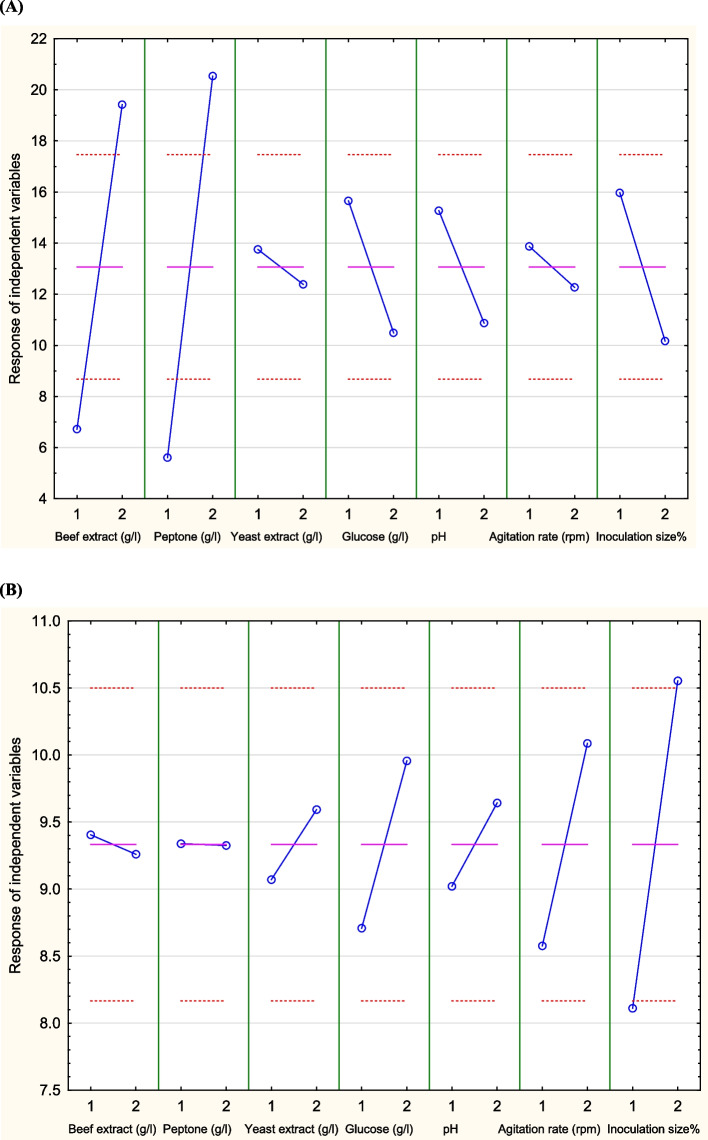
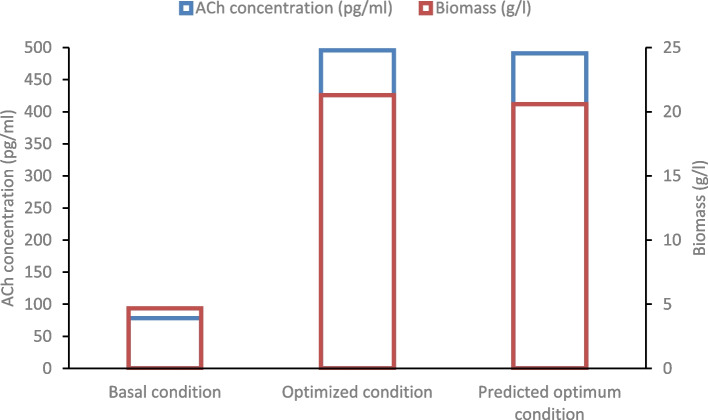
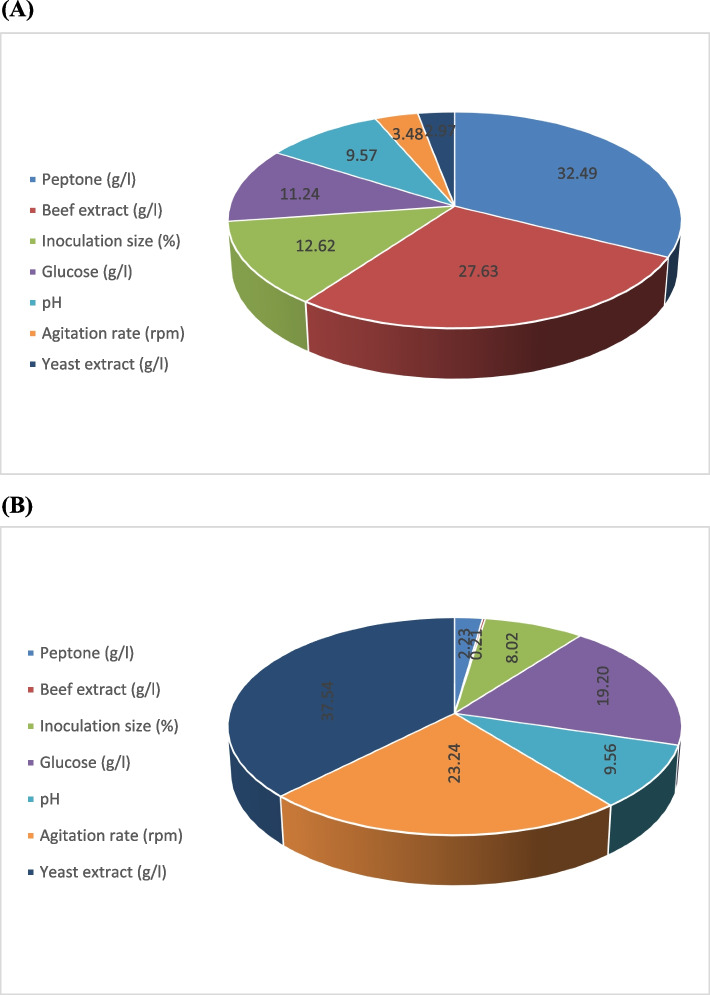
This study aimed to optimize the fermentation conditions and medium composition for maximum acetylcholine (ACh) and biomass production by Lactiplantibacillus plantarum AM2 using the Taguchi array design, which enables efficient identification of influential variables through minimal experimental runs. Seven key factors were evaluated: beef extract, peptone, yeast extract, glucose, pH, agitation rate, and inoculation size. The optimization process identified the most significant variables influencing ACh and biomass production, with beef extract and peptone being critical for ACh synthesis, while inoculation size was a critical determinant of biomass yield. The optimal conditions for ACh production were determined as beef extract (11 g/l), peptone (40 g/l), yeast extract (5 g/l), glucose (20 g/l), pH 5.7, no agitation, and 1% (v/v) inoculation size, resulting in a predicted ACh concentration of 490.83 pg/ml and an experimental value of 495.8 pg/ml. For biomass production, the optimal conditions were beef extract (8 g/l), peptone (10 g/l), yeast extract (20 g/l), glucose (35 g/l), pH 6.6, agitation at 150 rpm, and 4% (v/v) inoculation size, yielding a predicted biomass of 20.58 g/l and an experimental value of 21.3 g/l. The optimized conditions significantly improved ACh production (6.32-fold) and biomass production (4.56-fold) compared to basal conditions. These findings highlight the efficiency of the Taguchi approach in enhancing the production of ACh and biomass, providing insights into the functional niche of Lactiplantibacillus plantarum AM2 for potential industrial applications and its use in a symbiotic form.
本研究旨在通过田口阵列设计优化发酵条件和培养基组成,以实现植物乳杆菌AM2产生最大量的乙酰胆碱(ACh)和生物量。田口阵列设计能够通过最少的实验次数有效识别影响变量。评估了七个关键因素:牛肉浸出物、蛋白胨、酵母浸出物、葡萄糖、pH值、搅拌速度和接种量。优化过程确定了影响ACh和生物量产生的最显著变量,牛肉浸出物和蛋白胨对ACh合成至关重要,而接种量是生物量产量的关键决定因素。确定ACh产生的最佳条件为牛肉浸出物(11 g/l)、蛋白胨(40 g/l)、酵母浸出物(5 g/l)、葡萄糖(20 g/l)、pH 5.7、不搅拌、接种量1%(v/v),预测ACh浓度为490.83 pg/ml,实验值为495.8 pg/ml。对于生物量生产,最佳条件为牛肉浸出物(8 g/l)、蛋白胨(10 g/l)、酵母浸出物(20 g/l)、葡萄糖(35 g/l)、pH 6.6、搅拌速度150 rpm、接种量4%(v/v),预测生物量为20.58 g/l,实验值为21.3 g/l。与基础条件相比,优化后的条件显著提高了ACh产量(6.32倍)和生物量产量(4.56倍)。这些发现突出了田口方法在提高ACh和生物量产量方面的效率,为植物乳杆菌AM2在潜在工业应用中的功能生态位及其共生形式的使用提供了见解。