Kiepś Jakub, Dembczyński Radosław
Department of Biotechnology and Food Microbiology, Poznań University of Life Sciences, Wojska Polskiego 48, 60-627 Poznań, Poland.
Foods. 2022 Aug 4;11(15):2330. doi: 10.3390/foods11152330.
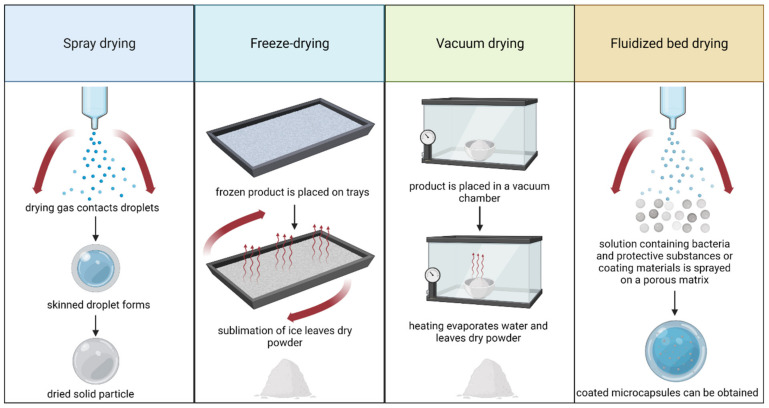
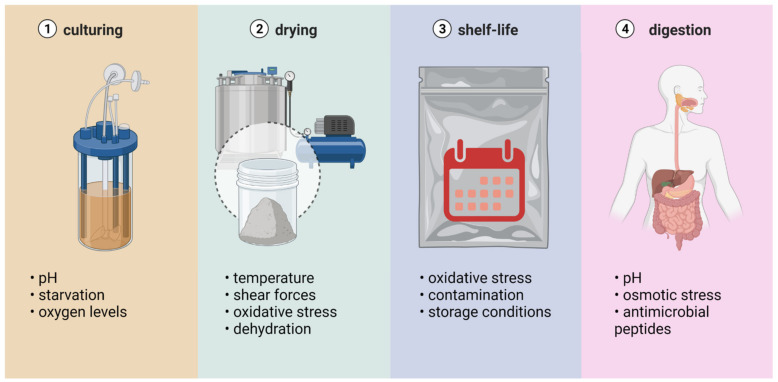
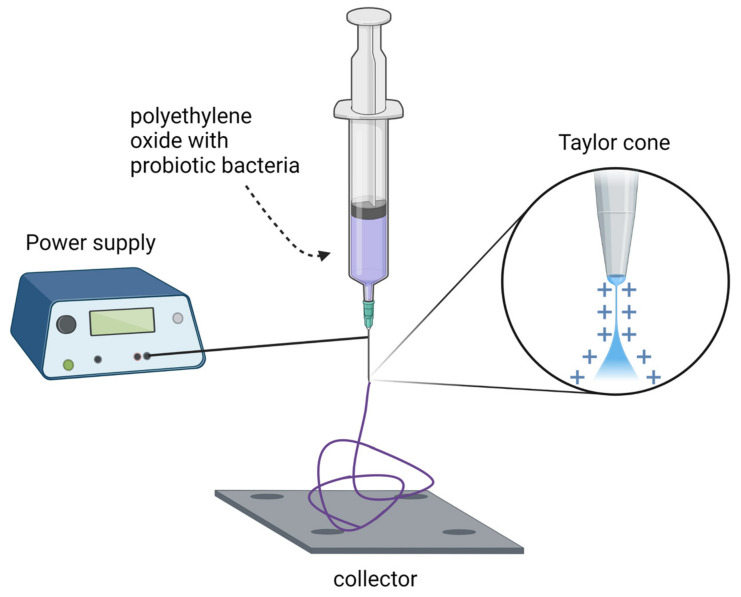
Preparations containing probiotic strains of bacteria have a beneficial effect on human and animal health. The benefits of probiotics translate into an increased interest in techniques for the preservation of microorganisms. This review compares different drying methods and their improvements, with specific reference to processing conditions, microorganisms, and protective substances. It also highlights some factors that may influence the quality and stability of the final probiotic preparations, including thermal, osmotic, oxidative, and acidic stresses, as well as dehydration and shear forces. Processing and storage result in the loss of viability and stability in probiotic formulations. Herein, the addition of protective substances, the optimization of process parameters, and the adaptation of cells to stress factors before drying are described as countermeasures to these challenges. The latest trends and developments in the fields of drying technologies and probiotic production are also discussed. These developments include novel application methods, controlled release, the use of food matrices, and the use of analytical methods to determine the viability of probiotic bacteria.
含有益生菌菌株的制剂对人类和动物健康具有有益作用。益生菌的益处使得人们对微生物保存技术的兴趣增加。本综述比较了不同的干燥方法及其改进,特别提及了加工条件、微生物和保护物质。它还强调了一些可能影响最终益生菌制剂质量和稳定性的因素,包括热、渗透、氧化和酸性应激,以及脱水和剪切力。加工和储存会导致益生菌制剂丧失活力和稳定性。在此,添加保护物质、优化工艺参数以及在干燥前使细胞适应应激因素被描述为应对这些挑战的对策。还讨论了干燥技术和益生菌生产领域的最新趋势和发展。这些发展包括新型应用方法、控释、食品基质的使用以及使用分析方法来确定益生菌的活力。