
使用EQ-5D评估巴西皮肤利什曼病患者的健康相关生活质量。
Health-related quality of life in Brazilian patients with cutaneous leishmaniasis using EQ-5D.
作者信息
Carvalho Janaína de Pina, Silva Sarah Nascimento, de Assis Tália Santana Machado, Galvão Endi Lanza, Moreira Mayra Soares, Andrade Mônica Viegas, de Souza Noronha Kenya Valéria Micaela, Cota Gláucia
机构信息
Pesquisa Clínica e Políticas Públicas em Doenças Infecciosas e Parasitárias, Núcleo de Avaliação de Tecinologias em Saúde, Instituto René Rachou, Fundação Oswaldo Cruz, Belo Horizonte, Minas Gerais, Brazil.
Centro de desenvolvimento e Planejamento Regional, Faculdade de Ciências Econômicas da Universidade Federal de Minas Gerais, Minas Gerais, Brazil.
出版信息
PLoS One. 2025 May 23;20(5):e0324788. doi: 10.1371/journal.pone.0324788. eCollection 2025.
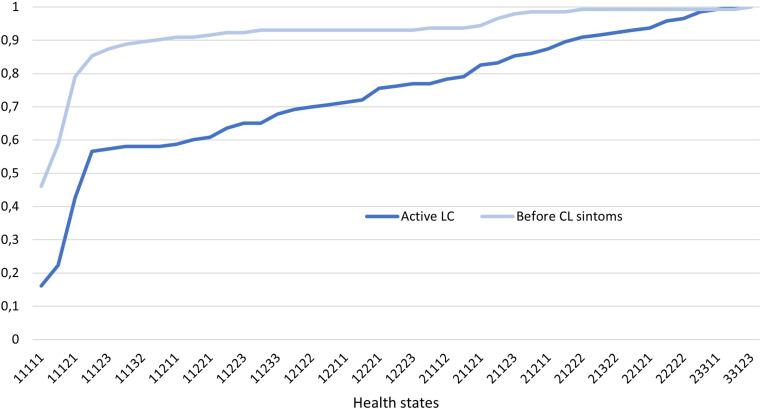
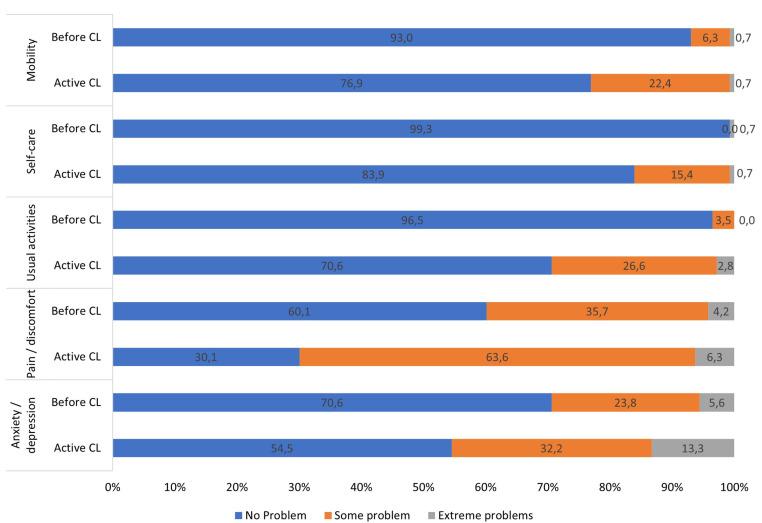
Cutaneous leishmaniasis (CL) is a neglected infectious disease with a global distribution and a known health-related quality of life (HRQoL) impact. However, no utility-based HRQoL assessments for CL patients are available. The aim of this study was to quantitatively assess the health-related quality of life among patients with CL attending a Brazilian reference center. A retrospective interview-based longitudinal study was conducted using the EQ-5D-3L/VAS to assess the current health status during active disease, and retrospectively before the onset of disease symptoms. In addition, socioeconomic data were collected via a standardized questionnaire, and sociodemographic and clinical data were collected directly from medical records. A total of 143 patients with a mean age of 52 (±17) years were included, 73% of whom were men. The mean utility score before the onset of CL symptoms was 0.858. Comparison of responses related to health status before and after disease onset revealed significant losses (p < 0.05) in all dimensions of the EQ-5D, especially those related to pain, malaise (50%) and usual activities (27%). CL also affected the median Visual Analogue Scale (VAS) score and utility score, which were 87 and 70 and 0.858 and 0.716, respectively. These results confirm the substantial negative impact of CL on all assessed dimensions of life, highlighting its role in perpetuating the cycle of suffering and poverty associated with neglected tropical diseases.
皮肤利什曼病(CL)是一种被忽视的传染病,在全球范围内均有分布,且对健康相关生活质量(HRQoL)有已知影响。然而,目前尚无基于效用的针对CL患者的HRQoL评估。本研究的目的是定量评估在巴西一家参考中心就诊的CL患者的健康相关生活质量。采用EQ-5D-3L/VAS进行了一项基于回顾性访谈的纵向研究,以评估疾病活动期的当前健康状况,以及在疾病症状出现之前的回顾性健康状况。此外,通过标准化问卷收集社会经济数据,并直接从病历中收集社会人口学和临床数据。共纳入143例患者,平均年龄为52(±17)岁,其中73%为男性。CL症状出现前的平均效用评分为0.858。对疾病发作前后与健康状况相关的回答进行比较,结果显示EQ-5D的所有维度均有显著下降(p < 0.05),尤其是与疼痛、不适(50%)和日常活动(27%)相关的维度。CL还影响了视觉模拟量表(VAS)评分中位数和效用评分中位数,分别为87和70以及0.858和0.716。这些结果证实了CL对所有评估的生活维度均有重大负面影响,突出了其在与被忽视热带病相关的痛苦和贫困循环持续存在中的作用。
 Zotero 插件