Frasson Ilaria, Quarta Santina, Ruvoletto Mariagrazia, Biasiolo Alessandra, Chinellato Monica, Turato Cristian, Maggi Maristella, Cendron Laura, Richter Sara N, Pontisso Patrizia
Department of Molecular Medicine, University of Padua, via Gabelli 63, 35128 Padua, Italy.
Department of Medicine, University of Padua, via Giustiniani, 2, 35128 Padua, Italy.
ACS Infect Dis. 2025 Sep 12;11(9):2411-2421. doi: 10.1021/acsinfecdis.5c00145. Epub 2025 May 23.
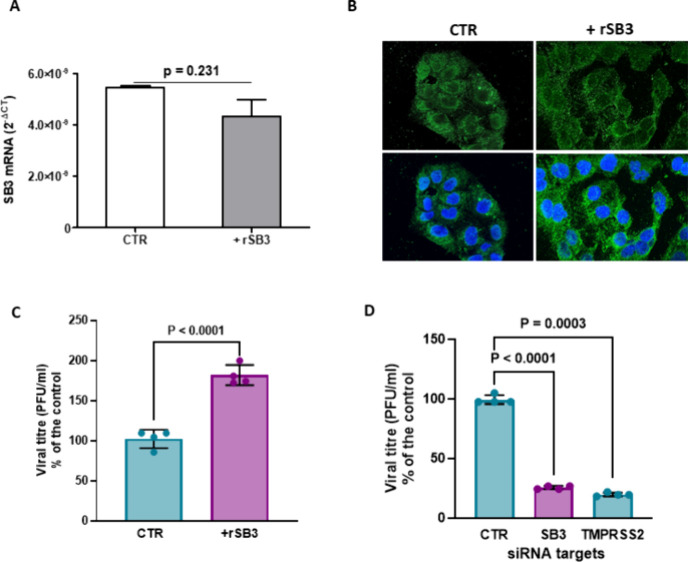
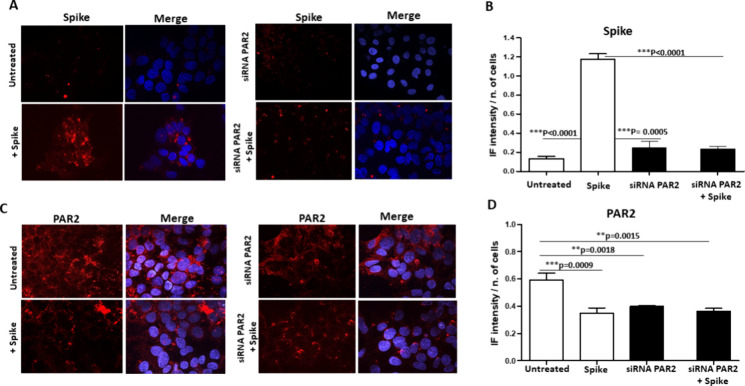
Recent research has proposed several host factors required for SARS-CoV-2 infection and involved in the inflammatory response. Among these, members of the human serpin family and PAR2 have been suggested to play a relevant role. As it has been shown that one of the multiple activities of protease inhibitor SerpinB3 is the activation of PAR2, we have modulated the expression of these two molecules on both human bronchial and hepatic cells and assessed cell surface Spike binding and SARS-CoV-2 infectivity. Our findings indicate that both SerpinB3 and PAR2 play a pivotal role in viral infection and downregulate the expression of interferon-γ, a cytokine with a well-known antiviral effect. These results underscore the potential of the SerpinB3-PAR2 axis as a target for antiviral therapy and provide support for addressing serpins as targets for this purpose.
最近的研究提出了几种新冠病毒感染所需并参与炎症反应的宿主因子。其中,人类丝氨酸蛋白酶抑制剂家族成员和蛋白酶激活受体2(PAR2)被认为发挥了相关作用。由于已有研究表明蛋白酶抑制剂丝氨酸蛋白酶抑制剂B3(SerpinB3)的多种活性之一是激活PAR2,我们调节了这两种分子在人支气管和肝细胞上的表达,并评估了细胞表面刺突蛋白结合和新冠病毒感染性。我们的研究结果表明,SerpinB3和PAR2在病毒感染中都起着关键作用,并下调了具有众所周知抗病毒作用的细胞因子γ干扰素的表达。这些结果强调了SerpinB3 - PAR2轴作为抗病毒治疗靶点的潜力,并为将丝氨酸蛋白酶抑制剂作为此目的的靶点提供了支持。