Lin Jiaquan, Zhang Zhichao, Meng Xiaorong, Yin Xiaofei, Pu Lingling, Xiang Chenhui, Yang Jing
Department of Radiology, CHINA MCC5 GROUP CORP. LTD. HOSPITAL, Chengdu, 610081, People's Republic of China.
Kangfu Kidney Hospital of Chengdu, Chengdu, 610047, People's Republic of China.
Clin Epidemiol. 2025 May 21;17:453-479. doi: 10.2147/CLEP.S521272. eCollection 2025.
With global aging, cancer burden rises. Kidney cancer is significantly influenced by high body mass index (BMI), especially in the elderly. This study analyzes the burden of kidney cancer attributable to high BMI in those aged ≥60, clarifying causes and future trends.
Using Global Burden of Disease (GBD) 2021 study, we assessed kidney cancer burden due to high BMI in population aged ≥60 from 1990 to 2021, comparing deaths, disability-adjusted life years (DALYs), age-standardized rate (ASR) of DALYs (ASDR), and mortality (ASMR). Stratified by Socio-Demographic Index (SDI), region, sex, and age, we evaluated spatiotemporal trends and inequalities. Finally, the Bayesian Age-Period-Cohort (BAPC) model predicted burden changes through 2040.
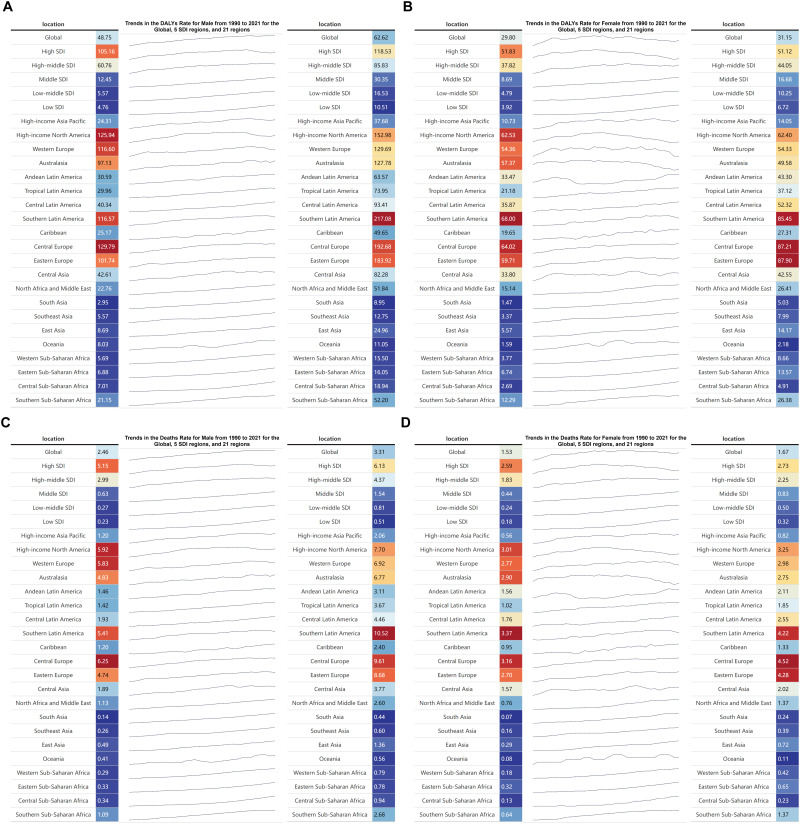
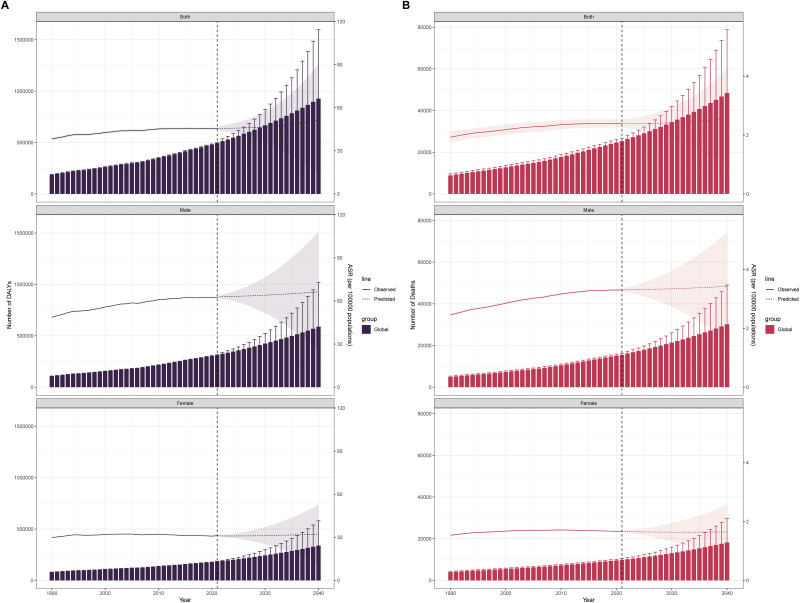
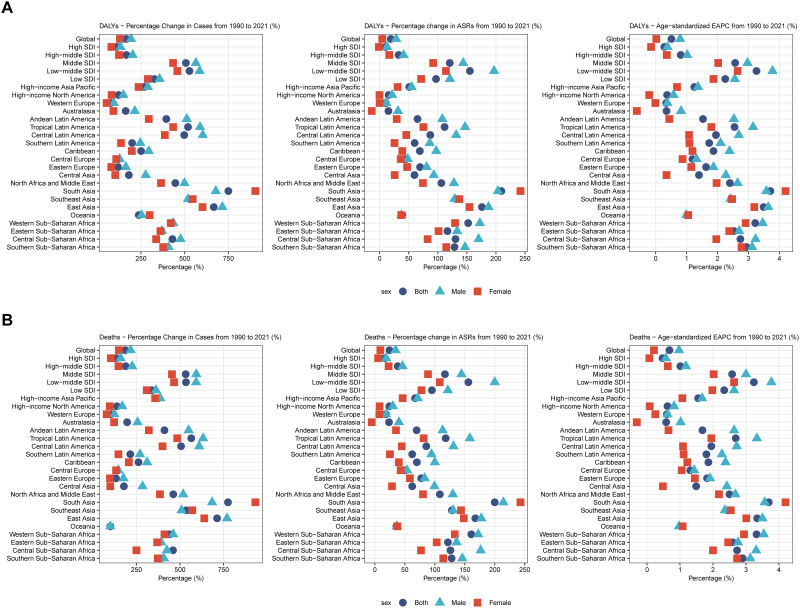
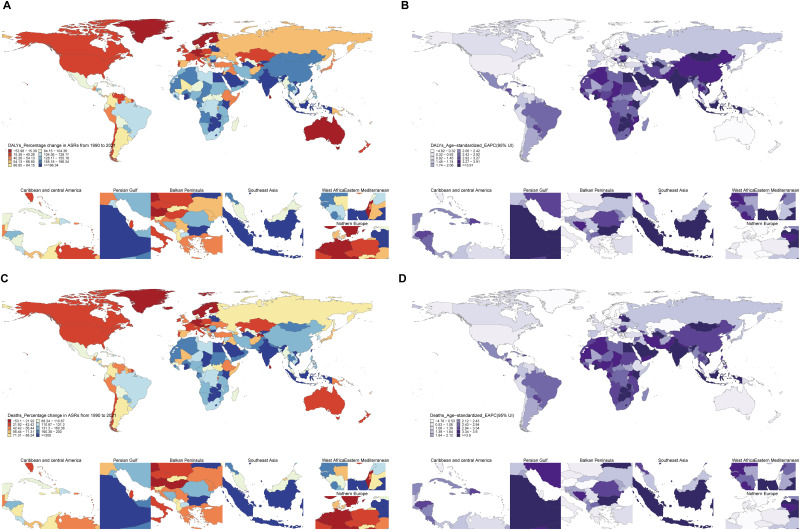
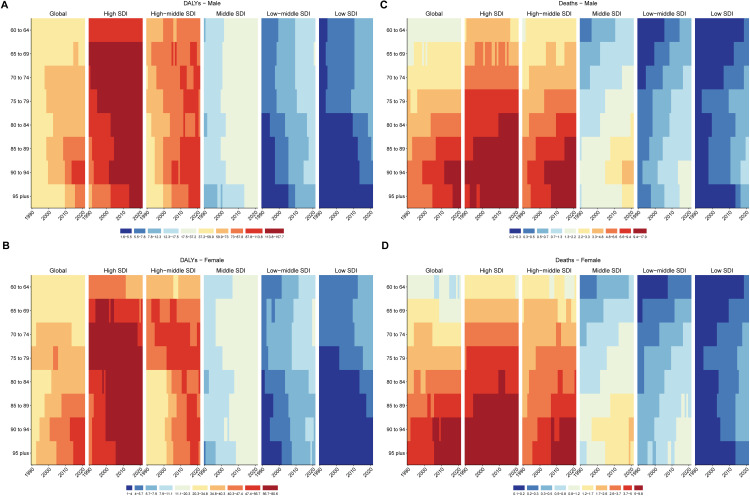
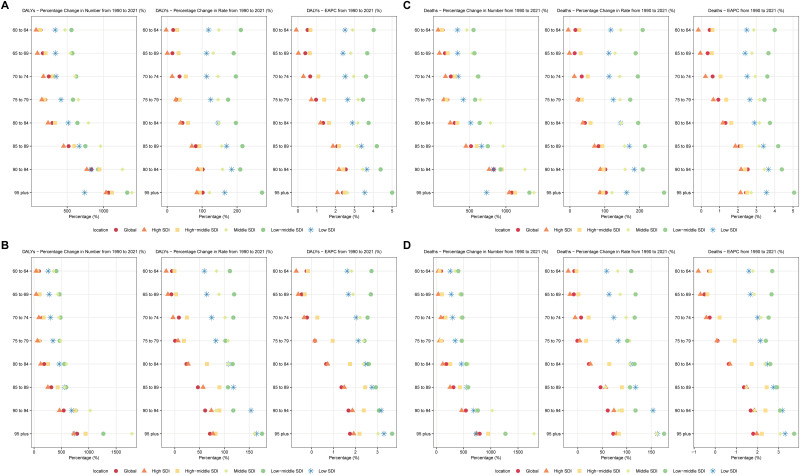
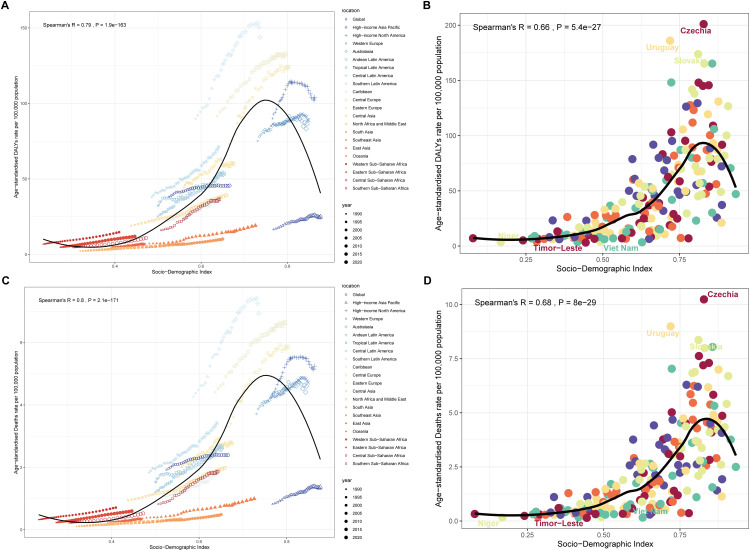
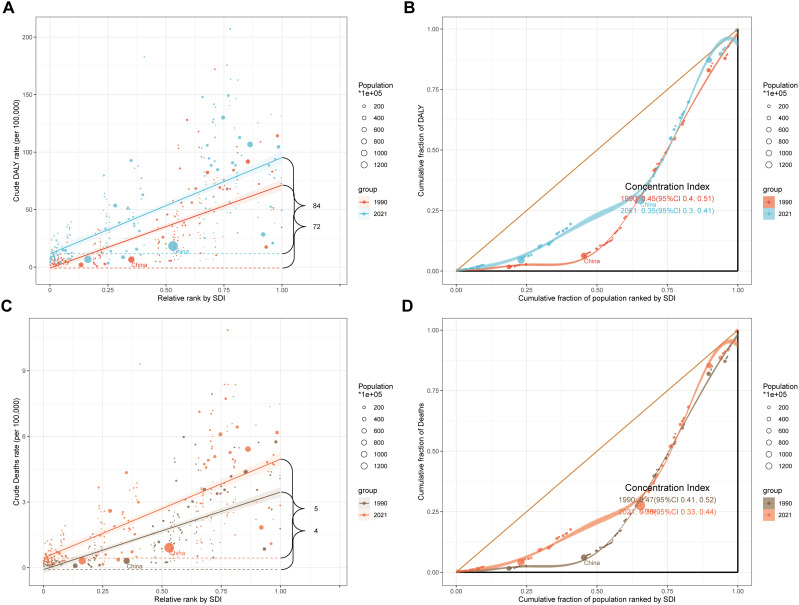
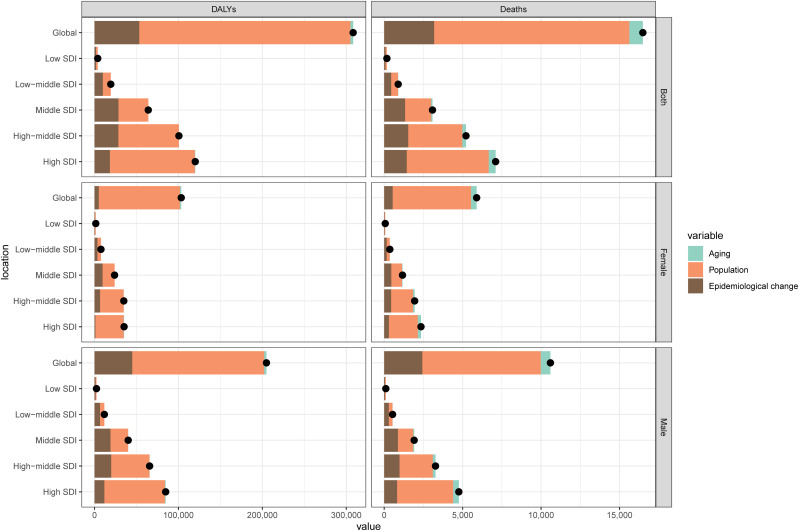
From 1990 to 2021, DALYs and deaths from high BMI-induced kidney cancer in those aged ≥60 increased by 165.82% and 186.39%, driven by population growth. In 2021, ASDR was 45.55/100,000 and ASMR 2.39/100,000. Regional differences were significant. DALYs and deaths expanded, especially in those aged ≥95. Males had higher burden than females. SDI correlated positively with ASDR and ASMR (r>0, P<0.05). Health inequalities continue to rise. By 2040, burden is projected to rise, especially in low-middle and low SDI regions, more in males.
This study shows a significant increase in kidney cancer burden due to high BMI in those aged ≥60 over 32 years, driven by population growth. Disparities across regions, genders, and age groups highlight the need for targeted prevention and early intervention, especially for high-risk groups (males, elderly, low-middle SDI regions), to reduce burden and optimize healthcare resource allocation.
随着全球老龄化,癌症负担加重。肾癌受高体重指数(BMI)影响显著,在老年人中尤为如此。本研究分析了60岁及以上人群中高BMI所致的肾癌负担,阐明其原因及未来趋势。
利用全球疾病负担(GBD)2021研究,我们评估了1990年至2021年60岁及以上人群中高BMI所致的肾癌负担,比较了死亡人数、伤残调整生命年(DALYs)、DALYs的年龄标准化率(ASR)(ASDR)和死亡率(ASMR)。按社会人口指数(SDI)、地区、性别和年龄分层,我们评估了时空趋势和不平等情况。最后,贝叶斯年龄-时期-队列(BAPC)模型预测了到2040年的负担变化。
1990年至2021年,60岁及以上人群中高BMI诱发的肾癌导致的DALYs和死亡人数分别增加了165.82%和186.39%,这是由人口增长驱动的。2021年,ASDR为45.55/10万,ASMR为2.39/10万。地区差异显著。DALYs和死亡人数有所增加,尤其是在95岁及以上人群中。男性的负担高于女性。SDI与ASDR和ASMR呈正相关(r>0,P<0.05)。健康不平等现象持续加剧。到2040年,预计负担将上升,尤其是在中低收入和低SDI地区,男性上升幅度更大。
本研究表明,在32年里,60岁及以上人群中高BMI所致的肾癌负担显著增加,这是由人口增长驱动的。地区、性别和年龄组之间的差异凸显了针对性预防和早期干预的必要性,特别是针对高危人群(男性、老年人、中低收入SDI地区),以减轻负担并优化医疗资源分配。