Cimbalnik J, Garcia-Salinas J S, Hamedi N, Prathapagiri S, Sarmiento Rivera L F, Galanina M, Dolezal J, Jurkovicova L, Daniel P, Kojan M, Roman R, Pail M, Sredniawa W, Fortuna W, Sluzewska-Niedzwiedz M, Smarzewska K, Reinacher P, Weiser A, Skok T, Piernicki T, Orzol A, Lier A, Seifzadeh S, Kostek Bozena, Czyzewski Andrzej, Tabakow Pawel, Brazdil Milan, Kucewicz Michal T
Department of Biomedical Engineering, International Clinical Research Center, St. Anne's University Hospital Brno, Brno, Czech Republic.
Brain & Mind Electrophysiology laboratory, BioTechMed Center, Multimedia Systems Department, Faculty of Electronics, Telecommunications and Informatics, Gdansk University of Technology, Gdansk, Poland.
Sci Data. 2025 May 28;12(1):899. doi: 10.1038/s41597-025-05222-2.
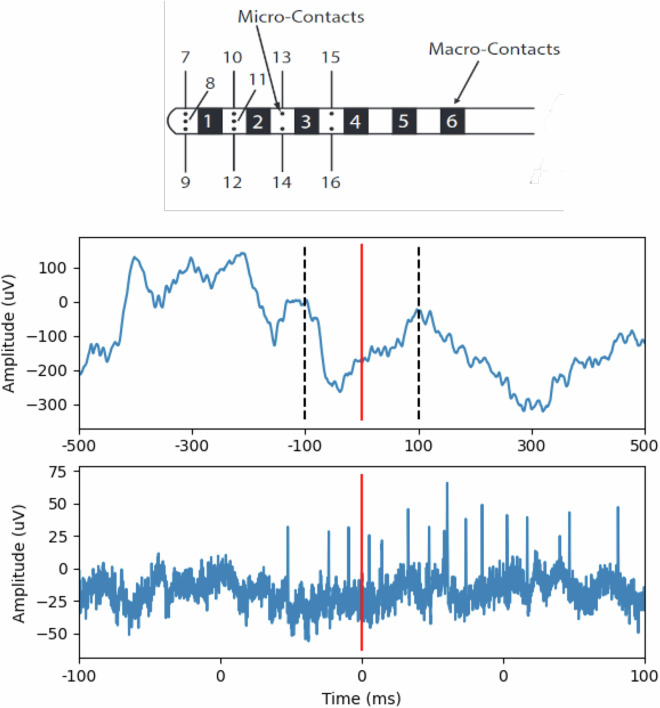
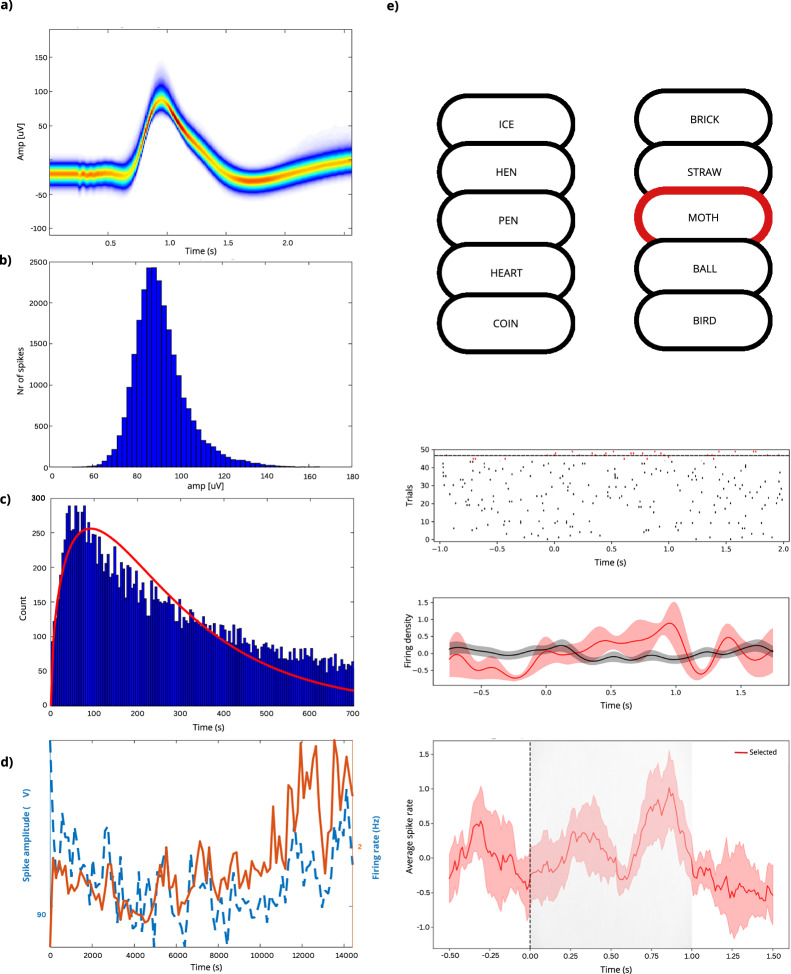
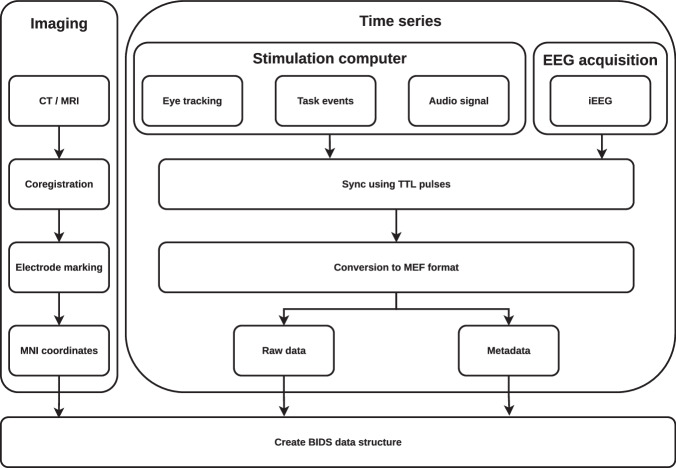
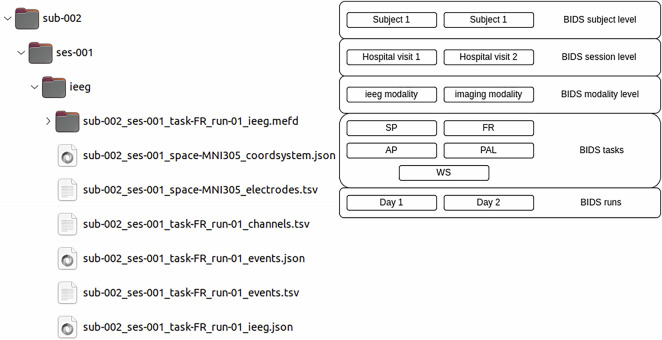
Intracranial human brain recordings from multiple implanted depth electrodes using stereo-EEG (sEEG) technology for seizure localization provide unique local field potential signals (LFP) sampled with standard macro- and special micro-electrode contacts. Over one hundred macro- and micro-contact LFP signals localized in particular brain regions were recorded from each sEEG monitoring case as patients engaged in an automated battery of verbal memory and non-verbal gaze movement tasks. Subject eye and vocal responses in both visual and auditory task versions were automatically detected in Polish, Czech, and Slovak languages with accurate timing of the correct and incorrect verbal responses using our web-based transcription tool. The behavioral events, LFP and pupillometric signals were synchronized and stored in a standard BIDS data structure with corresponding metadata. Each dataset contains recordings from at least one battery task performed over at least one day. The same set of 180 common nouns in the three languages was used across different battery tasks and recording days to enable the analysis of selective responses to specific word stimuli.
使用立体脑电图(sEEG)技术通过多个植入的深度电极进行颅内人脑记录以定位癫痫发作,可提供独特的局部场电位信号(LFP),这些信号是通过标准的宏观和特殊微电极触点采样得到的。在每个sEEG监测病例中,当患者进行一系列自动的言语记忆和非言语注视运动任务时,记录了一百多个定位在特定脑区的宏观和微触点LFP信号。使用我们基于网络的转录工具,以波兰语、捷克语和斯洛伐克语自动检测视觉和听觉任务版本中的受试者眼睛和声音反应,并准确记录正确和错误言语反应的时间。行为事件、LFP和瞳孔测量信号被同步并存储在具有相应元数据的标准BIDS数据结构中。每个数据集包含至少在一天内执行的至少一项电池任务的记录。在不同的电池任务和记录日中,使用三种语言中的同一组180个常用名词,以便分析对特定单词刺激的选择性反应。