Awad Abdu Alla Afra Mohamed, Eltyeeb Elnour Ashgan Elfadel, Olayiwola Aminat, Zahran Ehab, Mohamed Edris Rayan Zakria, Mohammed Ahmmed Nazik Abbas
Department of Pediatrics, Tuwaiq Medical Complex, Riyadh, SAU.
Department of Pediatric Hematology and Oncology, King Saud Medical City, Riyadh, SAU.
Cureus. 2025 Apr 27;17(4):e83056. doi: 10.7759/cureus.83056. eCollection 2025 Apr.
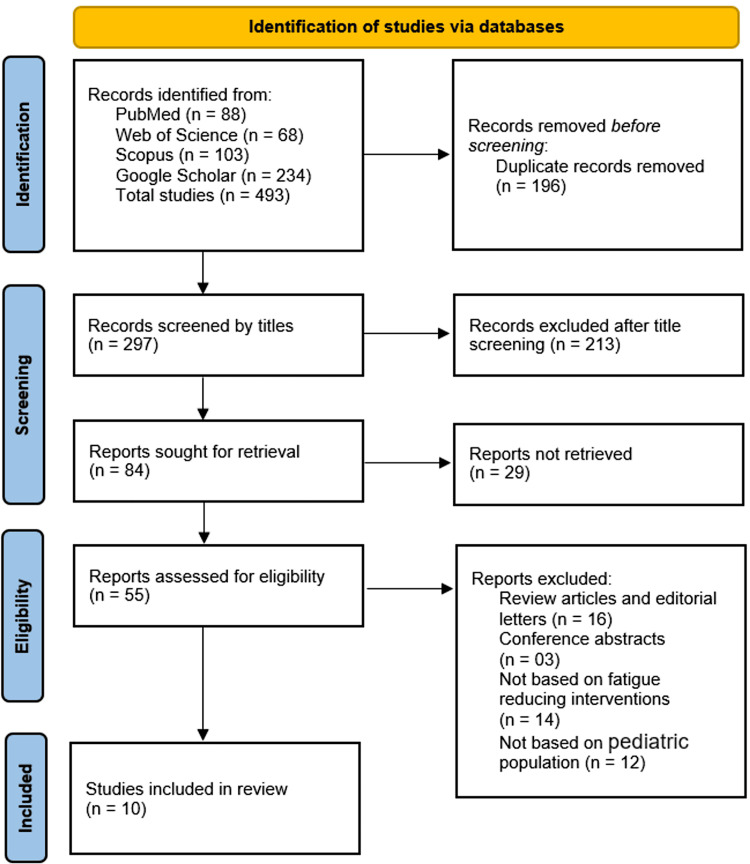
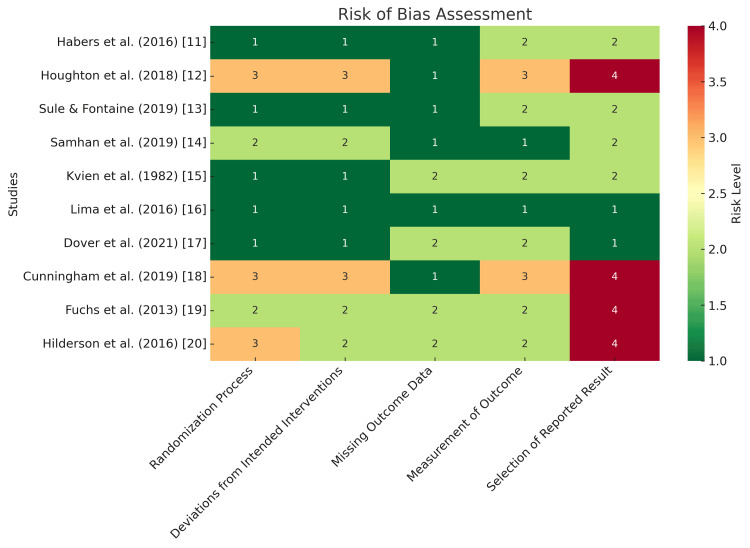
There are few intervention trials aimed at lowering fatigue in pediatric rheumatic conditions (PRCs), despite the fact that it is a common and upsetting symptom in these patients. The study's primary goal is to thoroughly examine the data pertaining to the effectiveness of treatments meant to lessen fatigue in PRC patients. We followed the Preferred Reporting Items for Systematic Reviews and Meta-Analyses (PRISMA) guidelines to search for relevant studies across four different databases (PubMed, Web of Science, Scopus, and Google Scholar). A total of 493 records were identified through database searches, and after removing 196 duplicates, 297 unique studies remained for screening. Following title screening and eligibility assessment, 45 studies were excluded for various reasons, and 10 studies met the inclusion criteria for this systematic review. The interventions included exercise treatment on land and in water, prednisolone, vitamin D and creatine supplements, psychological counseling, and a program for transitioning into a mature rheumatology program. Every included study measured fatigue using self-reported questionnaires. Two randomized controlled studies found land-based exercise treatment to be ineffective, while one pre-post intervention research found it to be useful. Compared to land-based exercise therapy, aquatic-based physical therapy was found to be more beneficial. Prednisolone combined with vitamin D significantly reduced subjective fatigue in two placebo-controlled trials. Creatine did not seem to be beneficial. The effectiveness of the present therapies to lessen fatigue in PRCs is not sufficiently supported by the available data. Future research should focus on intervention studies targeted at treating fatigue in adolescents and children with PRCs, as indicated by the small number of investigations, non-comparable therapies, risk of bias, and unclear outcomes of the included studies. It is necessary to identify potential underlying biological and psychological pathways as potential therapy targets in order to lessen fatigue symptoms in kids and teenagers with PRCs.
尽管疲劳是儿科风湿性疾病(PRC)患者常见且令人苦恼的症状,但旨在降低PRC患者疲劳的干预试验却很少。本研究的主要目的是全面审查与旨在减轻PRC患者疲劳的治疗效果相关的数据。我们遵循系统评价和荟萃分析的首选报告项目(PRISMA)指南,在四个不同的数据库(PubMed、科学网、Scopus和谷歌学术)中搜索相关研究。通过数据库搜索共识别出493条记录,去除196条重复记录后,剩余297项独特研究用于筛选。经过标题筛选和资格评估,45项研究因各种原因被排除,10项研究符合本系统评价的纳入标准。干预措施包括陆地和水中运动治疗、泼尼松龙、维生素D和肌酸补充剂、心理咨询以及向成熟风湿病项目过渡的计划。每项纳入研究均使用自我报告问卷测量疲劳。两项随机对照研究发现陆地运动治疗无效,而一项干预前后研究发现其有用。与陆地运动疗法相比,水上物理疗法被发现更有益。在两项安慰剂对照试验中,泼尼松龙联合维生素D显著降低了主观疲劳。肌酸似乎没有益处。现有数据不足以支持目前治疗减轻PRC患者疲劳的有效性。如纳入研究数量少、治疗方法不可比、存在偏倚风险以及结果不明确所示,未来研究应侧重于针对PRC青少年和儿童疲劳治疗的干预研究。有必要确定潜在的生物学和心理途径作为潜在的治疗靶点,以减轻PRC儿童和青少年的疲劳症状。