Heredia-Pi Ileana B, Orozco-Núñez Emanuel, Guerrero-López Carlos M, Cerecer-Ortiz Nadia, Ojeda-Arroyo Enai, Allen-Leigh Betania, Jan Stephen, Downey Laura, Serván-Mori Edson
Center for Health Systems Research, The National Institute of Public Health, Cuernavaca, Morelos, Mexico.
Center for Population Health Research, The National Institute of Public Health, Cuernavaca, Morelos, Mexico.
Int J Equity Health. 2025 May 30;24(1):157. doi: 10.1186/s12939-025-02523-1.
To analyse the gendered experience of women and men living with type 2 diabetes mellitus (T2D) related to diagnosis, treatment, and control in rural and urban contexts of Mexico.
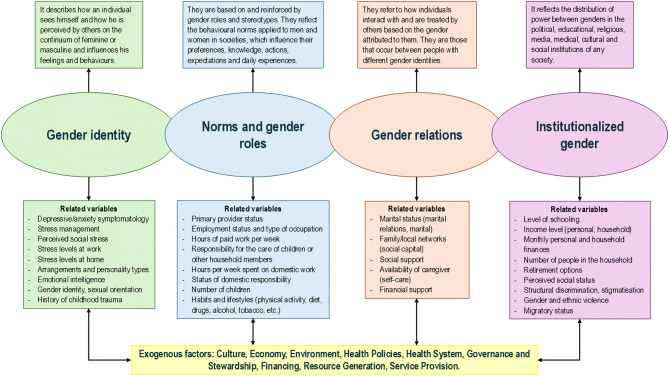
Qualitative ethnographic study. Thirty-six adults (21 women and 15 men) with a confirmed diagnosis of T2D for more than five years residing in urban and rural localities in Baja California and Morelos participated in this qualitative study between November 2022 and February 2023. A semi-structured interview guide was used to explore lifestyle changes, social and community networks, work and living conditions, experience with the disease, health services and associated economic burden. The analysis was guided by four conceptual domains of gender influence: identity, norms and roles, relationships and institutionalised gender.
Women were more likely to report difficulty in accepting the diagnosis of T2D and stress in coping with the disease and related lifestyle changes. Men were more likely to report impact of T2D on their job and role as household providers, and their inability to contribute to the care of other family members. Women were more likely to report leaving their jobs, taking on caregiving responsibilities for family members, experiencing difficulty in accessing healthcare, and prioritizing their health in comparison to men. Men reported receiving more support from their partners, faced fewer financial barriers to care access, and had more freedom to pay for their medications and seek treatment in private care. However, they were also less adherent to treatment and disease care measures.
Gender appears to substantially influence experience of living with T2D. Women were more likely to provide family support and less likely to receive it and reported greater financial barriers to care access in comparison to men. Men were more likely to experience stress in relation to their employment as primary providers for their family, and less likely to adhere to prescribed medical management of their condition. These findings should be considered in more targeted health policy interventions to promote greater gender equity in the care of those with T2D in Mexico.
分析在墨西哥城乡环境中,2型糖尿病(T2D)患者在诊断、治疗和控制方面的性别差异体验。
定性人种学研究。2022年11月至2023年2月期间,36名确诊T2D超过五年的成年人(21名女性和15名男性)参与了此项定性研究,他们居住在下加利福尼亚州和莫雷洛斯州的城乡地区。采用半结构化访谈指南,探讨生活方式的变化、社会和社区网络、工作和生活条件、疾病体验、医疗服务及相关经济负担。分析以性别影响的四个概念领域为指导:身份认同、规范和角色、关系以及制度化性别。
女性更有可能报告在接受T2D诊断时存在困难,以及在应对疾病和相关生活方式变化时感到压力。男性更有可能报告T2D对其工作以及作为家庭供养者角色的影响,以及他们无法为照顾其他家庭成员做出贡献。与男性相比,女性更有可能报告辞去工作、承担照顾家庭成员的责任、在获得医疗保健方面遇到困难,以及将自身健康置于优先地位。男性报告从伴侣那里得到更多支持,在获得医疗服务方面面临的经济障碍较少,并且在支付药物费用和寻求私人医疗治疗方面有更大的自由度。然而,他们对治疗和疾病护理措施的依从性也较低。
性别似乎对T2D患者的生活体验有重大影响。与男性相比,女性更有可能提供家庭支持但较少获得支持,并且报告在获得医疗服务方面面临更大的经济障碍。男性作为家庭主要供养者,在就业方面更有可能感到压力,并且对规定的病情医疗管理的依从性较低。在墨西哥,制定更具针对性的卫生政策干预措施时应考虑这些发现,以促进在T2D患者护理方面实现更大的性别平等。