Buser Julie M, Tengera Olive, Jiang Charley, Kumakech Edward, Gray Rachel, Mukeshimana Madeleine, Kaberuka Gerard, Bazakare Marie Laetitia Ishimwe, Ayikoru Jackline, Ntasumbumuyange Diomede, Endale Tamrat, Pebolo Pebalo Francis, Auma Anna Grace, August Ella, Smith Yolanda R
Center for International Reproductive Health Training (CIRHT), University of Michigan, Ann Arbor, MI, 48105, USA.
College of Medicine and Health Sciences, University of Rwanda, Kigali, Rwanda.
Reprod Health. 2025 May 31;22(1):94. doi: 10.1186/s12978-025-02047-5.
Research training in Sub-Saharan Africa is crucial for strengthening the capacity of healthcare professionals and researchers to address specific sexual and reproductive health (SRH) challenges within their communities. Interventions that enhance research capacity and foster a culture of innovation within existing structures offer a practical and economical strategy capable of addressing national and sub-national SRH needs. This study evaluated an intervention to enhance reproductive health research skills to assess research competence changes among participants.
A pre-post intervention design was employed. Pre- and post-program assessments were conducted using the Clinical Research Appraisal Inventory (CRAI)-12 scale to establish baseline and endline levels of research competence. Descriptive statistics, chi-squared and Kruskal Wallis tests were used to analyze data. Our data interpretation is guided by the Social Cognitive Career Theory.
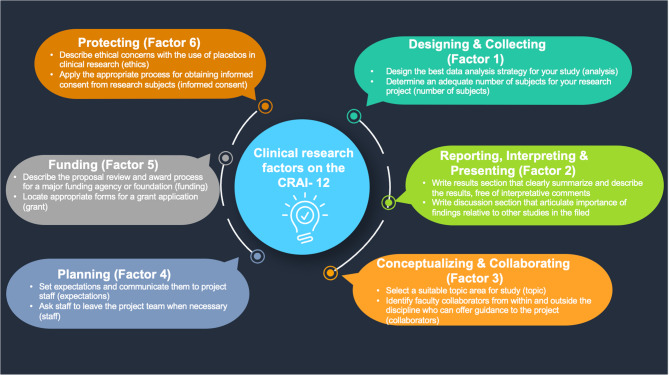
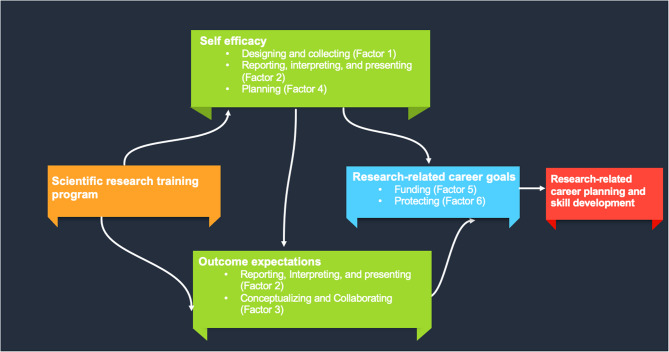
Faculty members and clinicians from Uganda and Rwanda completed the intervention and 84 had complete baseline while 77 had complete endline data. Analyses revealed significant improvements in nearly every item on the CRAI-12 scale after the research training program, including increased Self-Efficacy in Designing and Collecting Data (Factor 1); Reporting, Interpreting and Presenting (Factor 2); Conceptualizing and Collaborating (Factor 3); Setting Expectations for Research Staff (part of Factor 4); Describing the Funding Process (Part of Factor 5); and Protecting Study Participants (Factor 6) (all p = < 0.05). The only items that did not improve significantly were Confidence in Asking Staff to Leave the Project Team when Necessary (part of Factor 4) and Locating the Appropriate Grant Application Forms (part of Factor 5).We proposed a conceptual framework outlining the hypothesized pathways through which training and skill development influence research-related career planning and progression.
The research training intervention effectively improved participants' research competence. These findings underscore the importance of structured research training programs in enhancing research skills. Future research should focus on longitudinal assessments to explore sustained changes and the enduring impact of self-efficacy, outcome expectations (anticipations about career-related consequences), and research-related career goals on career planning and skill development.
撒哈拉以南非洲地区的研究培训对于增强医疗保健专业人员和研究人员应对其社区内特定性与生殖健康(SRH)挑战的能力至关重要。在现有架构内提高研究能力并培育创新文化的干预措施提供了一种切实可行且经济高效的策略,能够满足国家和次国家级别的SRH需求。本研究评估了一项旨在提高生殖健康研究技能的干预措施,以评估参与者研究能力的变化。
采用干预前后设计。使用临床研究评估量表(CRAI)-12进行项目前和项目后的评估,以确定研究能力的基线水平和终末水平。使用描述性统计、卡方检验和克鲁斯卡尔-沃利斯检验分析数据。我们的数据解释以社会认知职业理论为指导。
来自乌干达和卢旺达的教员和临床医生完成了干预,84人有完整的基线数据,77人有完整的终末数据。分析显示,在研究培训项目之后,CRAI-12量表上几乎每个项目都有显著改善,包括在设计和收集数据方面自我效能感的提高(因素1);报告、解释和展示(因素2);概念化和协作(因素3);为研究人员设定期望(因素4的一部分);描述资助过程(因素5的一部分);以及保护研究参与者(因素6)(所有p < 0.05)。唯一没有显著改善的项目是在必要时要求工作人员离开项目团队的信心(因素4的一部分)和找到合适的资助申请表(因素5的一部分)。我们提出了一个概念框架,概述了培训和技能发展影响与研究相关的职业规划和进展的假设途径。
该研究培训干预有效地提高了参与者的研究能力。这些发现强调了结构化研究培训项目在提高研究技能方面的重要性。未来的研究应侧重于纵向评估,以探索自我效能感、结果期望(对与职业相关后果的预期)以及与研究相关的职业目标对职业规划和技能发展的持续变化和持久影响。