Ezeamii Victor C, Egbuchiem Alex N, Obianyo Chekwube M, Nwoke Providence, Okwuonu Lilian
Public Health, Jiann-Ping Hsu College of Public Health, Georgia Southern University, Statesboro, USA.
Public Health Research, College of Public Health, University of Nebraska Medical Center, Omaha, USA.
Cureus. 2025 May 1;17(5):e83306. doi: 10.7759/cureus.83306. eCollection 2025 May.
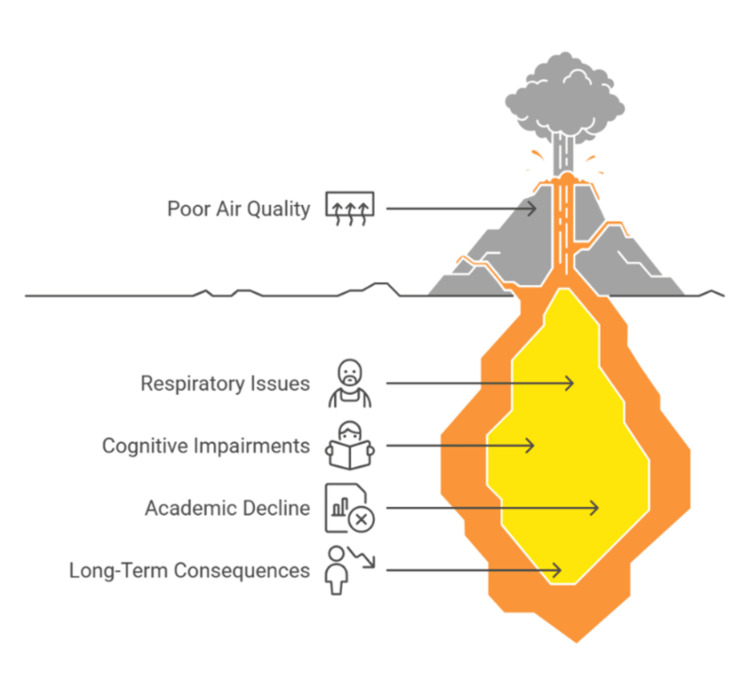
In schools, indoor air quality (IAQ) is critical to students' health, cognitive performance, and overall well-being. Poor ventilation can lead to increased exposure to airborne pollutants, exacerbating respiratory conditions, such as childhood asthma, while impairing concentration, memory, and academic performance. Poor IAQ contributes to nearly 14 million missed school days annually due to asthma-related complications and a 15% increase in asthma-related hospital visits among students. This review examines the impact of ventilation improvements on air quality, cognitive function, and asthma prevalence among school-aged children. It explores various air quality monitoring techniques, the effectiveness of ventilation upgrades, and the regulatory frameworks guiding indoor air quality in educational settings. Literature suggests that enhanced ventilation strategies, such as high-efficiency particulate air (HEPA) filtration and increased outdoor air exchange, significantly reduce indoor pollutants. These improvements correlate with better respiratory health outcomes and cognitive enhancements, demonstrating the need for evidence-based policies to promote optimal IAQ in schools. School administrators and policymakers can foster healthier learning environments that support student development and long-term well-being by integrating air quality monitoring with sustainable ventilation strategies. The review underscores the urgency of adopting cost-effective, scalable air quality interventions to mitigate health risks and enhance academic performance in educational institutions.
在学校,室内空气质量(IAQ)对学生的健康、认知表现和整体幸福感至关重要。通风不良会导致接触空气传播污染物增加,加剧呼吸道疾病,如儿童哮喘,同时损害注意力、记忆力和学业表现。由于与哮喘相关的并发症,室内空气质量差每年导致近1400万个缺课日,学生中与哮喘相关的住院就诊增加15%。本综述探讨了通风改善对学龄儿童空气质量、认知功能和哮喘患病率的影响。它探讨了各种空气质量监测技术、通风升级的有效性以及指导教育环境中室内空气质量的监管框架。文献表明,高效空气微粒(HEPA)过滤和增加室外空气交换等强化通风策略可显著减少室内污染物。这些改善与更好的呼吸健康结果和认知增强相关,表明需要基于证据的政策来促进学校的最佳室内空气质量。学校管理人员和政策制定者可以通过将空气质量监测与可持续通风策略相结合,营造更健康的学习环境,以支持学生发展和长期幸福感。该综述强调了采用具有成本效益、可扩展的空气质量干预措施以减轻教育机构中的健康风险并提高学业表现的紧迫性。