Gleizes Antoine, Janto Nicolas V, Bombin Sergei, Rao Vivek, Ari Gurel, Sun Siyang, Fonseca Maria, Gracz Adam D
Department of Medicine, Division of Digestive Diseases, Emory University. Atlanta, GA USA.
Graduate Program in Genetics and Molecular Biology, Emory University. Atlanta, GA USA.
bioRxiv. 2025 May 13:2025.05.08.652522. doi: 10.1101/2025.05.08.652522.
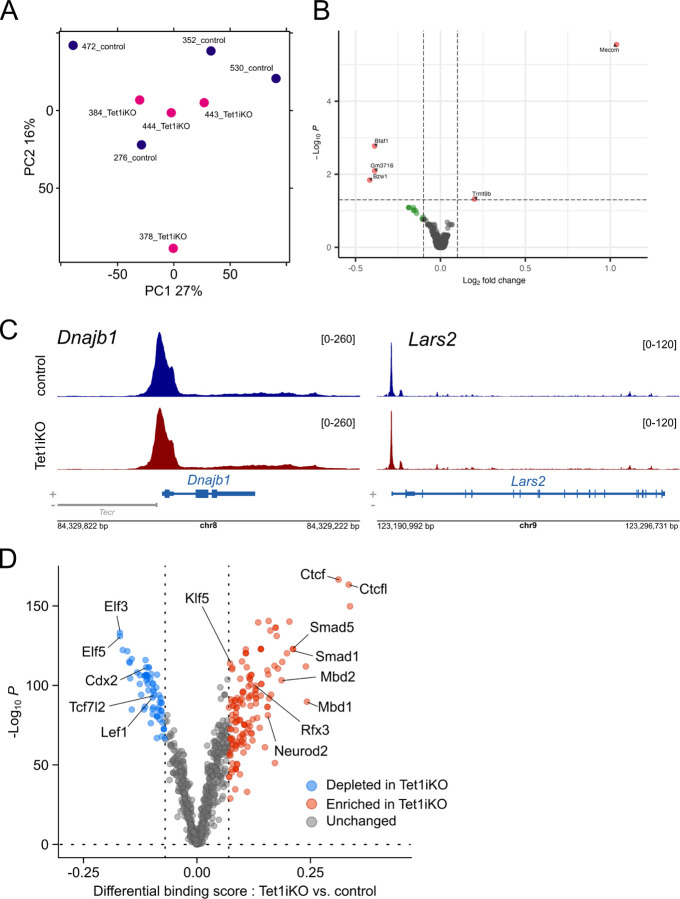
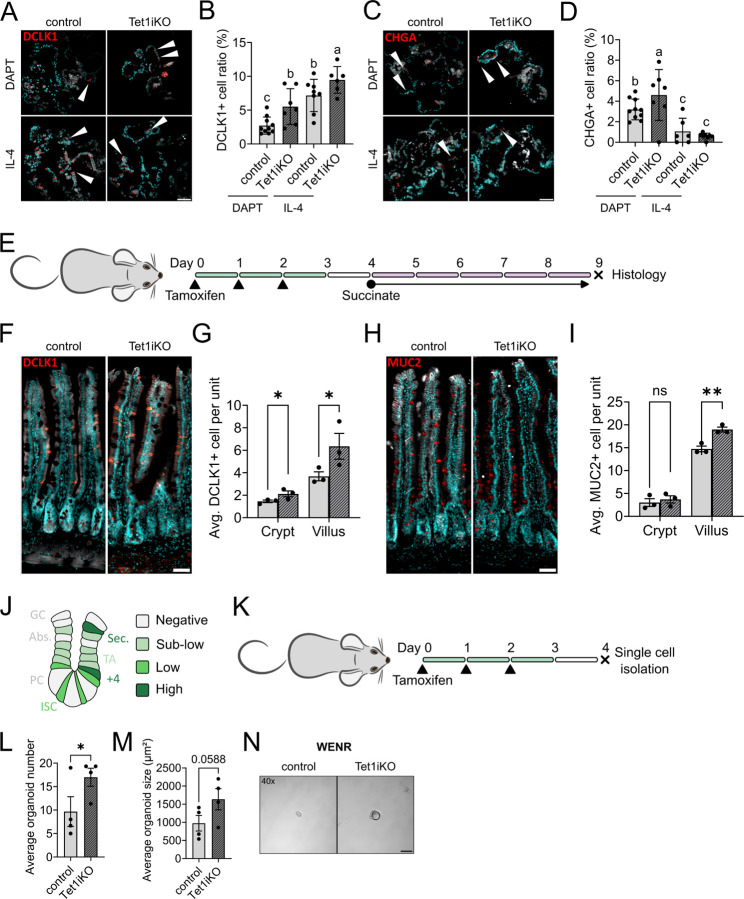
Intestinal stem cells (ISCs) balance self-renewal and differentiation to maintain the intestinal epithelial barrier, which is replaced weekly throughout adult life. Genetic control of ISC differentiation is well-defined relative to transcription factor (TF) activity, but less is known regarding the role of chromatin regulation in ISC biology. Prior work from our lab and others has shown that , a chromatin modifying enzyme involved in DNA demethylation, is specifically enriched in ISCs and early secretory progenitors. While constitutive loss of is associated with defects in early postnatal ISC development, its role in adult ISC biology remains unknown. Here, we show that safeguards ISC fate decisions by reducing sensitivity to extrinsic signaling. Inducible, intestine-specific knockout mice (Tet1iKO) exhibit environmentally sensitive phenotypes, including absorptive differentiation bias and premature expression of mature absorptive transcripts in ISCs. These phenotypes are largely "silenced" in animals housed in a high-level barrier facility, where Tet1iKO epithelium closely resembles controls. Despite the lack of baseline phenotype in these conditions, Tet1iKO mice retain increased sensitivity to pro-differentiation signaling. , succinate administration induces increased tuft and goblet cell hyperplasia in the absence of , while Tet1iKO organoids cultured with IL-4 or DAPT exhibit increased tuft and enteroendocrine cell specification, respectively. While ATAC-seq of Tet1iKO ISCs reveals minimal changes in chromatin accessibility, footprinting analysis suggests increased binding of lineage-specific TFs and CTCF even in the absence of cellular phenotypes. Together, our data demonstrate that serves as a "buffer" against ISC differentiation and suggest that it does so in a lineage agnostic manner that is not dependent on changes in chromatin accessibility.
肠道干细胞(ISC)通过平衡自我更新和分化来维持肠道上皮屏障,在成年期,整个肠道上皮屏障每周都会更新。相对于转录因子(TF)活性而言,ISC分化的遗传控制已得到充分阐明,但关于染色质调控在ISC生物学中的作用,我们所知甚少。我们实验室及其他团队之前的研究表明,一种参与DNA去甲基化的染色质修饰酶在ISC和早期分泌祖细胞中特异性富集。虽然该酶的组成性缺失与出生后早期ISC发育缺陷有关,但其在成年ISC生物学中的作用仍不清楚。在这里,我们表明该酶通过降低对外源信号的敏感性来保障ISC的命运决定。可诱导的、肠道特异性该酶敲除小鼠(Tet1iKO)表现出对环境敏感的表型,包括吸收性分化偏向以及ISC中成熟吸收性转录本的过早表达。在饲养于高级屏障设施中的动物中,这些表型在很大程度上“沉默”了,在该设施中,Tet1iKO上皮与对照非常相似。尽管在这些条件下缺乏基线表型,但Tet1iKO小鼠对促分化信号仍保持较高的敏感性。例如,给予琥珀酸盐会在缺乏该酶的情况下诱导簇状细胞和杯状细胞增生增加,而用白细胞介素-4或DAPT培养的Tet1iKO类器官分别表现出簇状细胞和肠内分泌细胞特化增加。虽然对Tet1iKO ISC的ATAC-seq分析显示染色质可及性变化极小,但足迹分析表明,即使在没有细胞表型的情况下,谱系特异性TF和CTCF的结合也会增加。总之,我们的数据表明该酶作为一种抵御ISC分化的“缓冲剂”,并且表明它以一种不依赖于染色质可及性变化的谱系无关方式发挥作用。