Wang YanRan, Zou XiaoHang, Liu YuQing, Shi GuoLin, Li Xiang, Han Xiao, Zhang Pan, Yang Hui
School of Life Sciences, Northwestern Polytechnical University, 127 West Youyi Road, Xi'an, Shaanxi, 710072, China.
Engineering Research Center of Chinese Ministry of Education for Biological Diagnosis, Treatment and Protection Technology and Equipment, Xi'an, Shaanxi, China.
Stem Cell Res Ther. 2025 Jun 4;16(1):287. doi: 10.1186/s13287-025-04413-3.
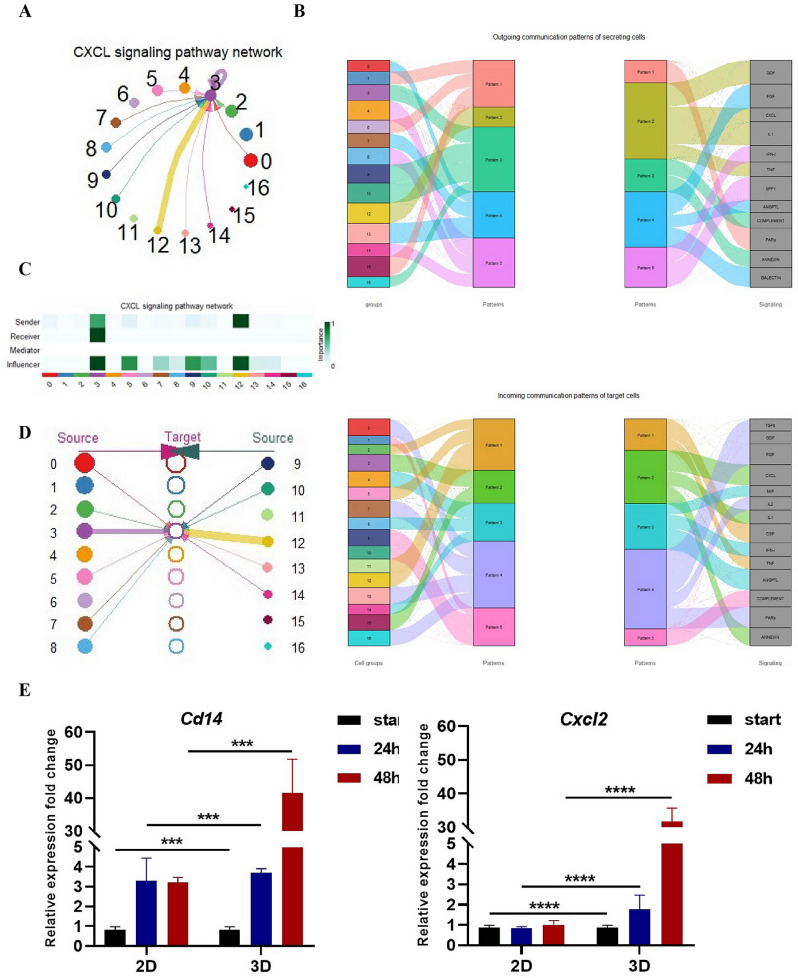
The influence of scaffolds with bone marrow (BM) niche-like mechanical properties on the stemness and lineage differentiation of hematopoietic stem cells (HSCs) in vitro has been studied. Previous research has demonstrated that 3D collagen hydrogels can regulate the differentiation trajectory of late myeloid progenitors, leading to the specialization of '3D-macrophages' that express various chemokine genes, including Cxcl2 and Cd14. Comprehensive transcriptional profiles in single-cell level have characterized the interaction between 3D-macrophages and neutrophil clusters through the CXCL2/CXCR2 ligand-receptor binding. Therefore, in this study, we aim to confirm the recruited effect of 3D-macrophage subsets on neutrophils during the immune process.
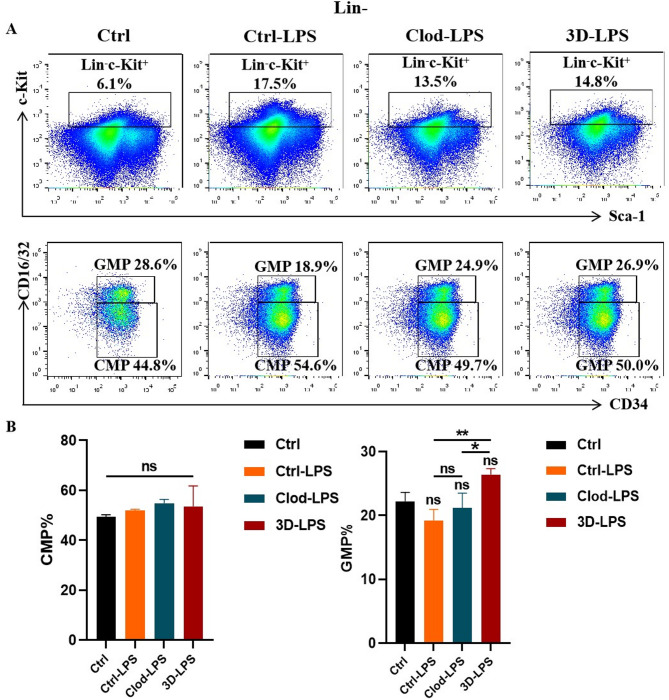
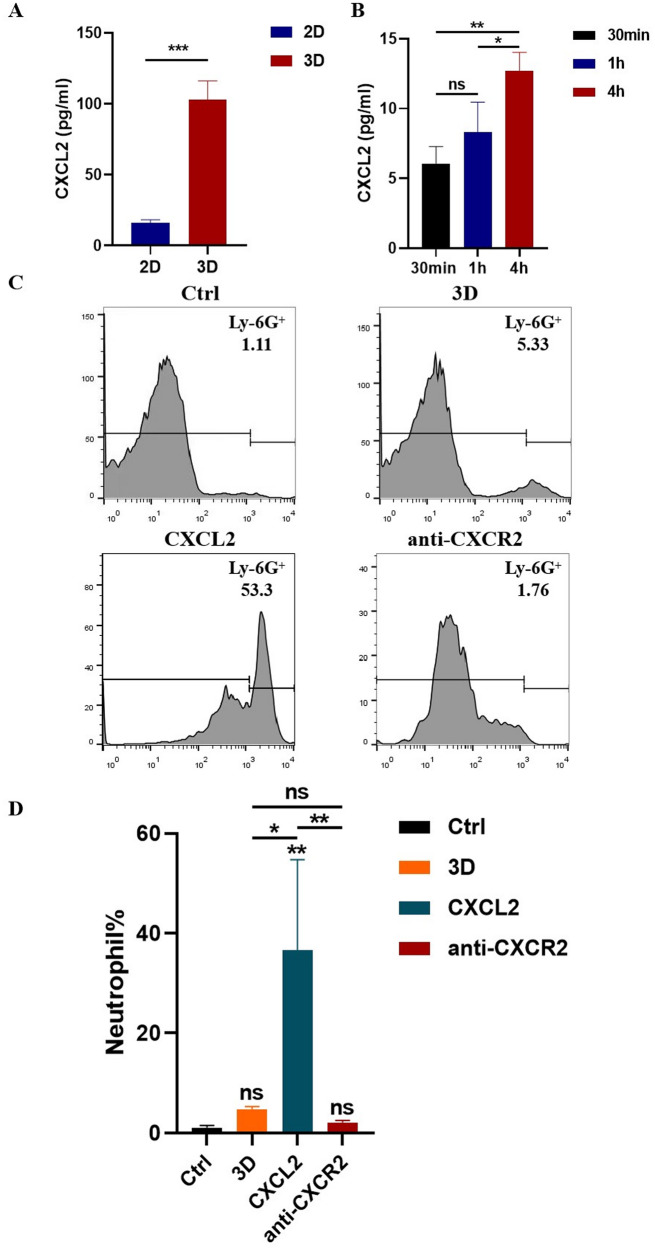
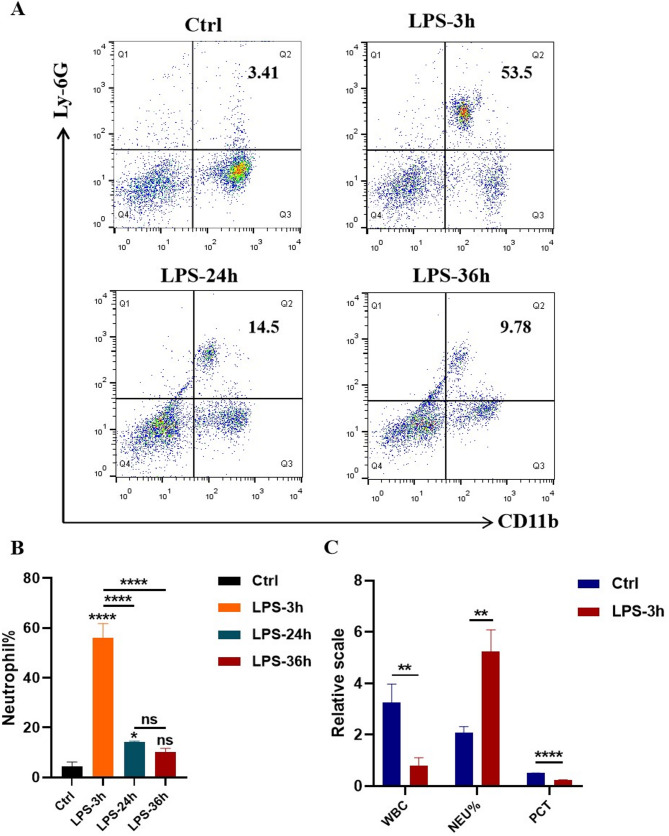
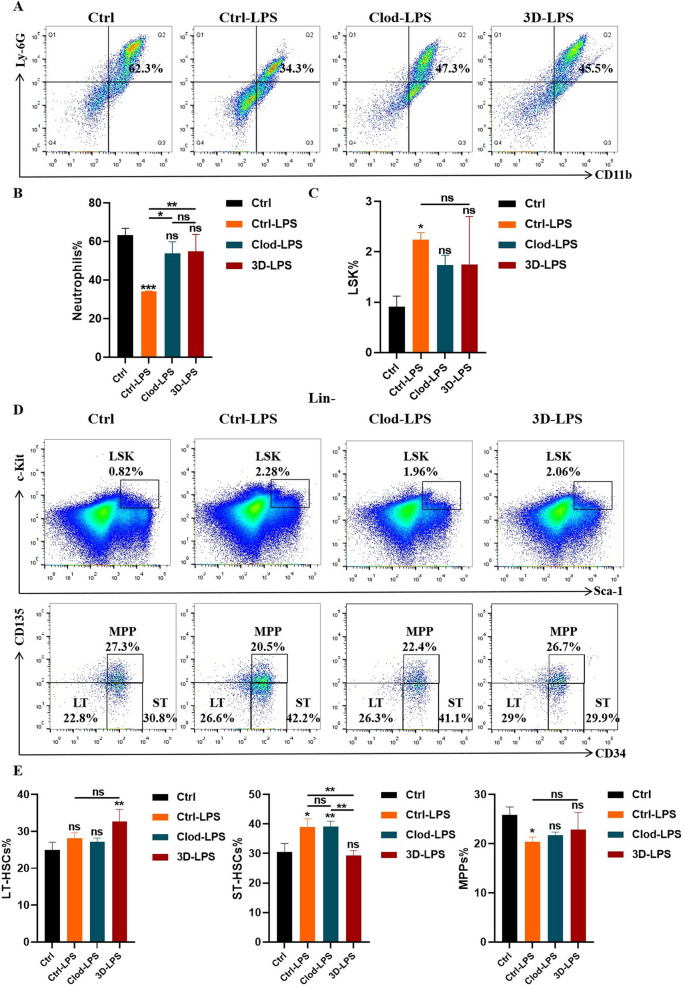
In this study, 3D collagen hydrogels were constructed to culture HSCs in vitro, then CD14 cells, 3D-macrophages, which generated from HSCs regulated by mechanical microenvironment were purified from 3D gels by using specific antibody CD14 labeling and flow cytometry. First of all, the ability of 3D-macrophages to recruit neutrophils by secreting CXCL2 ligands was investigated in vitro by ELISA and Transwell experiments in vitro. Then, macrophage-deficient mice models were constructed by clodronate liposomes, after 3D-macrophages were transplanted into this models, lipopolysaccharide (LPS) was used to repeat peritonitis to investigate whether 3D-macrophages could recruit neutrophils by secreting CXCL2 ligands and maintain the output of HSCs pool to granulocyte-monocyte progenitor cells (GMPs) pool to sustain the subsequent immune response.
In vitro experiments show that 3D-macrophages can recruit neutrophils by expressing Cxcl2. The effect of recruitment can also be observed in the peritonitis mice model, where macrophage ablation is experienced, followed by 3D-macrophage transplantation. CD14 macrophages reach the site of inflammation, not only rescuing the immune deficiency caused by the absence of tissue macrophages but also maintaining the output of the common myeloid progenitor cells (CMPs) pool to the GMPs pool in the BM, thereby maintaining the production of mature immune cells during infection. The study revealed the immune function of macrophage subsets derived from a 3D mechanical microenvironment, which are expected to serve as a potential cell material for clinical significance.
These results explored the possible immune function of 3D-macrophages derived from 3D gels, assisting in comprehensively understand immune cell interaction in bone marrow hematopoietic microenvironment. Furthermore, 3D-macrophages are expected to serve as a potential cell therapy for immune deficiency caused by the functional deficiency of macrophages.
已研究了具有骨髓(BM)龛样力学特性的支架对体外造血干细胞(HSC)干性和谱系分化的影响。先前的研究表明,三维胶原蛋白水凝胶可调节晚期髓系祖细胞的分化轨迹,导致表达包括Cxcl2和Cd14等多种趋化因子基因的“三维巨噬细胞”的特化。单细胞水平的综合转录谱已通过CXCL2/CXCR2配体-受体结合表征了三维巨噬细胞与中性粒细胞簇之间的相互作用。因此,在本研究中,我们旨在确认免疫过程中三维巨噬细胞亚群对中性粒细胞的募集作用。
在本研究中,构建三维胶原蛋白水凝胶以体外培养造血干细胞,然后通过使用特异性抗体CD14标记和流式细胞术从三维凝胶中纯化由机械微环境调节产生的CD14细胞、三维巨噬细胞。首先,通过酶联免疫吸附测定(ELISA)和体外Transwell实验在体外研究三维巨噬细胞通过分泌CXCL2配体募集中性粒细胞的能力。然后,通过氯膦酸脂质体构建巨噬细胞缺陷小鼠模型,将三维巨噬细胞移植到该模型后,使用脂多糖(LPS)重复腹膜炎实验,以研究三维巨噬细胞是否可通过分泌CXCL2配体募集中性粒细胞,并维持造血干细胞库向粒细胞-单核细胞祖细胞(GMP)库的输出以维持随后的免疫反应。
体外实验表明,三维巨噬细胞可通过表达Cxcl2募集中性粒细胞。在经历巨噬细胞消融后再进行三维巨噬细胞移植的腹膜炎小鼠模型中也可观察到募集作用。CD14巨噬细胞到达炎症部位,不仅挽救了因组织巨噬细胞缺失引起的免疫缺陷,还维持了骨髓中常见髓系祖细胞(CMP)库向GMP库的输出,从而在感染期间维持成熟免疫细胞的产生。该研究揭示了源自三维机械微环境的巨噬细胞亚群的免疫功能,有望作为具有临床意义的潜在细胞材料。
这些结果探索了源自三维凝胶的三维巨噬细胞可能的免疫功能,有助于全面了解骨髓造血微环境中的免疫细胞相互作用。此外,三维巨噬细胞有望作为巨噬细胞功能缺陷引起的免疫缺陷的潜在细胞疗法。