Department of Medical Cell Biology, Uppsala University, Husargatan 3, P.O. Box 571, 751 23, Uppsala, Sweden.
Cell Tissue Res. 2018 Mar;371(3):415-423. doi: 10.1007/s00441-017-2780-z. Epub 2018 Feb 12.
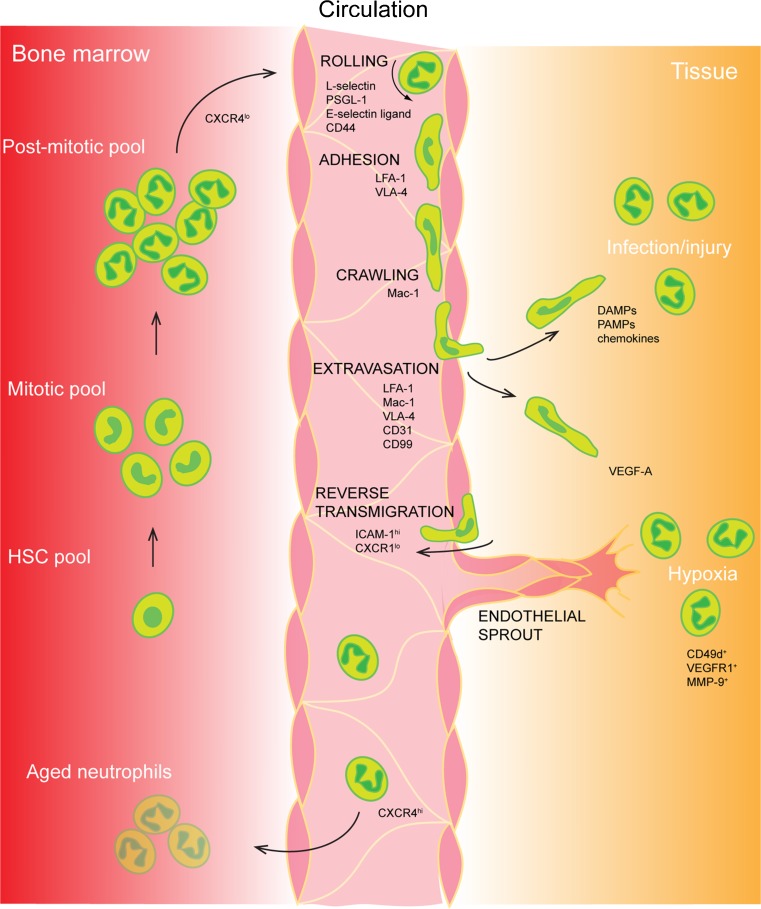
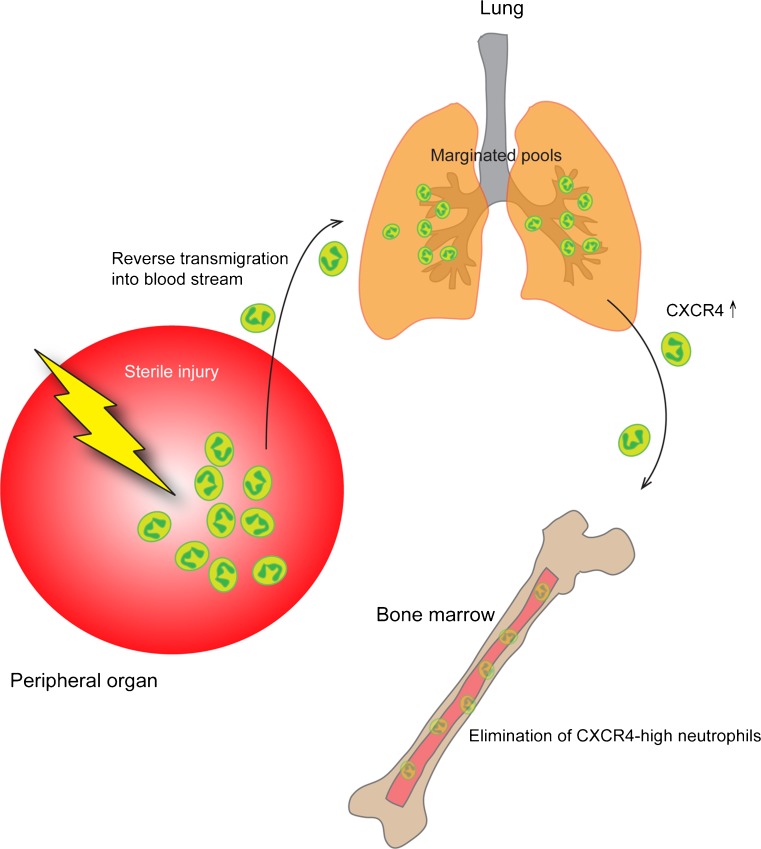
The unique role of neutrophils in host defense is not only based on their abilities to kill bacteria but is also due to their abundance in circulation and their ability to quickly migrate and accumulate in great numbers at afflicted sites. The high number of circulating neutrophils is the result of regulated release of new neutrophils from bone marrow as well as from marginated pools to balance their recruitment to tissue. Marginated pools, such as the spleen and lung, have previously been attributed to passively delay neutrophil transit time due to their large capillary network, but recent reports demonstrate that they are comprised of neutrophils with specific functions. The spleen, for instance, holds neutrophil subpopulations at different anatomical locations with distinct functions important for, e.g., bacterial eradication, and the lung was recently shown to re-educate neutrophils that had trafficked from a site of sterile injury to home back to bone marrow for elimination. Further, recent reports demonstrate subpopulations of neutrophils with different actions during homeostasis, infection, tissue restitution and cancer. It is becoming increasingly clear that this cannot be due to different stages of neutrophil activation during their life span but instead points towards distinct subpopulations of neutrophils with different effector functions. Whether these cellular distinctions are due to different education or origin is, however, not yet known. Together, the accumulating information about the heterogeneous neutrophils presents important insights into their role in development of pathologies, as well as revealing novel targets in the form of certain subpopulations to treat disease.
中性粒细胞在宿主防御中的独特作用不仅基于其杀死细菌的能力,还归因于其在循环中的丰富度以及快速迁移和大量聚集在受影响部位的能力。循环中中性粒细胞数量众多,是由于骨髓和边缘池中调节性释放新的中性粒细胞以平衡其向组织募集的结果。边缘池,如脾脏和肺部,以前归因于由于其庞大的毛细血管网络而被动延迟中性粒细胞通过时间,但最近的报告表明,它们由具有特定功能的中性粒细胞组成。例如,脾脏在不同的解剖位置拥有具有不同功能的中性粒细胞亚群,这些功能对于例如细菌清除很重要,最近的研究表明,肺部可以重新教育从无菌损伤部位迁移而来的中性粒细胞回到骨髓进行清除。此外,最近的报告表明,在稳态、感染、组织修复和癌症期间,中性粒细胞存在不同的亚群。越来越明显的是,这不可能是由于中性粒细胞在其生命周期中不同的激活阶段引起的,而是指向具有不同效应功能的不同中性粒细胞亚群。然而,这些细胞差异是否是由于不同的教育或起源尚不清楚。总之,关于异质中性粒细胞的累积信息为它们在病理发展中的作用提供了重要的见解,并揭示了某些亚群作为治疗疾病的新靶点。