Datla Sanjana, Albar Zainab, Eaton Elke, Porges Jodie, Nennstiel Matthew, Sullivan Claire, Greene Lloyd, Al-Kindi Sadeer G, Montgomery Elizabeth, Padiyar Aparna, Kosiborod Mikhail, Magwire Melissa L, Rahman Mahboob, Rajagopalan Sanjay, Neeland Ian J
Case Western Reserve University School of Medicine, Cleveland, OH, USA.
Division of Cardiovascular Medicine, University Hospitals Harrington Heart and Vascular Institute, University Hospitals Cleveland Medical Center, Cleveland, OH, USA.
Am J Prev Cardiol. 2025 Apr 25;22:101004. doi: 10.1016/j.ajpc.2025.101004. eCollection 2025 Jun.
Chronic kidney disease (CKD) is a global health concern, particularly among patients with type 2 diabetes mellitus (T2DM) and prediabetes who are at high risk of cardiovascular disease (CVD). The Center for Integrated and Novel Approaches in Vascular-Metabolic Disease (CINEMA) program aims to address these challenges through a multidisciplinary, patient-centered intervention. This study evaluates the CKD prevalence and outcomes in the CINEMA program, with a focus on risk for CVD and CKD progression and guideline-directed treatments.
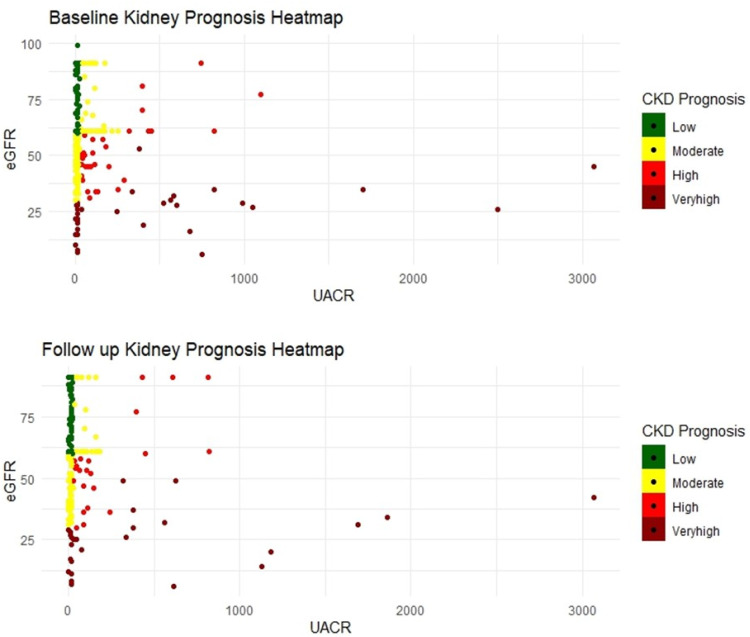
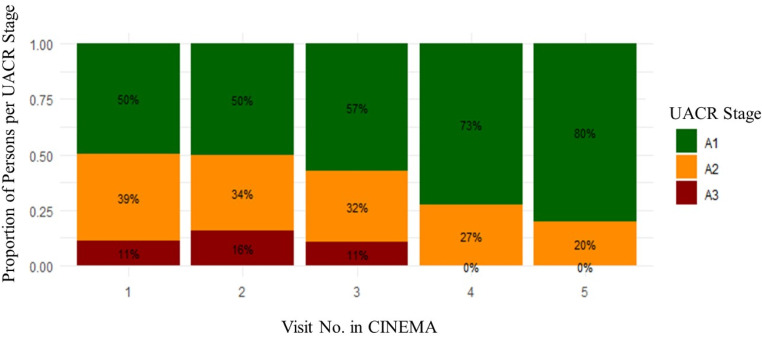
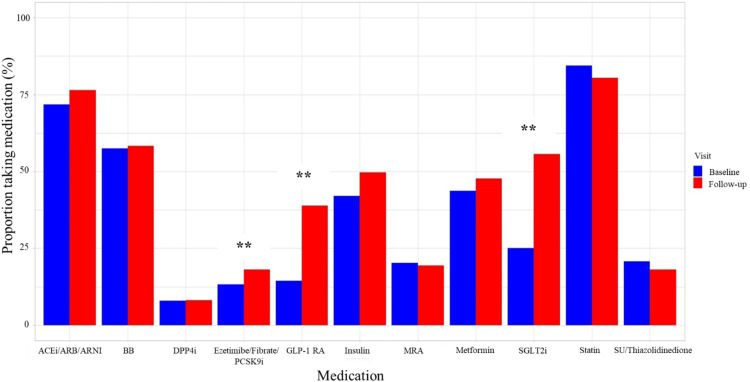
Patients with T2DM or prediabetes at high-risk for cardiovascular events, including those with established atherosclerotic CVD, elevated coronary artery calcium score ≥100, chronic heart failure, ischemic stroke, peripheral arterial disease, CKD (defined as eGFR<60mL/min/1.73 m and/or by the presence of urine-albumin creatinine ratio, UACR, ≥30 mg/g) and obesity with metabolic syndrome were included. From May 2020 to September 2022, 454 patients were enrolled in the CINEMA program with 45 % having a diagnosis of CKD. Among those with CKD, the median age was 64 years, 48 % were women, and 47 % were Black. 93 % had T2DM, 82 % had HTN, 52 % had established coronary artery disease, and 39 % had heart failure. Median eGFR was 49 mL/min/1.73 m and median UACR was 42 mg/g. Persons with CKD were more likely to be older, Black, have diabetes and heart failure ( < 0.05 for all). From August 2020 to June 2022, the CINEMA intervention was associated with statistically significant improvements in cardiometabolic risk factors with reductions in body weight (-3.49 lbs), BMI (-0.54 kg/m2), systolic blood pressure (-2.65 mmHg), Hb A1c (-0.63 %), total cholesterol (-9.01 mg/dL) and LDL cholesterol (-8.29 mg/dL), < 0.05 for all. There was a trend toward lower UACR ( = 0.41) and no significant change in eGFR ( = 0.58). There was a significant increase in prescription rates of SGLT2i (25 % to 55 %) and GLP-1RA (14 % to 38 %) in the CKD population from baseline to follow-up ( < 0.05).
In high-risk patients with T2DM or prediabetes and CKD, the CINEMA program is effective in improving cardiovascular risk factors and shows promise in addressing CKD outcomes. Enhanced screening for CKD, appropriate risk stratification, and aggressive implementation of guideline-directed medical therapies may lead to improved long-term outcomes.
慢性肾脏病(CKD)是一个全球性的健康问题,在2型糖尿病(T2DM)患者和糖尿病前期患者中尤为突出,这些患者心血管疾病(CVD)风险较高。血管代谢疾病综合与新方法中心(CINEMA)项目旨在通过多学科、以患者为中心的干预措施应对这些挑战。本研究评估了CINEMA项目中的CKD患病率和结局,重点关注CVD风险、CKD进展风险以及指南指导的治疗。
纳入有心血管事件高风险的T2DM或糖尿病前期患者,包括已确诊动脉粥样硬化性CVD、冠状动脉钙化评分升高≥100、慢性心力衰竭、缺血性中风、外周动脉疾病、CKD(定义为估算肾小球滤过率[eGFR]<60mL/(min·1.73m²)和/或尿白蛋白肌酐比值[UACR]≥30mg/g)以及伴有代谢综合征的肥胖患者。2020年5月至2022年9月,454例患者纳入CINEMA项目,其中45%被诊断为CKD。在CKD患者中,中位年龄为64岁,48%为女性,47%为黑人。93%患有T2DM,82%患有高血压,52%患有已确诊的冠状动脉疾病,39%患有心力衰竭。中位eGFR为49mL/(min·1.73m²),中位UACR为42mg/g。CKD患者更可能年龄较大、为黑人、患有糖尿病和心力衰竭(所有P<0.05)。2020年8月至2022年6月,CINEMA干预与心血管代谢危险因素的统计学显著改善相关,体重(-3.49磅)、体重指数(BMI,-0.54kg/m²)、收缩压(-2.65mmHg)、糖化血红蛋白(HbA1c,- [0.63%])、总胆固醇(-9.01mg/dL)和低密度脂蛋白胆固醇(-8.29mg/dL)均降低(所有P<0.05)。UACR有降低趋势(P = 0.41),eGFR无显著变化(P = 0.58)。从基线到随访,CKD人群中钠-葡萄糖协同转运蛋白2抑制剂(SGLT2i)和胰高血糖素样肽-1受体激动剂(GLP-1RA)的处方率显著增加(分别从25%增至55%和从14%增至38%,P<0.05)。
在T2DM或糖尿病前期且患有CKD的高风险患者中,CINEMA项目在改善心血管危险因素方面有效,并在解决CKD结局方面显示出前景。加强CKD筛查、适当的风险分层以及积极实施指南指导的药物治疗可能会改善长期结局。