Li Ying-Lin, Li Ning, Mei Zhi-Bin, Li Jun-Rong, Yao Su-Juan, Yu Fei, Li Shun-Li, Lin Jiao-Min, Liu Jiang, Lan Ya-Qian
National and Local Joint Engineering Research Center of MPTES in High Energy and Safety LIBs, Engineering Research Center of MTEES (Ministry of Education), Key Lab. of ETESPG (GHEI), School of Chemistry, South China Normal University Guangzhou 510006 China
Jiangsu Collaborative Innovation Centre of Biomedical Functional Materials, Jiangsu Key Laboratory of New Power Batteries, School of Chemistry and Materials Science, Nanjing Normal University Nanjing 210023 China.
Chem Sci. 2025 May 20. doi: 10.1039/d5sc01242b.
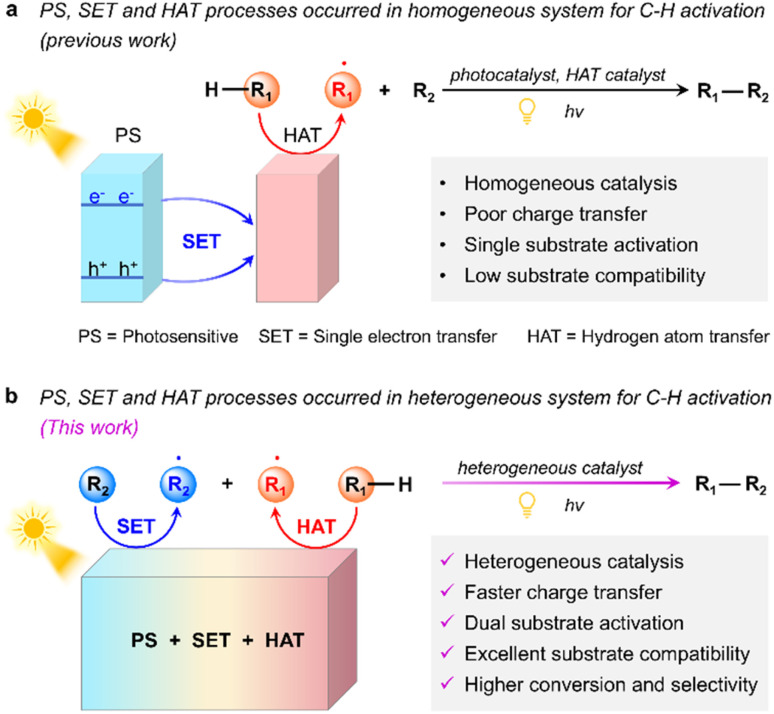
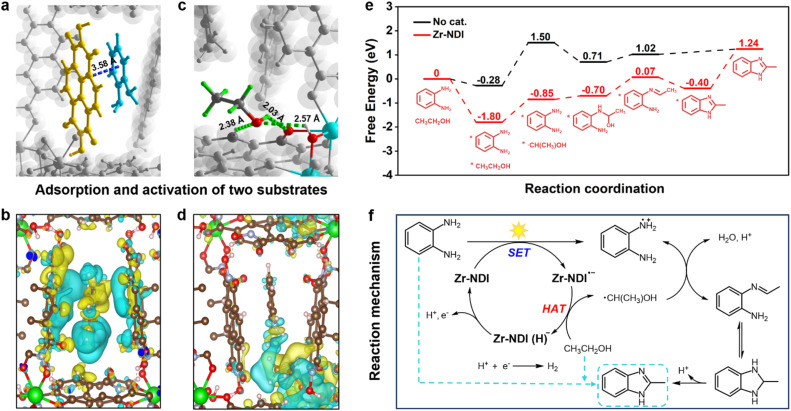
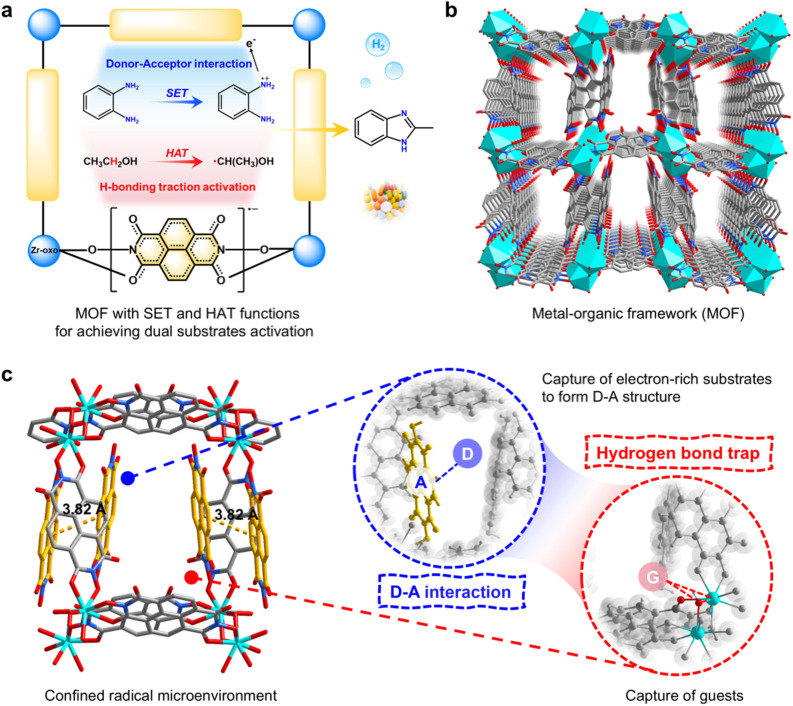
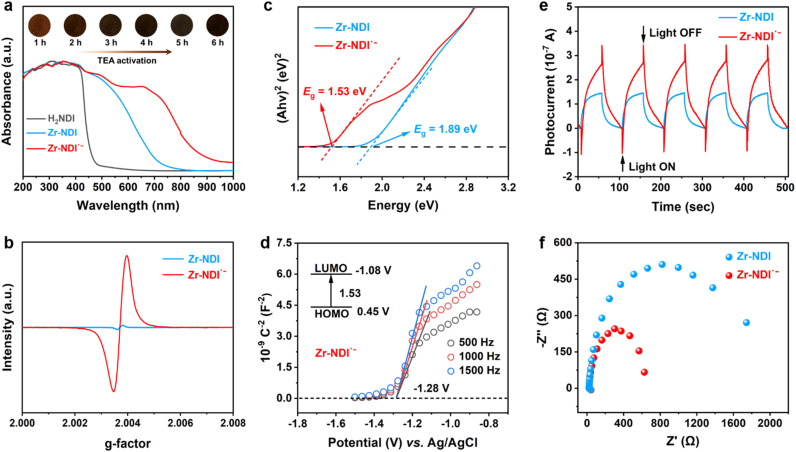
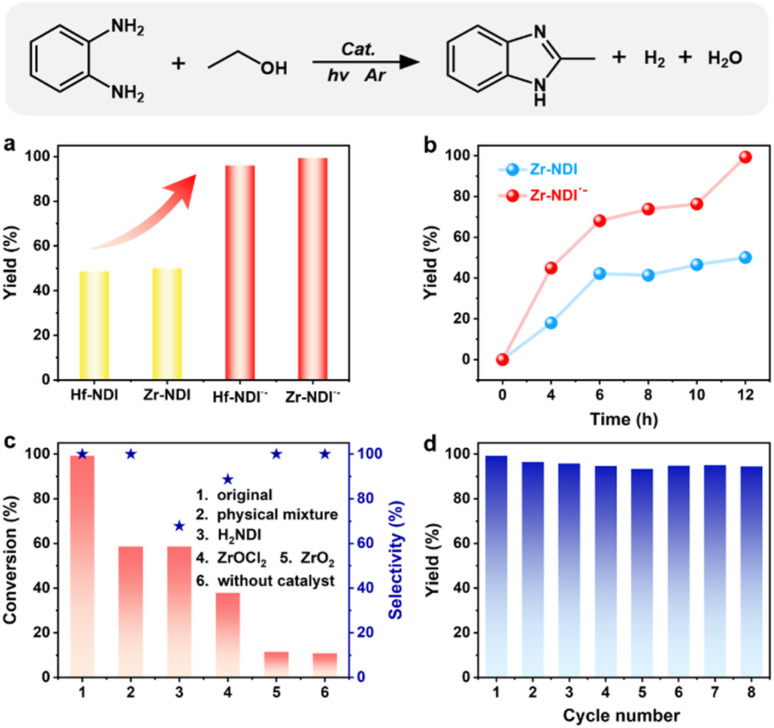
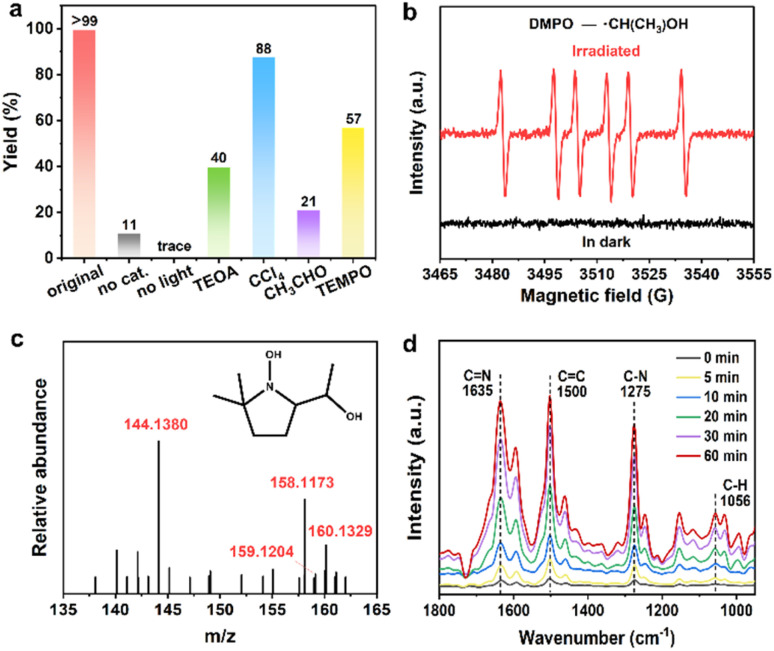
It has been well-demonstrated that the combination of photosensitive (PS), hydrogen atom transfer (HAT) and single electron transfer (SET) processes can achieve efficient radical-mediated organic synthesis, but such reaction systems are usually homogeneous, requiring additional HAT agents and can only activate one substrate. Here, we constructed two crystalline porous materials, Zr/Hf-NDI, which possess excellent light absorbing capacity and a confined radical microenvironment, making them able to integrate PS, HAT, and SET processes to simultaneously activate two substrates. Thus, as heterogeneous photocatalysts, they exhibited excellent catalytic performance for the carbon radical-mediated cross-coupling reaction between alcohols and -phenylenediamine (OPD) to synthesize benzimidazoles (yield > 99%). More importantly, they displayed very good substrate compatibility, especially for OPD substrates with electron-withdrawing groups, even surpassing those of noble metal catalysts. characterizations combined with theoretical calculations showed that the high activity of these catalysts arose from: (i) the metal-oxo clusters and radical NDI˙ ligands can form hydrogen bonding traction activation for the alcohol substrate, and thus facilitate it to generate key intermediate α-carbon radical through a HAT process; (ii) the OPD substrate, acting as an electron donor, forms strong D-A interaction with the NDI ligand and activates the NDI and itself into radicals NDI˙ and OPD˙, respectively, an SET process, further promoting the reaction. To the best of our knowledge, this is the best performing crystalline porous catalyst for photocatalytic carbon radical-induced benzimidazole synthesis.
光敏(PS)、氢原子转移(HAT)和单电子转移(SET)过程的组合已被充分证明可以实现高效的自由基介导的有机合成,但此类反应体系通常是均相的,需要额外的HAT试剂,并且只能激活一种底物。在此,我们构建了两种晶体多孔材料Zr/Hf-NDI,它们具有出色的光吸收能力和受限的自由基微环境,使其能够整合PS、HAT和SET过程以同时激活两种底物。因此,作为多相光催化剂,它们在醇与邻苯二胺(OPD)之间的碳自由基介导的交叉偶联反应中表现出优异的催化性能,用于合成苯并咪唑(产率>99%)。更重要的是,它们表现出非常好的底物兼容性,特别是对于带有吸电子基团的OPD底物,甚至超过了贵金属催化剂。表征结合理论计算表明,这些催化剂的高活性源于:(i)金属氧簇和自由基NDI˙配体可以对醇底物形成氢键牵引活化,从而促进其通过HAT过程生成关键中间体α-碳自由基;(ii)OPD底物作为电子供体,与NDI配体形成强的D-A相互作用,并分别通过SET过程将NDI和自身激活为自由基NDI˙和OPD˙,进一步促进反应。据我们所知,这是用于光催化碳自由基诱导合成苯并咪唑的性能最佳的晶体多孔催化剂。