Wilmes Katharina Anna, Petrovici Mihai A, Sachidhanandam Shankar, Senn Walter
Department of Physiology, University of Bern, Bern, Switzerland.
Elife. 2025 Jun 5;13:RP95127. doi: 10.7554/eLife.95127.
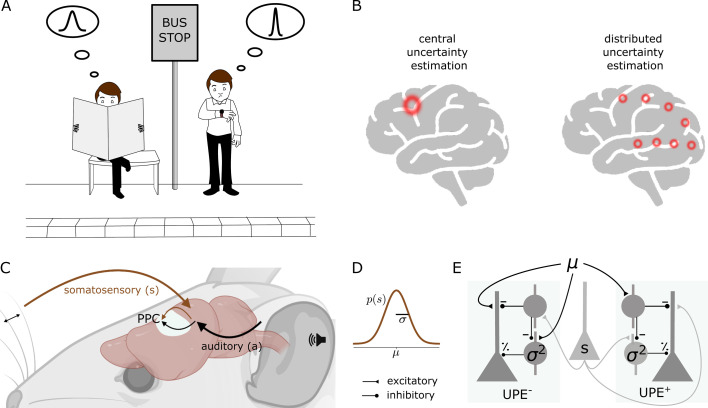
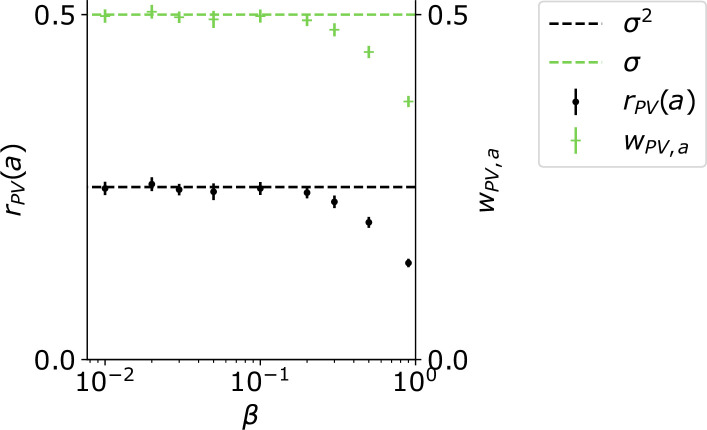
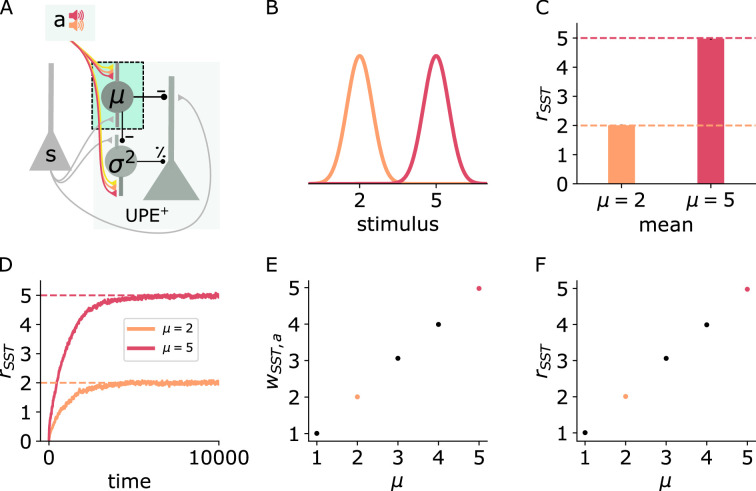
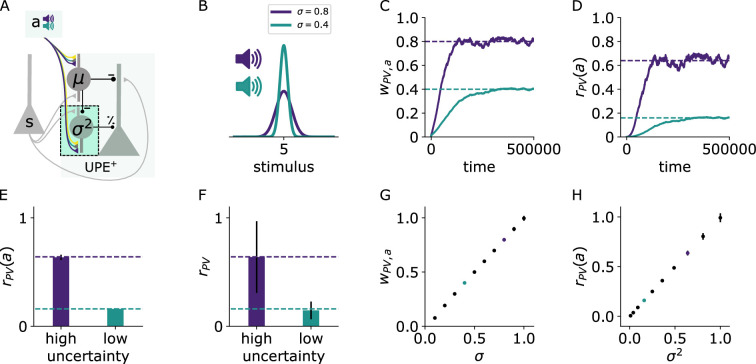
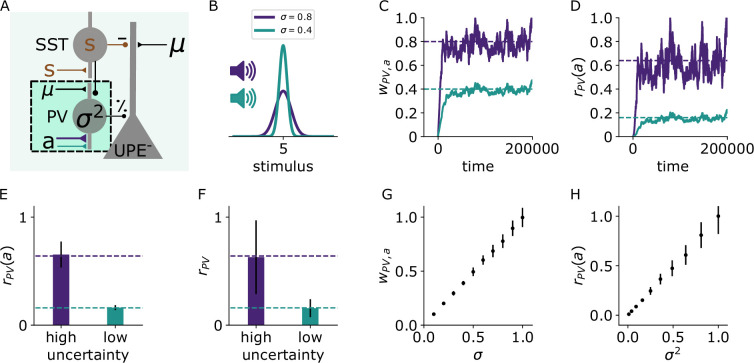
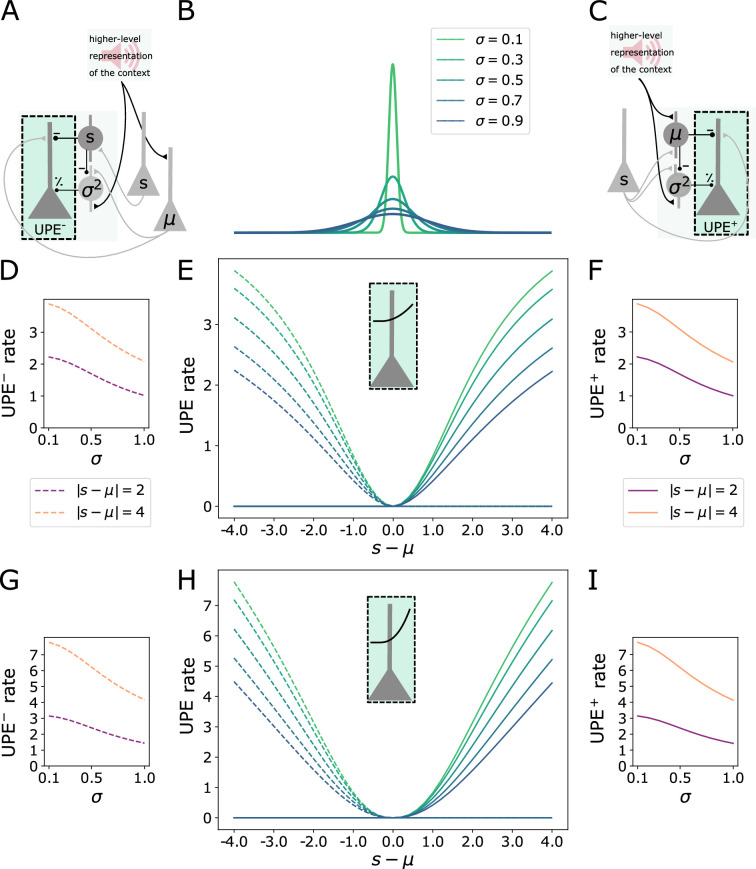
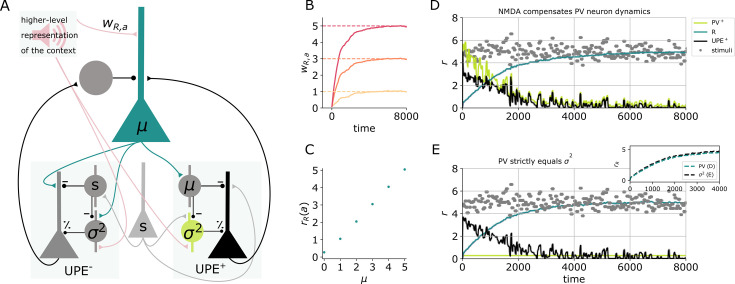
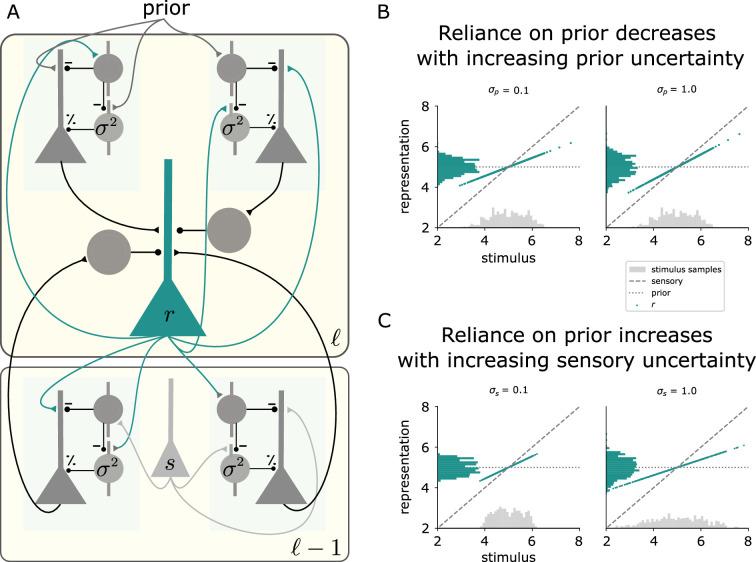
Understanding the variability of the environment is essential to function in everyday life. The brain must hence take uncertainty into account when updating its internal model of the world. The basis for updating the model are prediction errors that arise from a difference between the current model and new sensory experiences. Although prediction error neurons have been identified in layer 2/3 of diverse brain areas, how uncertainty modulates these errors and hence learning is, however, unclear. Here, we use a normative approach to derive how uncertainty should modulate prediction errors and postulate that layer 2/3 neurons represent uncertainty-modulated prediction errors (UPE). We further hypothesise that the layer 2/3 circuit calculates the UPE through the subtractive and divisive inhibition by different inhibitory cell types. By implementing the calculation of UPEs in a microcircuit model, we show that different cell types can compute the means and variances of the stimulus distribution. With local activity-dependent plasticity rules, these computations can be learned context-dependently, and allow the prediction of upcoming stimuli and their distribution. Finally, the mechanism enables an organism to optimise its learning strategy via adaptive learning rates.
了解环境的变异性对于在日常生活中发挥功能至关重要。因此,大脑在更新其内部世界模型时必须考虑到不确定性。更新模型的基础是当前模型与新感官体验之间的差异所产生的预测误差。尽管在不同脑区的第2/3层中已经识别出预测误差神经元,但不确定性如何调节这些误差以及由此产生的学习过程尚不清楚。在这里,我们使用一种规范方法来推导不确定性应如何调节预测误差,并假设第2/3层神经元代表不确定性调节的预测误差(UPE)。我们进一步假设,第2/3层回路通过不同抑制性细胞类型的减法和除法抑制来计算UPE。通过在微电路模型中实现UPE的计算,我们表明不同的细胞类型可以计算刺激分布的均值和方差。利用局部活动依赖的可塑性规则,这些计算可以根据上下文进行学习,并允许预测即将到来的刺激及其分布。最后,该机制使生物体能够通过自适应学习率优化其学习策略。