Hibbard Patrick F, Tice Cameron W, Dewey Jodie M, Gallardo Kathryn R, Tompkins James, Bell Justin S, Sandhu Jasleen, Cruz Michelle A, Babbitt Kathryn, Mericle Amy A, Sheidow Ashli J
Chestnut Health Systems, Lighthouse Institute, Bloomington, IL, United States.
Department of Psychology, University of Cambridge, Cambridge, United Kingdom.
Front Public Health. 2025 May 22;13:1554344. doi: 10.3389/fpubh.2025.1554344. eCollection 2025.
Though communities have featured recovery housing (RH) for several decades, the base of evidence for best practices continues to grow - especially evidence needed by, and known to, those who operate and receive these services. The Initiative for Justice and Emerging Adult Populations (JEAP) engaged with three community boards (CBs) - consisting of young adults with experience in recovery from substance use issues, people who have a history of criminal legal system involvement and recovery, and payers and provider of substance use services and harm reduction - to understand on-the-ground priorities for research into recovery support services.
JEAP engaged with the CBs using community-based participatory research, resulting in 12 overarching categories of research priorities, including RH. Each category contains a general problem statement, as well as testable research questions stemming from the priorities identified by the CBs. It remains to be seen, though, if research has answered them. This study used these research questions as the basis for an adapted scoping study, querying extant literature on these research priorities.
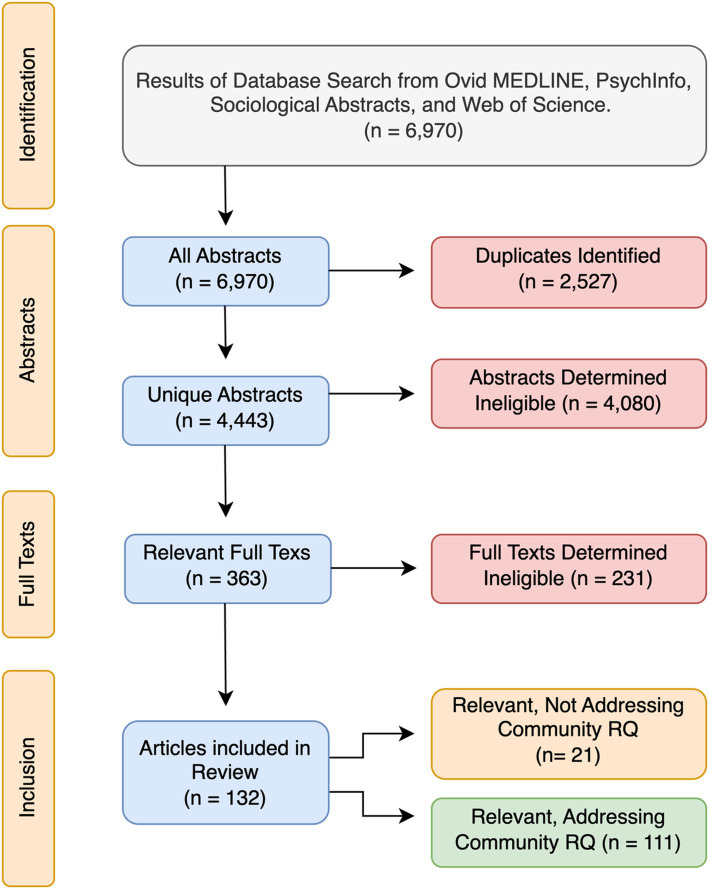
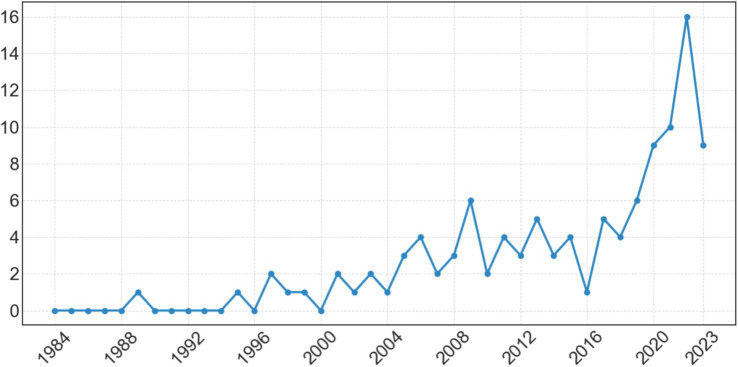
These efforts resulted Our search found 132 peer-reviewed studies of RH since 1984, 111 of these pertaining to the CB's research questions. These, however, were heavily weighted toward those providing fewer services and supervision (80%), and the research questions focused on RH operations (57%), though more recent efforts have investigated populations served (37%).
Though many RH studies fell within JEAP research questions, the literature has yet to reach an overarching consensus on best practices within each. Given the high degree of variation between types of RH programs and between geographic locations, such consensus may not be feasible or even desirable. Key elements of effective RH operations are discussed providing useful information for both researchers and practitioners to consider, as well as recommendations for future research.
尽管社区提供康复住房(RH)已有数十年,但最佳实践的证据基础仍在不断扩大——尤其是那些运营和接受这些服务的人所需的且已知的证据。司法与新兴成年人群体倡议(JEAP)与三个社区委员会(CBs)进行了合作,这些委员会由有药物使用问题康复经验的年轻人、有刑事法律系统参与和康复历史的人以及药物使用服务和减少伤害的支付者和提供者组成,以了解康复支持服务研究的实际优先事项。
JEAP通过基于社区的参与性研究与社区委员会进行合作,得出了12个总体研究优先类别,包括康复住房。每个类别都包含一个一般问题陈述,以及源自社区委员会确定的优先事项的可测试研究问题。不过,这些问题研究是否得到解答仍有待观察。本研究以这些研究问题为基础进行了一项适应性范围研究,查询了关于这些研究优先事项的现有文献。
这些努力得出……自1984年以来,我们的搜索发现了132项关于康复住房的同行评审研究,其中111项与社区委员会的研究问题相关。然而,这些研究严重偏向于提供较少服务和监督的研究(80%),研究问题集中在康复住房运营方面(57%),不过最近的研究也对所服务的人群进行了调查(3)。
尽管许多康复住房研究属于JEAP的研究问题范畴,但文献尚未就其中的最佳实践达成总体共识。鉴于康复住房项目类型和地理位置之间存在高度差异,这样的共识可能不可行甚至不可取。本文讨论了有效康复住房运营的关键要素,为研究人员和从业者提供了有用的参考信息,以及对未来研究的建议。