• 文献检索
  • 文档翻译
  • 深度研究
  • 学术资讯
  • Suppr Zotero 插件Zotero 插件
  • 邀请有礼
  • 套餐&价格
  • 历史记录
应用&插件
Suppr Zotero 插件Zotero 插件浏览器插件Mac 客户端Windows 客户端微信小程序
定价
高级版会员购买积分包购买API积分包
服务
文献检索文档翻译深度研究API 文档MCP 服务
关于我们
关于 Suppr公司介绍联系我们用户协议隐私条款
关注我们

Suppr 超能文献

核心技术专利:CN118964589B侵权必究
粤ICP备2023148730 号-1Suppr @ 2026

文献检索

告别复杂PubMed语法,用中文像聊天一样搜索,搜遍4000万医学文献。AI智能推荐,让科研检索更轻松。

立即免费搜索

文件翻译

保留排版,准确专业,支持PDF/Word/PPT等文件格式,支持 12+语言互译。

免费翻译文档

深度研究

AI帮你快速写综述,25分钟生成高质量综述,智能提取关键信息,辅助科研写作。

立即免费体验

《书籍(不像人):一则后数字时代寓言》

Books (Are Not Like People): A Postdigital Fable.

作者信息

Costello Eamon, Soverino Tiziana, Girme Prajakta

机构信息

Dublin City University, Dublin, Ireland.

Dún Laoghaire Institute of Art, Design and Technology, Dublin, Ireland.

出版信息

Postdigit Sci Educ. 2022;4(2):519-539. doi: 10.1007/s42438-021-00256-2. Epub 2021 Oct 4.

DOI:10.1007/s42438-021-00256-2
PMID:40477709
原文链接:https://pmc.ncbi.nlm.nih.gov/articles/PMC8488319/
Abstract

What are books? In 2054, where reading and writing have been banned, a scholar in a dystopian academy known as University V might legitimately pose such a question. This article uses speculative fiction as a form of narrative enquiry to explore the socio-materiality of the iconic educational artefact of the textbook. It gives an empirical account of socio-material practices of textbook use (and non-use) gathered from a series of interviews with online distance education students. We analyse these interviews via speculative fiction. We engage in a sense-making activity of the student testimony by narrating their story, via a scholar looking back at our times from a post-literature future. We seek to contribute to a relative dearth of future studies that use real student data. We give an example of how speculative fiction may be used as a form of research method to analyse and interpret such data. In so doing, we seek to cast a light on current educational practices, to show how books and people are entangled. As people, objects and spaces of education intertwine, they call our attention to the interplay of form and function. They decentre the human actor. We attempt to show how form legitimates certain types of knowledge, certain people, indeed people themselves from other non-human actors. We conclude that knowledge is not disembodied, is not stable and is not locked up in books. In our final analysis, we conclude what may seem obviously true, that books are not like people.

摘要

书籍是什么?在2054年,阅读和写作已被禁止,在一所名为第五大学的反乌托邦学院里,一位学者可能会合理地提出这样的问题。本文运用推测性小说作为一种叙事探究形式,来探讨教科书这一标志性教育制品的社会物质性。它给出了从对在线远程教育学生的一系列访谈中收集到的教科书使用(和不使用)的社会物质实践的实证描述。我们通过推测性小说来分析这些访谈。我们通过一位从后文学时代回望我们这个时代的学者来讲述学生们的故事,从而对学生的证词进行意义建构活动。我们试图为相对缺乏使用真实学生数据的未来研究做出贡献。我们给出一个例子,说明推测性小说如何可以作为一种研究方法来分析和解读此类数据。这样做时,我们试图揭示当前的教育实践,展示书籍与人是如何相互纠缠的。随着教育中的人、物和空间相互交织,它们让我们注意到形式与功能的相互作用。它们使人类行为主体去中心化。我们试图表明形式如何使某些类型的知识、某些人,实际上是人与其他非人类行为主体合法化。我们得出结论,知识不是脱离实体的,不是稳定的,也不是被锁在书本里的。在我们的最终分析中,我们得出了看似显而易见的结论,即书籍与人不同。
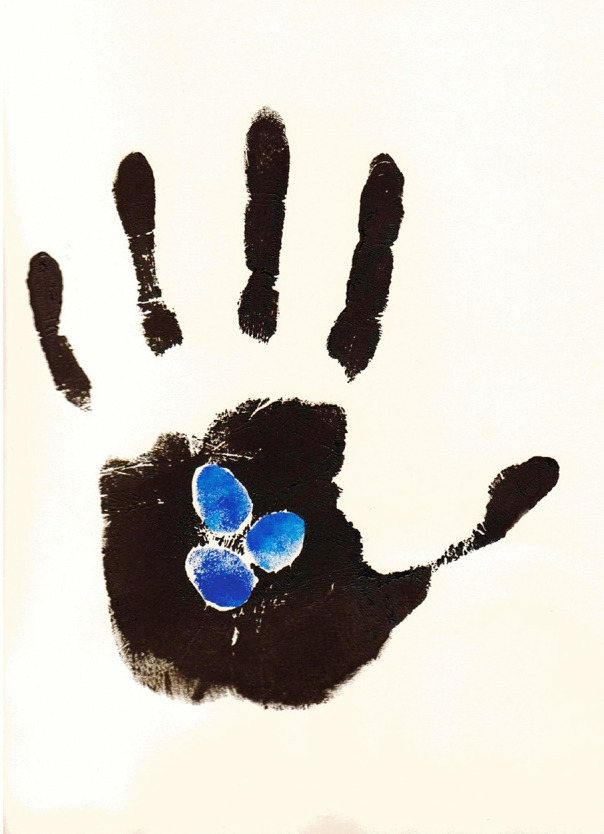
https://cdn.ncbi.nlm.nih.gov/pmc/blobs/419d/8488319/7add7f0ba871/42438_2021_256_Fig5_HTML.jpg
https://cdn.ncbi.nlm.nih.gov/pmc/blobs/419d/8488319/7d34f635e033/42438_2021_256_Fig1_HTML.jpg
https://cdn.ncbi.nlm.nih.gov/pmc/blobs/419d/8488319/862499cd96f4/42438_2021_256_Fig2_HTML.jpg
https://cdn.ncbi.nlm.nih.gov/pmc/blobs/419d/8488319/03249f255f86/42438_2021_256_Fig3_HTML.jpg
https://cdn.ncbi.nlm.nih.gov/pmc/blobs/419d/8488319/30cc516fe0e3/42438_2021_256_Fig4_HTML.jpg
https://cdn.ncbi.nlm.nih.gov/pmc/blobs/419d/8488319/7add7f0ba871/42438_2021_256_Fig5_HTML.jpg
https://cdn.ncbi.nlm.nih.gov/pmc/blobs/419d/8488319/7d34f635e033/42438_2021_256_Fig1_HTML.jpg
https://cdn.ncbi.nlm.nih.gov/pmc/blobs/419d/8488319/862499cd96f4/42438_2021_256_Fig2_HTML.jpg
https://cdn.ncbi.nlm.nih.gov/pmc/blobs/419d/8488319/03249f255f86/42438_2021_256_Fig3_HTML.jpg
https://cdn.ncbi.nlm.nih.gov/pmc/blobs/419d/8488319/30cc516fe0e3/42438_2021_256_Fig4_HTML.jpg
https://cdn.ncbi.nlm.nih.gov/pmc/blobs/419d/8488319/7add7f0ba871/42438_2021_256_Fig5_HTML.jpg

相似文献

1
Books (Are Not Like People): A Postdigital Fable.《书籍(不像人):一则后数字时代寓言》
Postdigit Sci Educ. 2022;4(2):519-539. doi: 10.1007/s42438-021-00256-2. Epub 2021 Oct 4.
2
The use of "non-fiction novels" in a sensation and perception course.在一门感觉与知觉课程中使用“非虚构小说”
J Undergrad Neurosci Educ. 2011 Oct 15;10(1):A14-23. Print 2011 Fall.
3
Impossible Dreaming: On Speculative Education Fiction and Hopeful Learning Futures.不可能的梦想:论推测性教育小说与充满希望的学习未来。
Postdigit Sci Educ. 2022 Oct 21:1-18. doi: 10.1007/s42438-022-00348-7.
4
Qualitative Study定性研究
5
#OurPlace2020: Blurring Boundaries of Learning Spaces.《我们的空间2020:模糊学习空间的界限》
Postdigit Sci Educ. 2022;4(1):116-137. doi: 10.1007/s42438-021-00264-2. Epub 2021 Oct 25.
6
Impact of summer programmes on the outcomes of disadvantaged or 'at risk' young people: A systematic review.暑期项目对处境不利或“有风险”的年轻人的影响:一项系统综述。
Campbell Syst Rev. 2024 Jun 13;20(2):e1406. doi: 10.1002/cl2.1406. eCollection 2024 Jun.
7
Materials and Places for Learning: Experiences of Doctoral Students in and around University Spaces.学习的材料与场所:博士生在大学校园内外的经历
Postdigit Sci Educ. 2022 Jul 25:1-24. doi: 10.1007/s42438-022-00328-x.
8
Video delivery of toxicology educational content versus textbook for asynchronous learning, using acetaminophen overdose as a topic.视频传递毒理学教育内容与教科书用于异步学习,以对乙酰氨基酚过量作为主题。
Clin Toxicol (Phila). 2019 Oct;57(10):842-846. doi: 10.1080/15563650.2019.1574974. Epub 2019 Feb 26.
9
Emotion and narrative fiction: Interactive influences before, during, and after reading.情绪与叙事小说:阅读前、阅读中和阅读后的互动影响。
Cogn Emot. 2011 Aug;25(5):818-33. doi: 10.1080/02699931.2010.515151. Epub 2011 May 24.
10
Educational Futures and Postdigital Science.教育的未来与后数字科学
Postdigit Sci Educ. 2022;4(2):216-223. doi: 10.1007/s42438-021-00236-6. Epub 2021 Jun 10.

本文引用的文献

1
Algorithmic injustice: a relational ethics approach.算法不公正:一种关系伦理方法。
Patterns (N Y). 2021 Feb 12;2(2):100205. doi: 10.1016/j.patter.2021.100205.
2
The Citation Diversity Statement: A Practice of Transparency, A Way of Life.引文多样性声明:透明的实践,生活的方式。
Trends Cogn Sci. 2020 Sep;24(9):669-672. doi: 10.1016/j.tics.2020.06.009.
3
The extent and drivers of gender imbalance in neuroscience reference lists.神经科学参考文献中性别失衡的程度和驱动因素。
Nat Neurosci. 2020 Aug;23(8):918-926. doi: 10.1038/s41593-020-0658-y. Epub 2020 Jun 19.