Jones Robyn Owen, Vaz DE Oliveria Mariana, Palmer Bethan, Maguire Danny, Butler George, Gothard Isabel, Kavanagh Kate, Areta Jose, Pugh Jamie, Louis Julien
Research Institute of Sports and Exercise Sciences (RISES), Liverpool John Moores University, Liverpool, UK.
Eur J Sport Sci. 2025 Jul;25(7):e12336. doi: 10.1002/ejsc.12336.
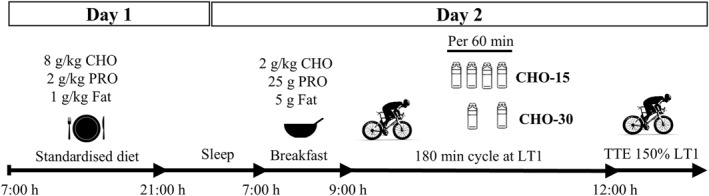
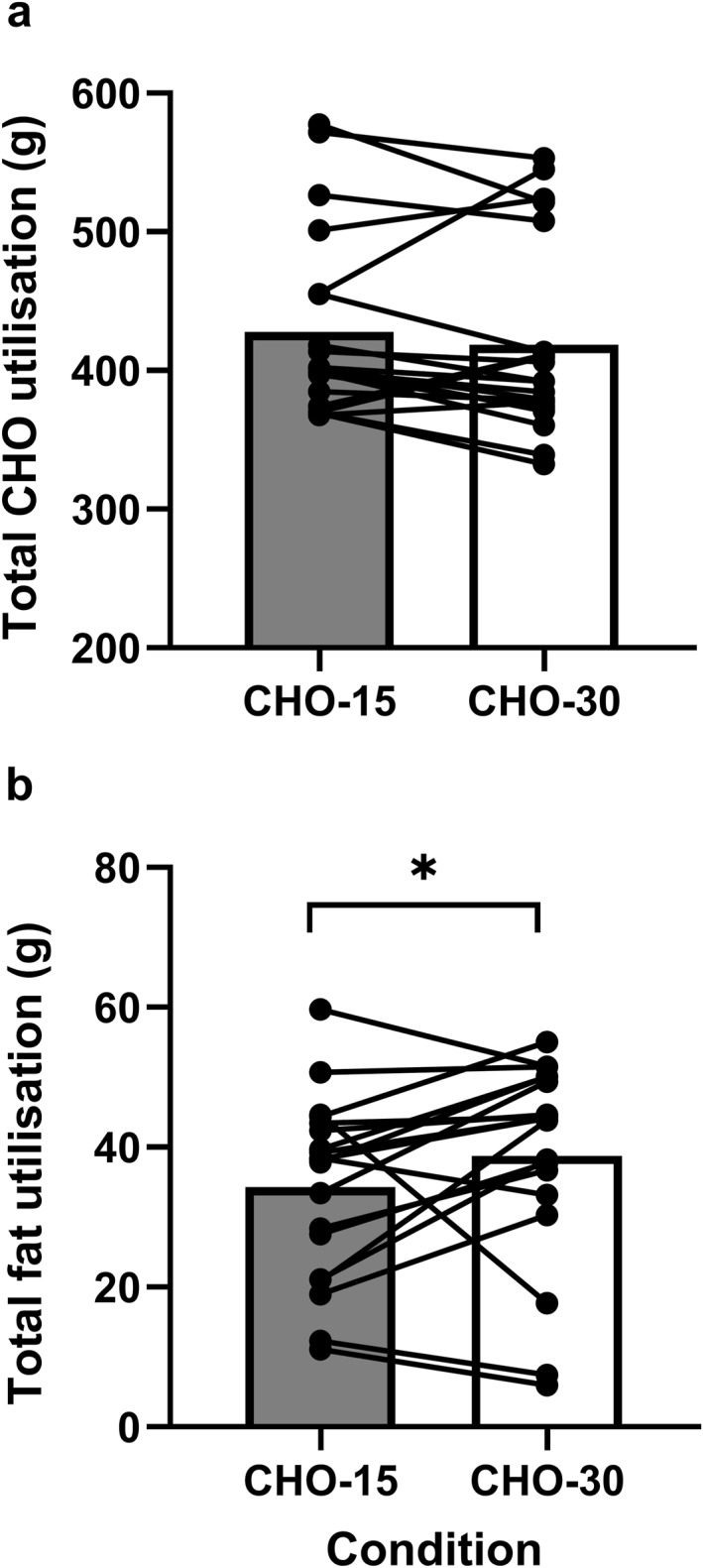
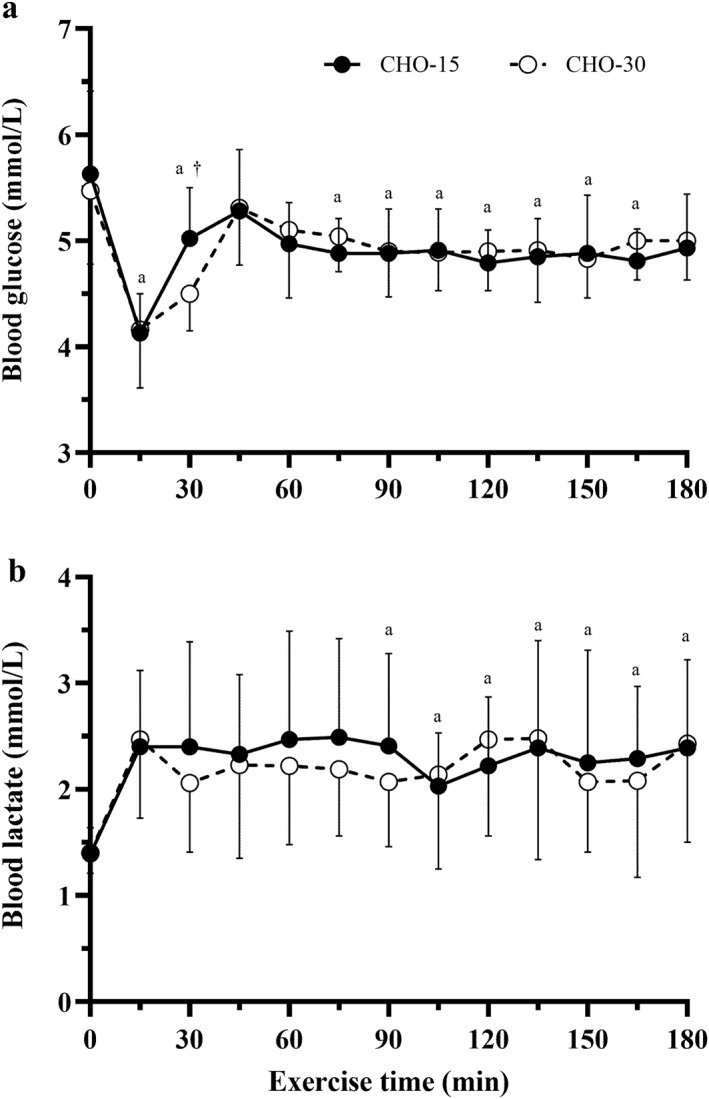
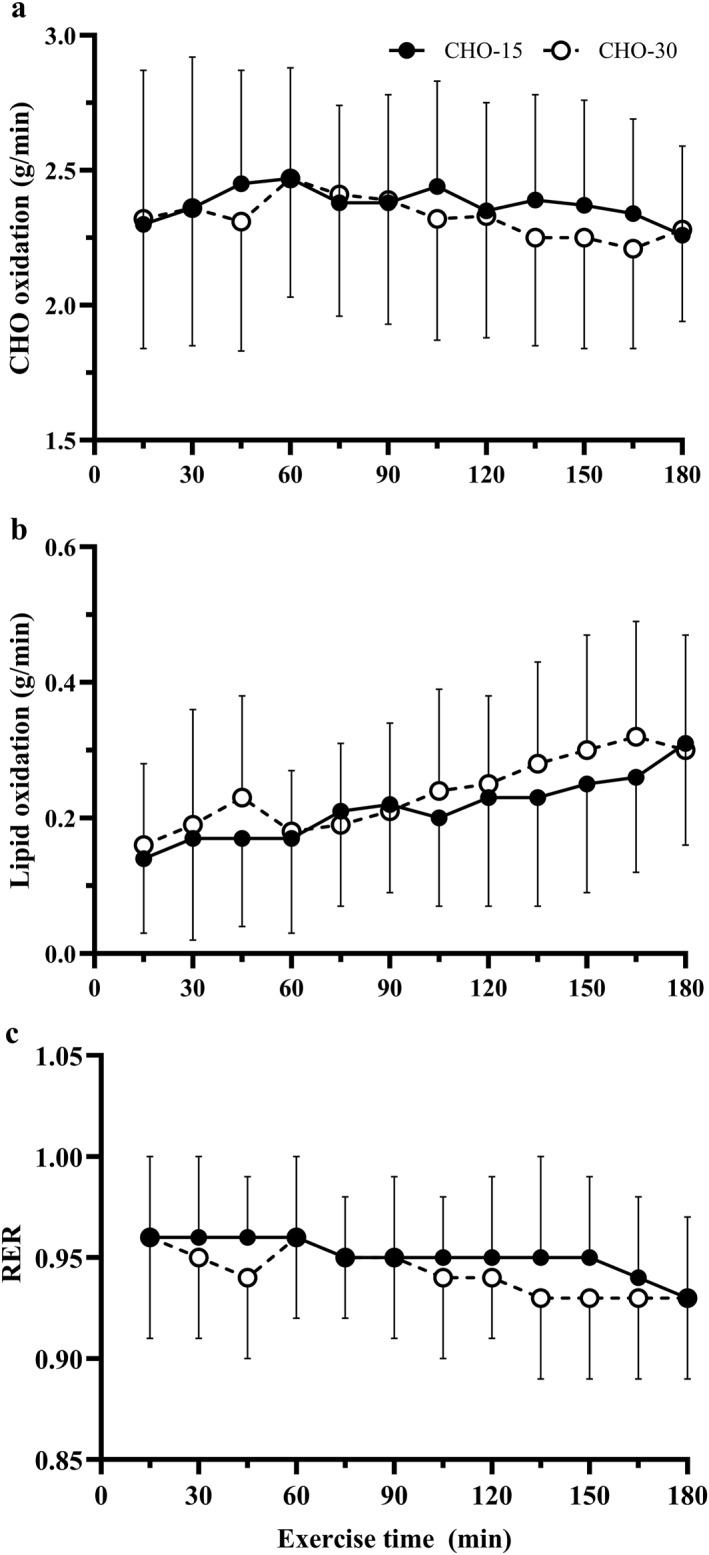
Fuelling during endurance exercise has evolved towards greater amounts of carbohydrates (CHO) ingested per hour, which can prove challenging for athletes. However, the effects of different CHO ingestion patterns during exercise have scarcely been investigated in cycling. 20 recreationally active males cycled for 180 min at lactate threshold on two occasions in a randomised counterbalanced order. Participants consumed 90 g/h of CHO, either as 22.5 g every 15 min or 45 g every 30 min (CHO-15 and CHO-30, respectively). Respiratory gases, blood glucose, lactate, heart rate, RPE and gastrointestinal symptoms were assessed every 15 min. Physiological responses showed no difference between conditions or significant interactions, except for blood glucose which saw a greater increase in CHO-15 during the first 30 min (interaction; p = 0.03). Whole body CHO and fat oxidation were not different between conditions (2.38 ± 0.37 and 2.33 ± 0.39 g/min, p = 0.25 and 0.19 ± 0.07 vs. 0.22 ± 0.08 g/min, p = 0.10 for CHO-15 and CHO-30, respectively). Subjective markers of gastrointestinal symptoms did not differ between conditions (p > 0.05) except for urge to defecate (p = 0.05); however, only 1 participant reported a score > 4 across any symptoms. Ingesting a larger CHO amount at less regular intervals during prolonged cycling had minimal impact on physiological responses to exercise, whole-body substrate oxidation and gut discomfort, allowing athletes to freely select their preferred strategy.
耐力运动期间的能量补充已朝着每小时摄入更多碳水化合物(CHO)的方向发展,这对运动员来说可能具有挑战性。然而,运动期间不同CHO摄入模式对骑行的影响几乎未被研究过。20名有休闲运动习惯的男性以随机交叉平衡顺序分两次在乳酸阈值下骑行180分钟。参与者每小时摄入90克CHO,要么每15分钟摄入22.5克,要么每30分钟摄入45克(分别为CHO-15和CHO-30)。每隔15分钟评估一次呼吸气体、血糖、乳酸、心率、主观用力程度(RPE)和胃肠道症状。生理反应在不同条件之间没有差异,也没有显著的交互作用,除了血糖在前30分钟内CHO-15组的升高幅度更大(交互作用;p = 0.03)。不同条件下全身CHO和脂肪氧化没有差异(CHO-15和CHO-30分别为2.38±0.37和2.33±0.39克/分钟,p = 0.25;以及0.19±0.07与0.22±0.08克/分钟,p = 0.10)。胃肠道症状的主观指标在不同条件之间没有差异(p>0.05),除了便意(p = 0.05);然而,只有1名参与者在任何症状上的评分>4。在长时间骑行过程中,以不太规律的间隔摄入更多CHO对运动的生理反应、全身底物氧化和肠道不适的影响最小,这使运动员能够自由选择他们喜欢的策略。