Zhou Shilin, Li Lixin
College of Traditional Chinese Medicine, Changchun University of Chinese Medicine, Changchun, China.
The First Clinical Hospital of Jilin Academy of Traditional Chinese Medicine, Changchun, China.
Ital J Pediatr. 2025 Jun 9;51(1):185. doi: 10.1186/s13052-025-02048-x.
Tourette syndrome (TS) is a chronic neurodevelopmental disorder with childhood onset characterized by multiple motor tics and at least one vocal tic, with symptoms persisting for over one year. Its exact etiology remains unclear. Identifying novel therapeutic targets for TS is critically important.
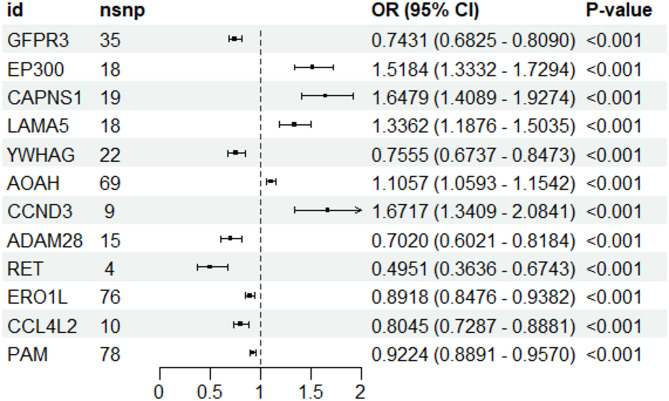
We utilized cis-expression quantitative trait loci (cis-eQTLs) of druggable genes obtained from the eQTLGen Consortium and genome-wide association study (GWAS) data for TS from the Psychiatric Genomics Consortium as the outcome to simulate the effects of pharmacological interventions on TS via Mendelian randomization (MR). Colocalization analyses were then conducted to validate the findings. To further corroborate these results, we investigated the role of DNA methylation in mediating the relationship between druggable gene expression and TS.
The expression of seven druggable genes was significantly associated with TS susceptibility (FDR < 0.05). TS susceptibility and three key genes (RET, CAPNS1, and LAMA5) were likely to share a causal variant. Further DNA methylation analysis identified seven critical methylation sites (cg02605258, cg02907768, cg06026331, cg09831553, cg12382846, cg19674797, and cg20752878), which indirectly influence TS development by regulating LAMA5 gene expression.
LAMA5 is the most promising potential drug target for mitigating TS risk. Our study not only reveals potential therapeutic targets but also provides directions for future TS drug development.
The online version contains supplementary material available at 10.1186/s13052-025-02048-x.
抽动秽语综合征(TS)是一种儿童期起病的慢性神经发育障碍,其特征为多种运动性抽动和至少一种发声性抽动,症状持续超过一年。其确切病因尚不清楚。确定TS的新治疗靶点至关重要。
我们利用从eQTLGen联盟获得的可成药基因的顺式表达定量性状位点(cis-eQTLs)以及精神基因组学联盟提供的TS全基因组关联研究(GWAS)数据作为结果,通过孟德尔随机化(MR)模拟药物干预对TS的影响。然后进行共定位分析以验证结果。为了进一步证实这些结果,我们研究了DNA甲基化在介导可成药基因表达与TS之间关系中的作用。
七个可成药基因的表达与TS易感性显著相关(FDR < 0.05)。TS易感性与三个关键基因(RET、CAPNS1和LAMA5)可能共享一个因果变异。进一步的DNA甲基化分析确定了七个关键甲基化位点(cg02605258、cg02907768、cg06026331、cg09831553、cg12382846、cg19674797和cg20752878),它们通过调节LAMA5基因表达间接影响TS的发展。
LAMA5是降低TS风险最有前景的潜在药物靶点。我们的研究不仅揭示了潜在的治疗靶点,还为未来TS药物开发提供了方向。
在线版本包含可在10.1186/s13052-025-02048-x获取的补充材料。