Gotum Tanawat, Keeratisiroj Orawan, Jariya Wutthichai
Faculty of Public Health, Naresuan University, Tha Pho, Phitsanulok, 65000, Thailand.
F1000Res. 2025 Apr 14;13:790. doi: 10.12688/f1000research.152382.2. eCollection 2024.
The objective of this research was to assess the prevalence of musculoskeletal symptoms in online students.
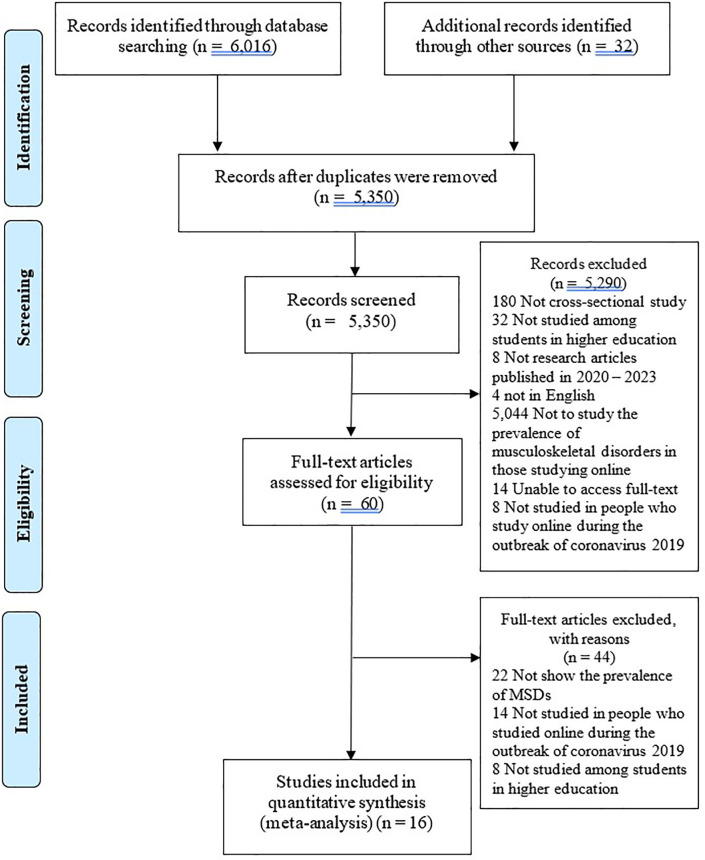
A systematic review and meta-analysis were performed by searching the PubMed, Cochrane Library, SCOPUS, Web of Science, ScienceDirect, ProQuest, CINAHL plus with full text, and Wiley InterScience databases. A total of 3,749 studies were identified between January 2020 and December 2023. The Joanna Briggs Tool for studies reporting prevalence was used to assess the quality of studies. Jamovi 2.4 was used in the meta-analysis.
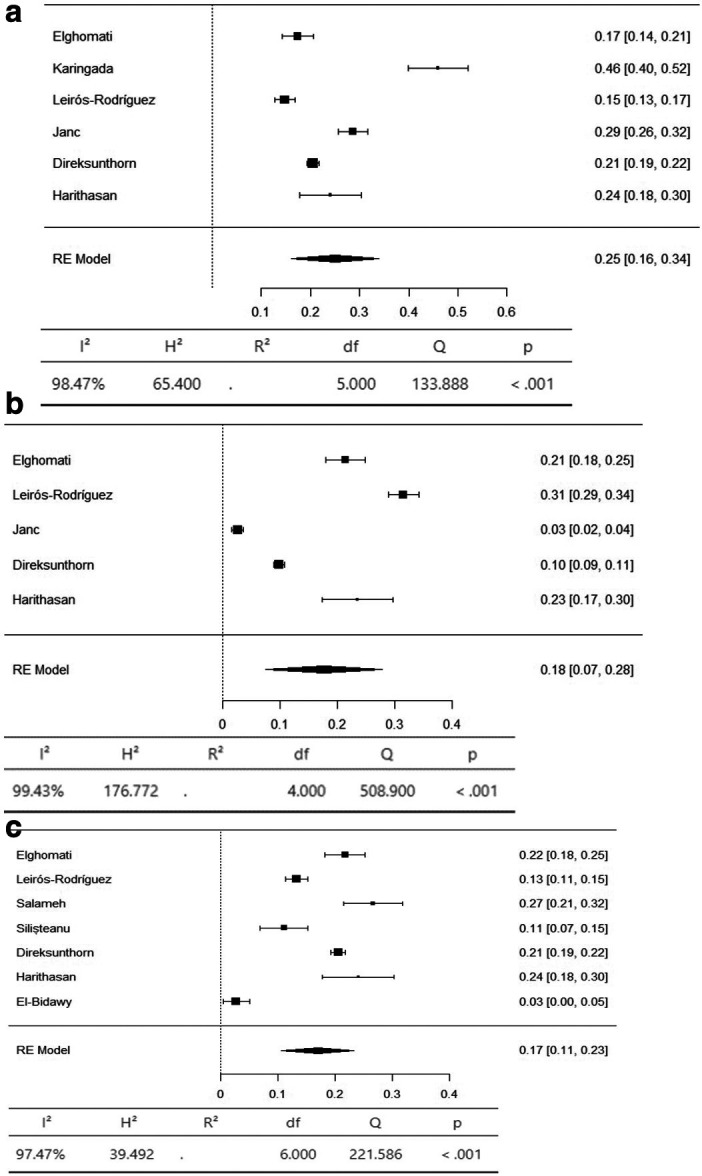
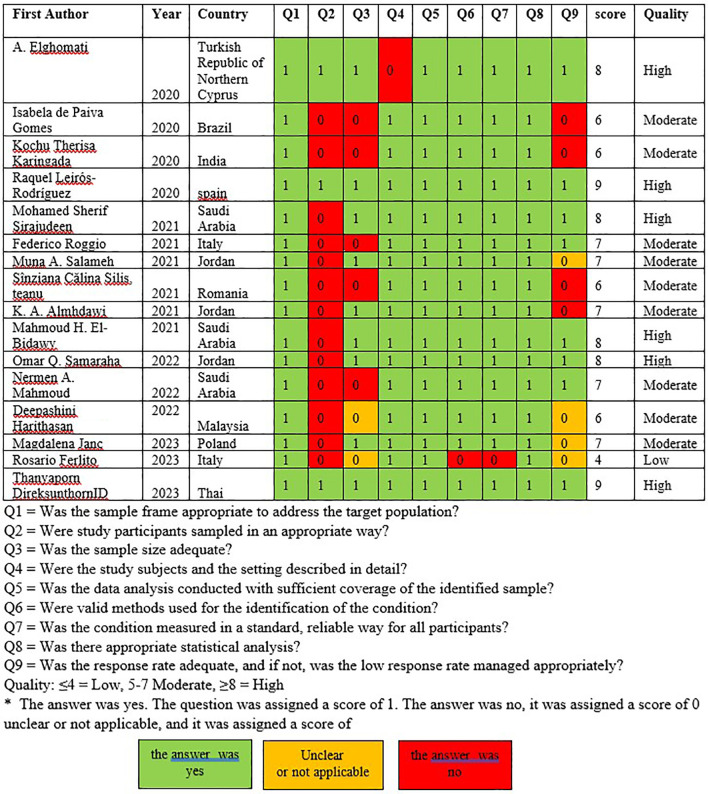
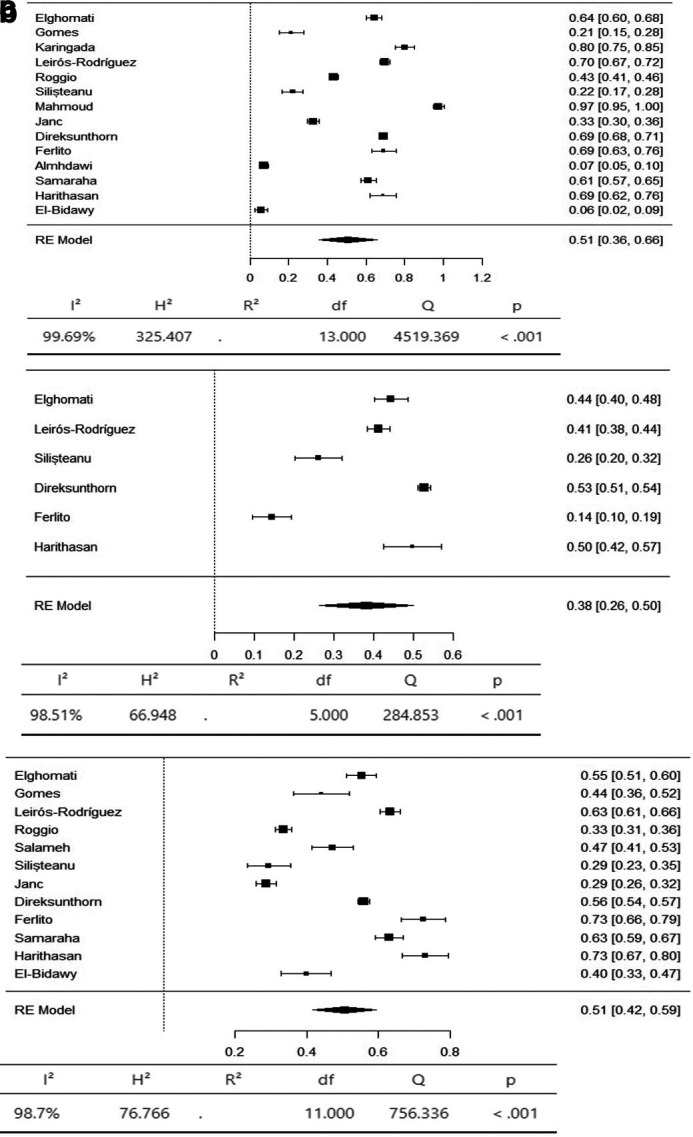
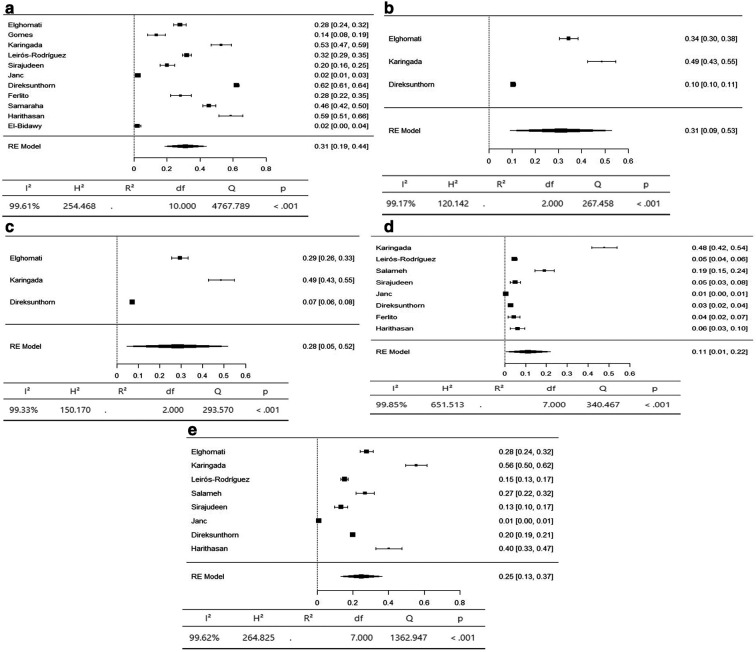
Sixteen studies were included and used for the meta-analysis. The average age of participants was 22 years, with an age range of 17-45 years. There were 6 studies of high quality, 9 studies of medium quality and 1 study of low quality. The areas with the highest prevalence of musculoskeletal pain were the neck (51%, 95% CI = 36-66%), lower back (51%, 95% CI = 42-59%) and shoulder (36%, 95% CI = 26-47%).
The shift to online learning during the COVID-19 pandemic has emerged as a potential factor influencing musculoskeletal pain in students. Educational institutions should study the duration of online learning that begins to impact student injury outcomes.
本研究的目的是评估在线学习学生中肌肉骨骼症状的患病率。
通过检索PubMed、Cochrane图书馆、SCOPUS、科学网、ScienceDirect、ProQuest、CINAHL全文数据库和Wiley InterScience数据库进行系统评价和荟萃分析。2020年1月至2023年12月期间共确定了3749项研究。使用乔安娜·布里格斯研究所的研究报告患病率工具来评估研究质量。荟萃分析使用Jamovi 2.4软件。
纳入16项研究并用于荟萃分析。参与者的平均年龄为22岁,年龄范围为17 - 45岁。其中高质量研究6项,中等质量研究9项,低质量研究1项。肌肉骨骼疼痛患病率最高的部位是颈部(51%,95%CI = 36 - 66%)、下背部(51%,95%CI = 42 - 59%)和肩部(36%,95%CI = 26 - 47%)。
COVID - 19大流行期间向在线学习的转变已成为影响学生肌肉骨骼疼痛的一个潜在因素。教育机构应研究开始影响学生受伤结果的在线学习时长。